
受海水观测的限制,塑料废物向全球海洋的排放。
Plastic waste discharge to the global ocean constrained by seawater observations.
机构信息
School of Atmospheric Sciences, Nanjing University, 210023, Nanjing, China.
Frontiers Science Center for Critical Earth Material Cycling, Nanjing University, 210023, Nanjing, China.
出版信息
Nat Commun. 2023 Mar 13;14(1):1372. doi: 10.1038/s41467-023-37108-5.
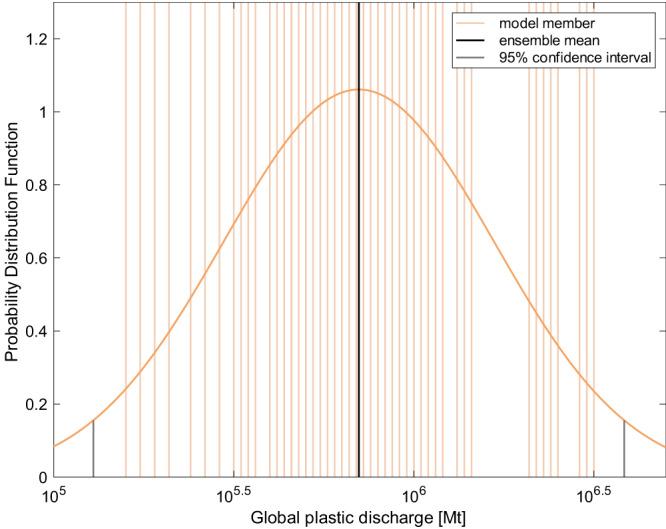
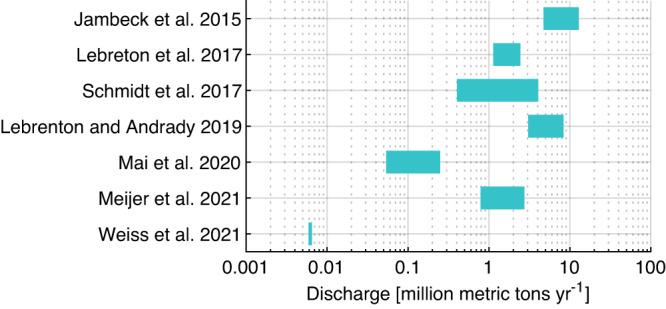
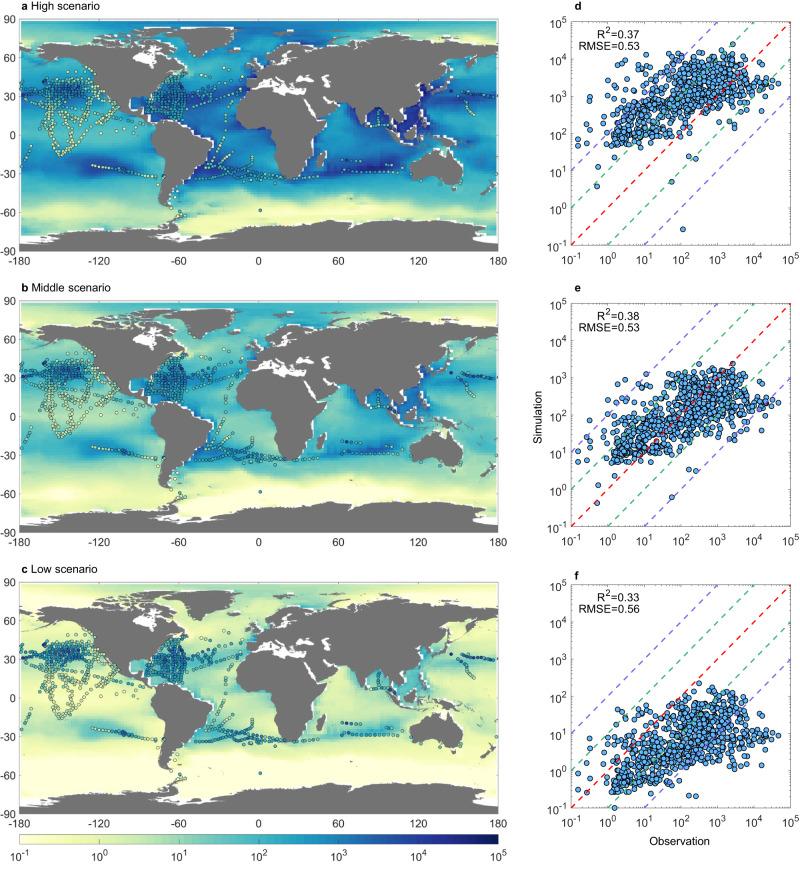
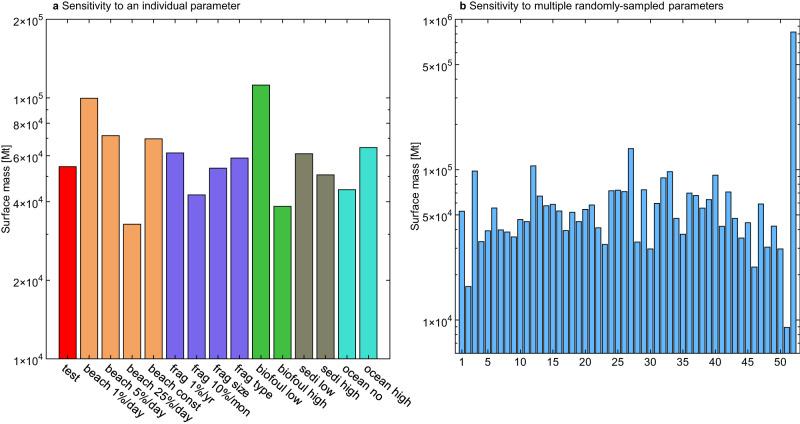
Marine plastic pollution poses a potential threat to the ecosystem, but the sources and their magnitudes remain largely unclear. Existing bottom-up emission inventories vary among studies for two to three orders of magnitudes (OMs). Here, we adopt a top-down approach that uses observed dataset of sea surface plastic concentrations and an ensemble of ocean transport models to reduce the uncertainty of global plastic discharge. The optimal estimation of plastic emissions in this study varies about 1.5 OMs: 0.70 (0.13-3.8 as a 95% confidence interval) million metric tons yr at the present day. We find that the variability of surface plastic abundance caused by different emission inventories is higher than that caused by model parameters. We suggest that more accurate emission inventories, more data for the abundance in the seawater and other compartments, and more accurate model parameters are required to further reduce the uncertainty of our estimate.
海洋塑料污染对生态系统构成潜在威胁,但污染源及其规模在很大程度上仍不清楚。现有的自下而上排放清单在两项至三项数量级(OM)上存在差异。在这里,我们采用自上而下的方法,利用海面塑料浓度观测数据集和一组海洋传输模型来降低全球塑料排放的不确定性。本研究中塑料排放的最佳估计值变化约为 1.5 个 OM:目前为 70 万公吨/年(95%置信区间为 0.13-3.8)。我们发现,不同排放清单引起的海面塑料丰度变化大于模型参数引起的变化。我们建议需要更准确的排放清单、更多的海水和其他隔室丰度数据以及更准确的模型参数,以进一步降低我们估计的不确定性。
 Zotero 插件