
新冠疫情时代隐匿性大流行的爆发:障碍与机遇
Flare of the silent pandemic in the era of the COVID-19 pandemic: Obstacles and opportunities.
作者信息
Rayan Rehab A
机构信息
Department of Epidemiology, High Institute of Public Health, Alexandria University, Alexandria 55555, Egypt.
出版信息
World J Clin Cases. 2023 Feb 26;11(6):1267-1274. doi: 10.12998/wjcc.v11.i6.1267.
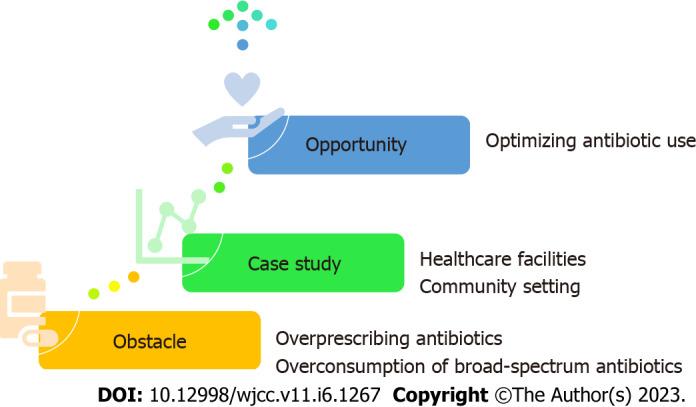
A noteworthy public health problem, antimicrobial resistance (AMR) has been impeded in many ways by the coronavirus disease 2019 (COVID-19) pandemic. This narrative review discusses the two-sided impact of COVID-19 on the magnitude of AMR. The pandemic has put tremendous strain on healthcare systems, diverting resources, personnel, and attention away from AMR diagnosis and management toward COVID-19 diagnosis and contact tracking and tracing. AMR research has been severely hampered, and surveillance and antimicrobial stewardship (AMS) programs have been de-emphasized, delayed, or halted. Antibiotics, particularly broad-spectrum, were prescribed more frequently without diagnostic confirmation of bacterial infection than before the pandemic. Nonetheless, the COVID-19 pandemic has highlighted the vulnerability of healthcare systems in controlling infectious disease threats and raised awareness of the importance of infection prevention and control. Yet, the pandemic has created opportunities to capitalize on positive effects on AMR management. The review concludes that it is now more important than ever to focus on AMR and strengthen AMS programs to ensure appropriate antibiotic use and other AMR prevention measures in healthcare. We must ensure that one of the COVID-19 legacies is increased support for AMR research, diagnostic implementation, appropriate diagnostic stewardship, and the strengthening of our health systems. The COVID-19 pandemic has demonstrated that prevention is better than cure. Countries will need to step up their efforts to combat AMR as a multidisciplinary community. We must prepare our public health systems to combat multiple threats at the same time.
抗菌药物耐药性(AMR)是一个值得关注的公共卫生问题,2019年冠状病毒病(COVID-19)大流行在许多方面对其产生了阻碍。这篇叙述性综述讨论了COVID-19对AMR严重程度的双重影响。大流行给医疗系统带来了巨大压力,将资源、人员和注意力从AMR的诊断和管理转移到COVID-19的诊断以及接触者追踪和溯源上。AMR研究受到了严重阻碍,监测和抗菌药物管理(AMS)计划不再受重视、被推迟或停止。与大流行之前相比,在未确诊细菌感染的情况下,抗生素(尤其是广谱抗生素)的处方开具更为频繁。尽管如此,COVID-19大流行凸显了医疗系统在控制传染病威胁方面的脆弱性,并提高了对感染预防和控制重要性的认识。然而,大流行也创造了利用对AMR管理产生积极影响的机会。该综述得出结论,现在比以往任何时候都更需要关注AMR并加强AMS计划,以确保在医疗保健中合理使用抗生素及采取其他AMR预防措施。我们必须确保COVID-19留下的遗产之一是增加对AMR研究、诊断实施、适当的诊断管理以及加强我们卫生系统的支持。COVID-19大流行表明预防胜于治疗。各国需要作为一个多学科群体加大力度抗击AMR。我们必须让我们的公共卫生系统做好同时应对多种威胁的准备。
 Zotero 插件