
金黄色葡萄球菌与 Seraph® 100 Microbind® 亲和滤器的结合:表面蛋白表达和处理时间的影响。
Staphylococcus aureus binding to Seraph® 100 Microbind® Affinity Filter: Effects of surface protein expression and treatment duration.
机构信息
Helmholtz Centre for Infection Research, Microbial Proteomics, Braunschweig, Germany.
Medical Clinic V, Nephrology, Rheumatology, Blood Purification, Academic Teaching Hospital Braunschweig, Braunschweig, Germany.
出版信息
PLoS One. 2023 Mar 17;18(3):e0283304. doi: 10.1371/journal.pone.0283304. eCollection 2023.
INTRODUCTION
Extracorporeal blood purification systems represent a promising alternative for treatment of blood stream infections with multiresistant bacteria.
OBJECTIVES
The aim of this study was to analyse the binding activity of S. aureus to Seraph affinity filters based on heparin coated beads and to identify effectors influencing this binding activity.
RESULTS
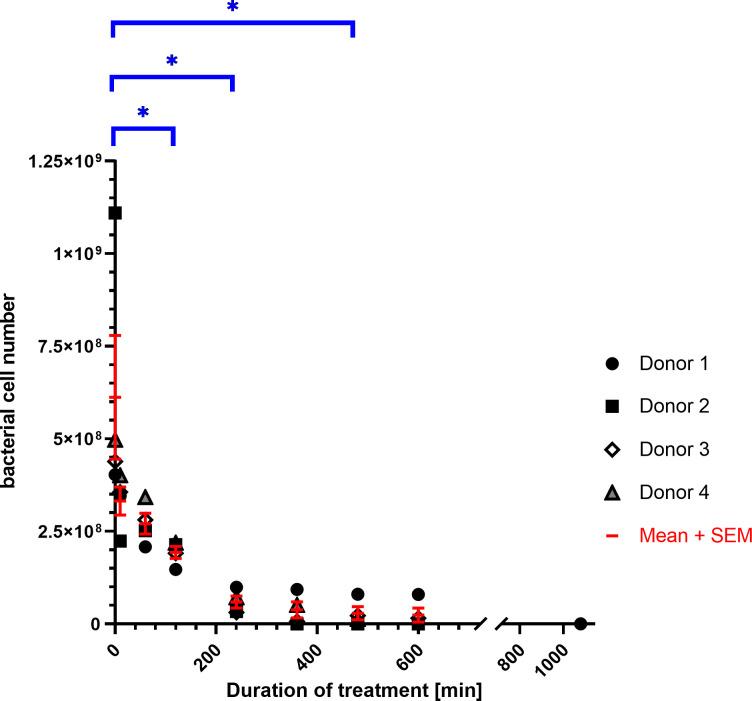
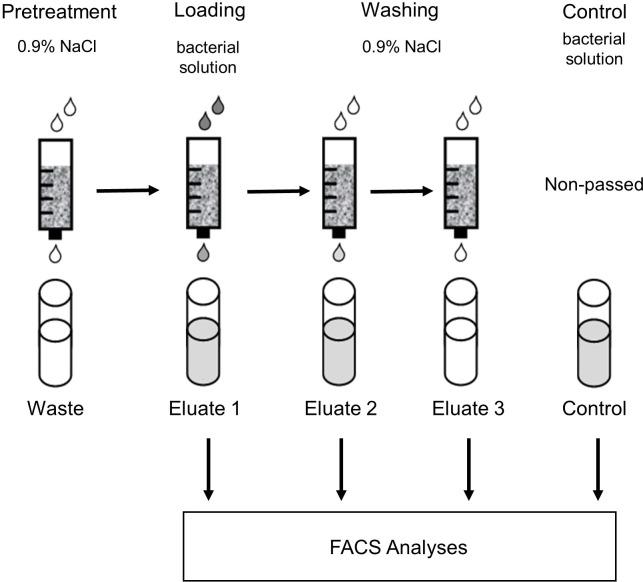
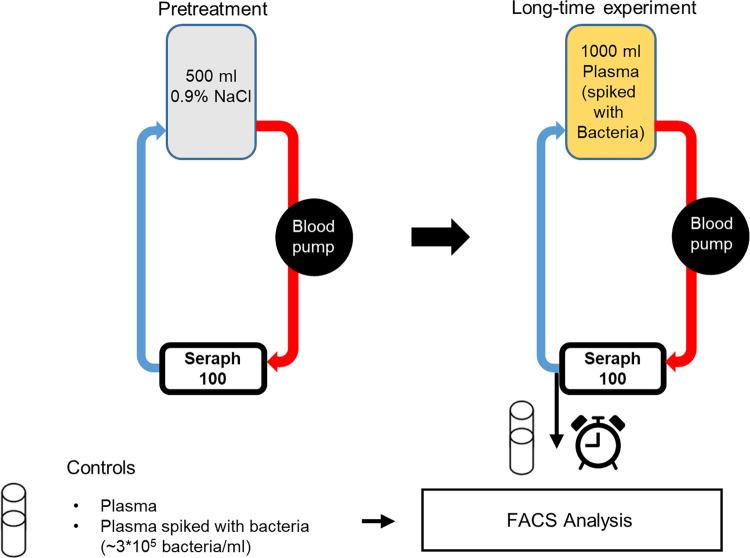
To test the binding activity, we used gfp-expressing S. aureus Newman strains inoculated either in 0.9% NaCl or in blood plasma and determined the number of unbound bacteria by FACS analyses after passing through Seraph affinity filters. The binding activity of S. aureus was clearly impaired in human plasma: while a percent removal of 42% was observed in 0.9% NaCl (p-value 0.0472) using Seraph mini columns, a percent removal of only 10% was achieved in human plasma (p-value 0.0934). The different composition of surface proteins in S. aureus caused by the loss of SarA, SigB, Lgt, and SaeS had no significant influence on its binding activity. In a clinically relevant approach using the Seraph® 100 Microbind® Affinity Filter and 1000 ml of human blood plasma from four different donors, the duration of treatment was shown to have a critical effect on the rate of bacterial reduction. Within the first four hours, the number of bacteria decreased continuously and the reduction in bacteria reached statistical significance after two hours of treatment (percentage reduction 64%, p-value 0.01165). The final reduction after four hours of treatment was close to 90% and is dependent on donor. The capacity of Seraph® 100 for S. aureus in human plasma was approximately 5 x 10⁸ cells.
CONCLUSIONS
The Seraph affinity filter, based on heparin-coated beads, is a highly efficient method for reducing S. aureus in human blood plasma, with efficiency dependent on blood plasma composition and treatment duration.
简介
体外血液净化系统是治疗血流感染多耐药菌的一种有前途的替代方法。
目的
本研究旨在分析金黄色葡萄球菌与基于肝素包被珠的 Seraph 亲和滤器的结合活性,并鉴定影响这种结合活性的效应物。
结果
为了测试结合活性,我们使用 gfp 表达的金黄色葡萄球菌 Newman 株接种在 0.9%NaCl 或血浆中,并通过流式细胞术分析确定通过 Seraph 亲和滤器后未结合细菌的数量。金黄色葡萄球菌的结合活性在人血浆中明显受损:在 0.9%NaCl 中使用 Seraph 迷你柱观察到 42%的去除率(p 值 0.0472),而在人血浆中仅达到 10%的去除率(p 值 0.0934)。由于 SarA、SigB、Lgt 和 SaeS 的缺失导致金黄色葡萄球菌表面蛋白组成的不同,对其结合活性没有显著影响。在使用 Seraph®100 Microbind®Affinity Filter 和来自四个不同供体的 1000 毫升人血浆的临床相关方法中,治疗持续时间对细菌减少率有重要影响。在前四个小时内,细菌数量持续减少,治疗两小时后细菌减少达到统计学意义(减少率 64%,p 值 0.01165)。治疗四小时后的最终减少率接近 90%,并取决于供体。Seraph®100 在人血浆中对金黄色葡萄球菌的容量约为 5 x 10⁸ 个细胞。
结论
基于肝素包被珠的 Seraph 亲和滤器是一种高效降低人血浆中金黄色葡萄球菌的方法,其效率取决于血浆组成和治疗持续时间。
 Zotero 插件