
血管脂质滴在 TNF、缺氧或 OA 作用下形成:生化组成和前列环素生成。
Vascular lipid droplets formed in response to TNF, hypoxia, or OA: biochemical composition and prostacyclin generation.
机构信息
Jagiellonian Centre for Experimental Therapeutics (JCET), Jagiellonian University, Krakow, Poland.
Jagiellonian Centre for Experimental Therapeutics (JCET), Jagiellonian University, Krakow, Poland; Doctoral School of Exact and Natural Sciences, Jagiellonian University, Krakow, Poland.
出版信息
J Lipid Res. 2023 May;64(5):100355. doi: 10.1016/j.jlr.2023.100355. Epub 2023 Mar 17.
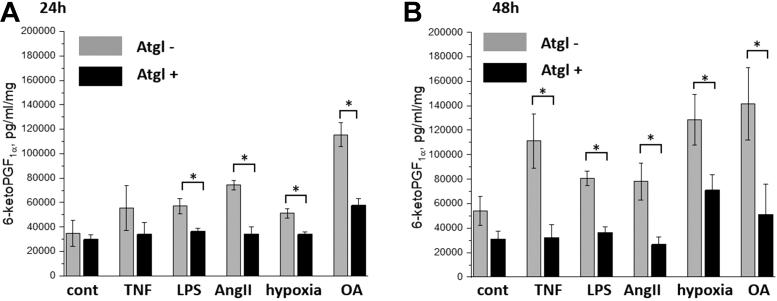
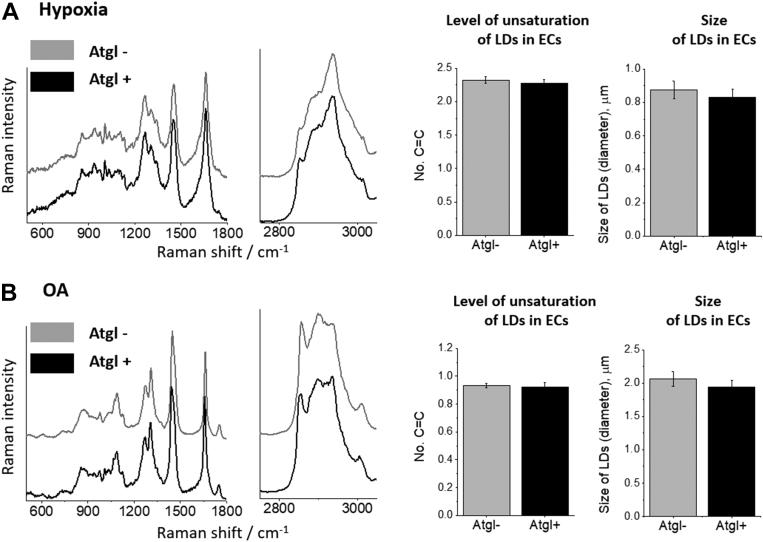
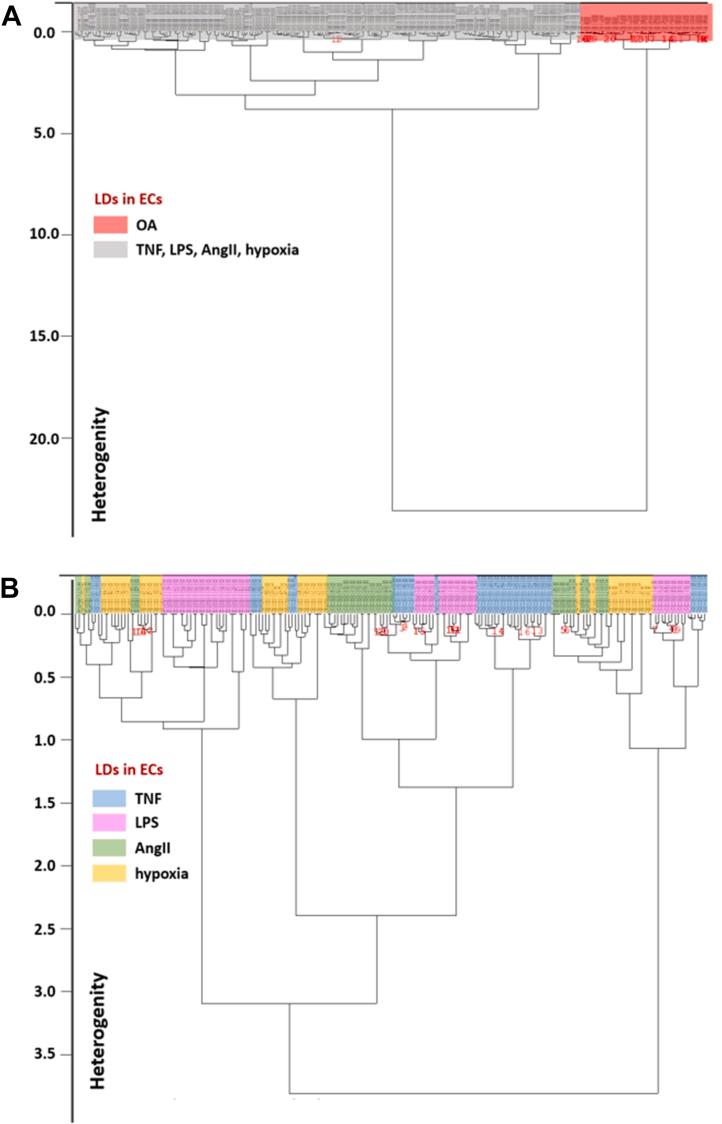
Biogenesis of lipid droplets (LDs) in various cells plays an important role in various physiological and pathological processes. However, the function of LDs in endothelial physiology and pathology is not well understood. In the present work, we investigated the formation of LDs and prostacyclin (PGI) generation in the vascular tissue of isolated murine aortas following activation by proinflammatory factors: tumor necrosis factor (TNF), lipopolysaccharides (LPS), angiotensin II (AngII), hypoxic conditions, or oleic acid (OA). The abundance, size, and biochemical composition of LDs were characterized based on Raman spectroscopy and fluorescence imaging. We found that blockade of lipolysis by the adipose triglyceride lipase (ATGL) delayed LDs degradation and simultaneously blunted PGI generation in aorta treated with all tested proinflammatory stimuli. Furthermore, the analysis of Raman spectra of LDs in the isolated vessels stimulated by TNF, LPS, AngII, or hypoxia uncovered that these LDs were all rich in highly unsaturated lipids and had a negligible content of phospholipids and cholesterols. Additionally, by comparing the Raman signature of endothelial LDs under hypoxic or OA-overload conditions in the presence or absence of ATGL inhibitor, atglistatin (Atgl), we show that Atgl does not affect the biochemical composition of LDs. Altogether, independent of whether LDs were induced by pro-inflammatory stimuli, hypoxia, or OA and of whether they were composed of highly unsaturated or less unsaturated lipids, we observed LDs formation invariably associated with ATGL-dependent PGI generation. In conclusion, vascular LDs formation and ATGL-dependent PGI generation represent a universal response to vascular proinflammatory insult.
脂滴(LDs)在各种细胞中的生物发生在各种生理和病理过程中起着重要作用。然而,LDs 在血管内皮生理学和病理学中的功能尚不清楚。在本工作中,我们研究了在炎症因子:肿瘤坏死因子(TNF)、脂多糖(LPS)、血管紧张素 II(AngII)、缺氧条件或油酸(OA)激活后,分离的鼠主动脉血管组织中 LDs 的形成和前列环素(PGI)的产生。根据拉曼光谱和荧光成像,对 LDs 的丰度、大小和生化组成进行了表征。我们发现,脂肪甘油三酯脂肪酶(ATGL)阻断脂肪分解会延迟 LDs 的降解,并同时减弱所有测试的炎症刺激物处理的主动脉中 PGI 的产生。此外,对 TNF、LPS、AngII 或缺氧刺激的分离血管中 LDs 的拉曼光谱分析表明,这些 LDs 均富含高度不饱和脂质,而磷脂和胆固醇含量可忽略不计。此外,通过比较缺氧或 OA 过载条件下内皮 LDs 的拉曼特征,以及在存在或不存在 ATGL 抑制剂 atglistatin(Atgl)的情况下,我们表明 Atgl 不会影响 LDs 的生化组成。总而言之,无论 LDs 是由炎症刺激、缺氧还是 OA 诱导的,以及它们是由高度不饱和还是较少不饱和的脂质组成的,我们都观察到 LDs 的形成始终与 ATGL 依赖性 PGI 产生相关。总之,血管 LDs 的形成和 ATGL 依赖性 PGI 的产生代表了血管炎症损伤的普遍反应。




 Zotero 插件