
树突状细胞亚群在癌症免疫和肿瘤抗原识别中的作用。
Dendritic cell subsets in cancer immunity and tumor antigen sensing.
机构信息
Department of Molecular and Translational Medicine, University of Brescia, Brescia, Italy.
Humanitas Clinical and Research Center-IRCCS Rozzano, Milano, Italy.
出版信息
Cell Mol Immunol. 2023 May;20(5):432-447. doi: 10.1038/s41423-023-00990-6. Epub 2023 Mar 22.
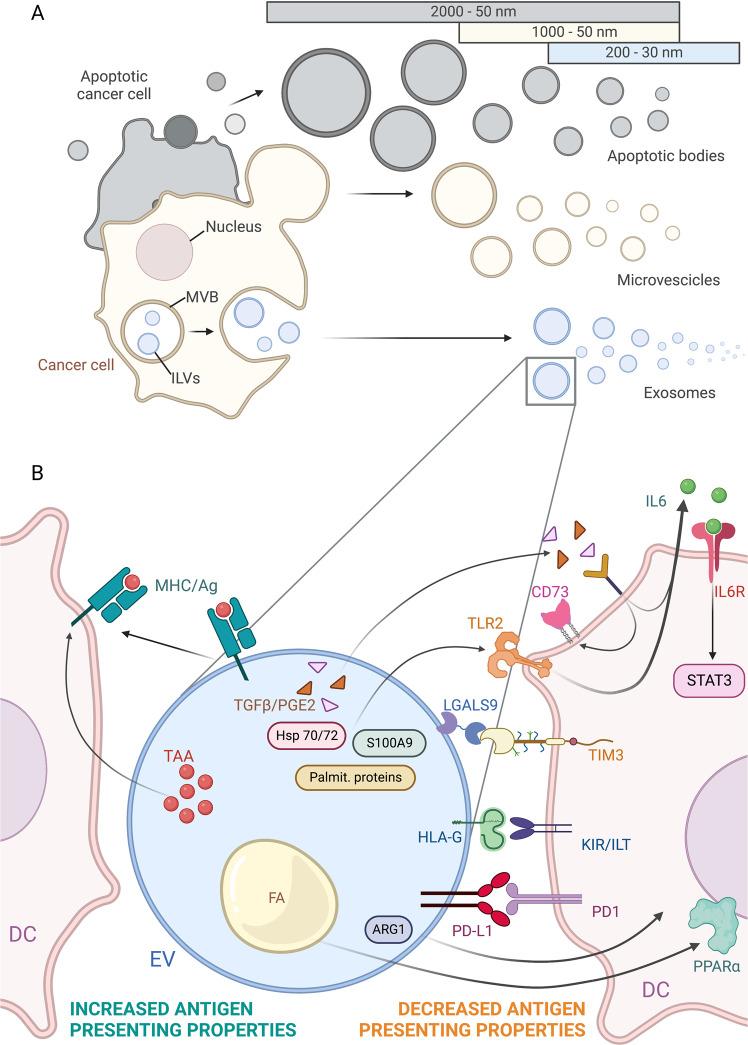
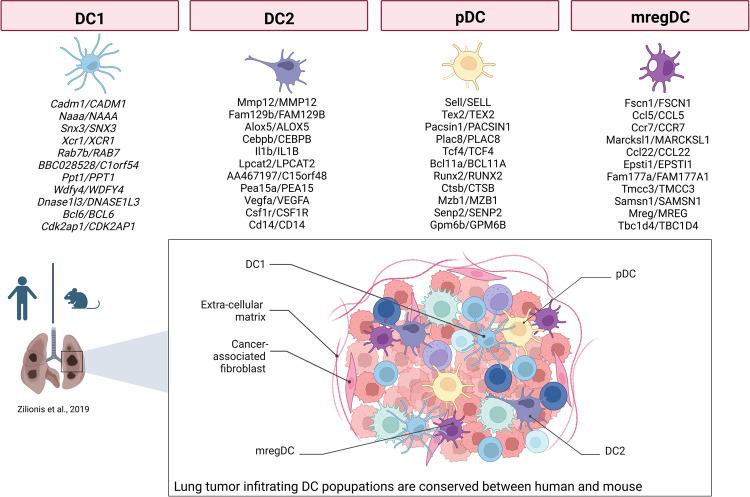
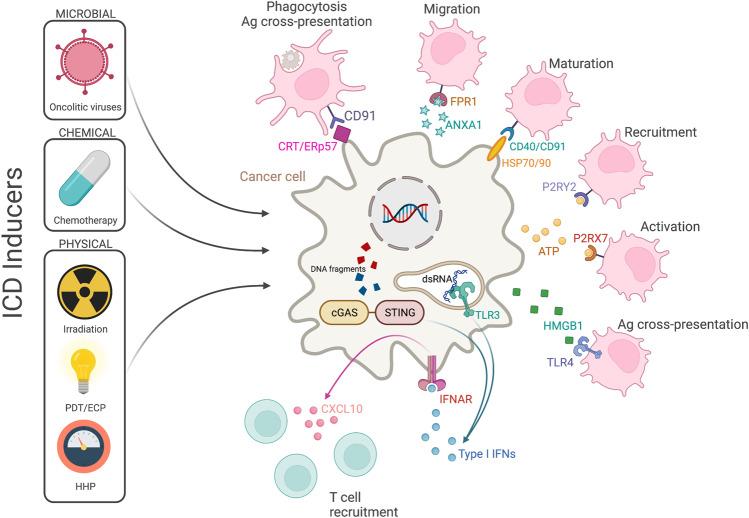
Dendritic cells (DCs) exhibit a specialized antigen-presenting function and play crucial roles in both innate and adaptive immune responses. Due to their ability to cross-present tumor cell-associated antigens to naïve T cells, DCs are instrumental in the generation of specific T-cell-mediated antitumor effector responses in the control of tumor growth and tumor cell dissemination. Within an immunosuppressive tumor microenvironment, DC antitumor functions can, however, be severely impaired. In this review, we focus on the mechanisms of DC capture and activation by tumor cell antigens and the role of the tumor microenvironment in shaping DC functions, taking advantage of recent studies showing the phenotype acquisition, transcriptional state and functional programs revealed by scRNA-seq analysis. The therapeutic potential of DC-mediated tumor antigen sensing in priming antitumor immunity is also discussed.
树突状细胞 (DCs) 表现出特殊的抗原呈递功能,在先天和适应性免疫反应中发挥关键作用。由于其能够将肿瘤细胞相关抗原交叉呈递给初始 T 细胞,因此在控制肿瘤生长和肿瘤细胞扩散的过程中,DC 有助于产生特异性的 T 细胞介导的抗肿瘤效应反应。然而,在免疫抑制性肿瘤微环境中,DC 的抗肿瘤功能可能会受到严重损害。在这篇综述中,我们专注于肿瘤细胞抗原对 DC 的捕获和激活机制,以及肿瘤微环境在塑造 DC 功能方面的作用,利用最近的研究结果,通过单细胞 RNA 测序分析揭示了 DC 的表型获得、转录状态和功能程序。还讨论了 DC 介导的肿瘤抗原感知在启动抗肿瘤免疫中的治疗潜力。

 Zotero 插件