
肿瘤微环境中单细胞的泛癌症分类。
Pan-cancer classification of single cells in the tumour microenvironment.
机构信息
Ontario Institute for Cancer Research, Toronto, ON, Canada.
Department of Molecular Genetics, University of Toronto, Toronto, ON, Canada.
出版信息
Nat Commun. 2023 Mar 23;14(1):1615. doi: 10.1038/s41467-023-37353-8.
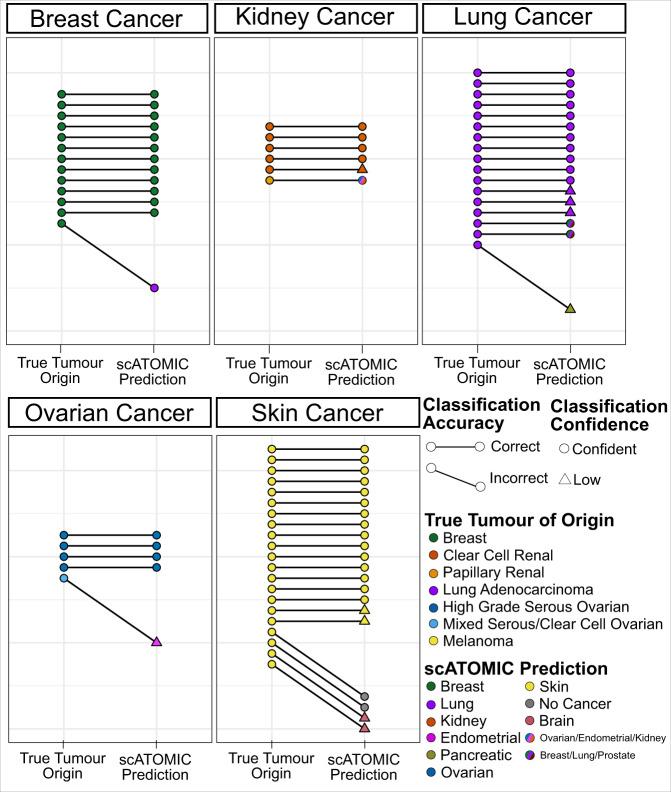
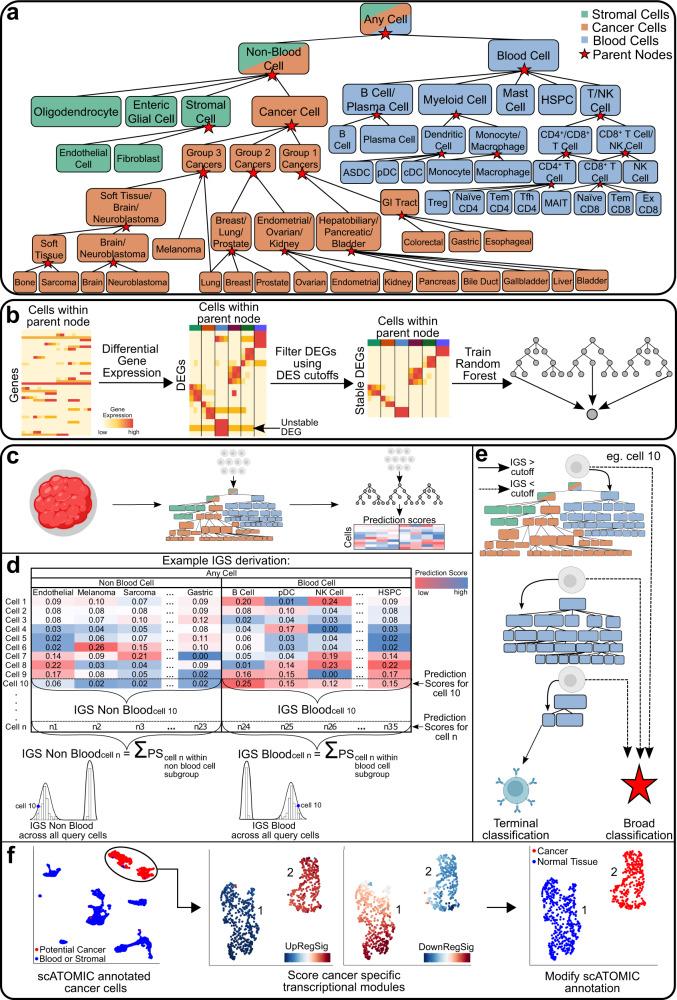
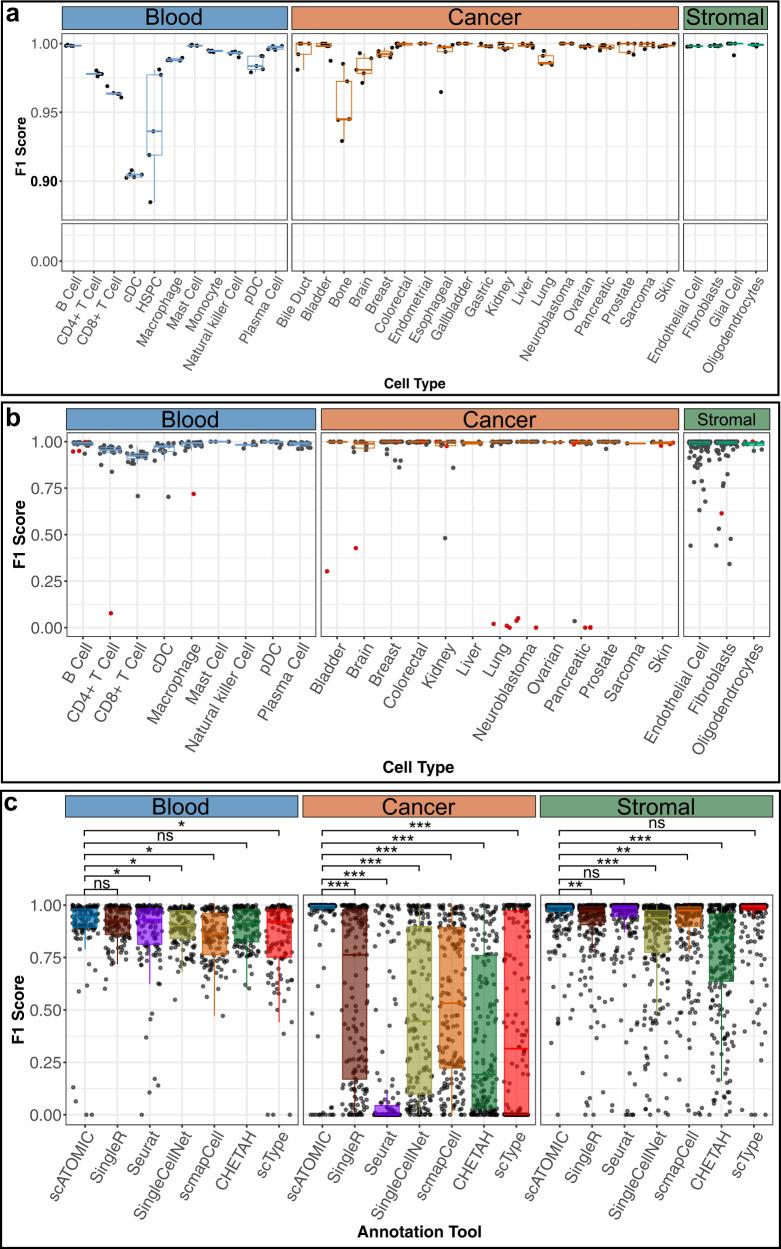
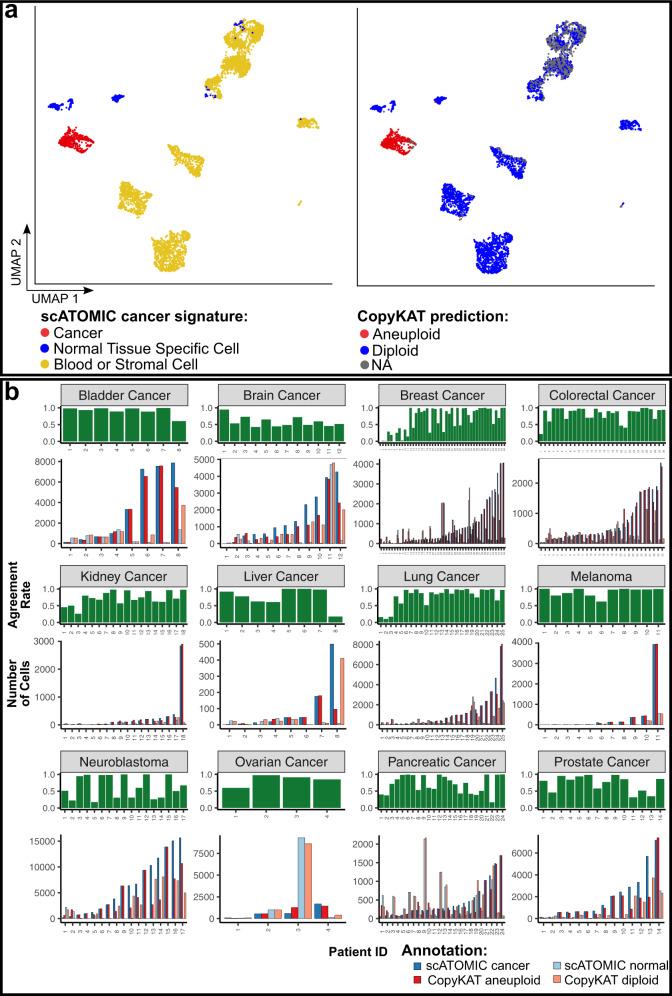
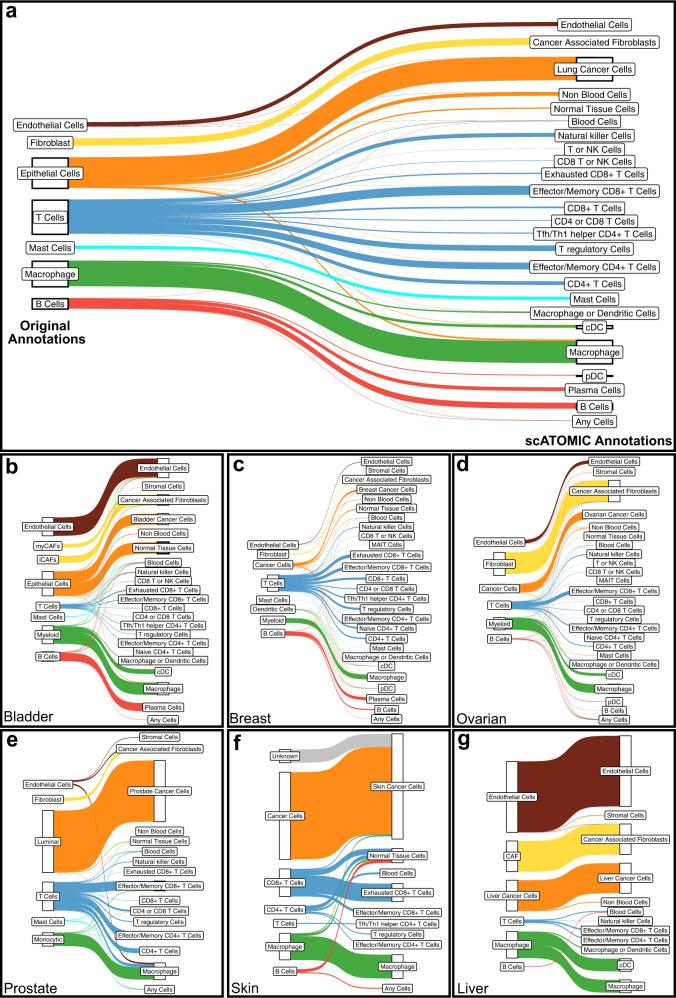
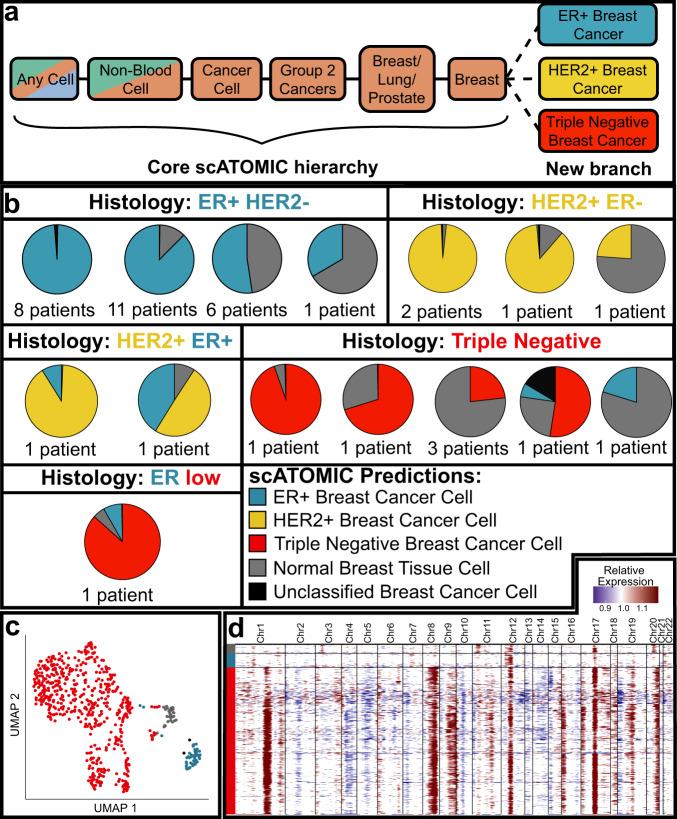
Single-cell RNA sequencing can reveal valuable insights into cellular heterogeneity within tumour microenvironments (TMEs), paving the way for a deep understanding of cellular mechanisms contributing to cancer. However, high heterogeneity among the same cancer types and low transcriptomic variation in immune cell subsets present challenges for accurate, high-resolution confirmation of cells' identities. Here we present scATOMIC; a modular annotation tool for malignant and non-malignant cells. We trained scATOMIC on >300,000 cancer, immune, and stromal cells defining a pan-cancer reference across 19 common cancers and employ a hierarchical approach, outperforming current classification methods. We extensively confirm scATOMIC's accuracy on 225 tumour biopsies encompassing >350,000 cancer and a variety of TME cells. Lastly, we demonstrate scATOMIC's practical significance to accurately subset breast cancers into clinically relevant subtypes and predict tumours' primary origin across metastatic cancers. Our approach represents a broadly applicable strategy to analyse multicellular cancer TMEs.
单细胞 RNA 测序可以揭示肿瘤微环境(TME)中细胞异质性的有价值的见解,为深入了解导致癌症的细胞机制铺平道路。然而,同一癌症类型之间的高度异质性和免疫细胞亚群中的低转录组变异为准确、高分辨率地确认细胞的身份带来了挑战。在这里,我们提出了 scATOMIC;一种用于恶性和非恶性细胞的模块化注释工具。我们在超过 30 万个癌症、免疫和基质细胞上训练了 scATOMIC,定义了跨越 19 种常见癌症的泛癌症参考,并采用了分层方法,优于当前的分类方法。我们在 225 个肿瘤活检中广泛证实了 scATOMIC 的准确性,其中包含超过 35 万个癌症和各种 TME 细胞。最后,我们证明了 scATOMIC 在准确地将乳腺癌亚组分为临床相关亚型和预测转移性癌症中肿瘤的原发来源方面的实际意义。我们的方法代表了一种广泛适用于分析多细胞癌症 TME 的策略。
 Zotero 插件