
斋月禁食与体重变化轨迹:低收入和难民群体在斋月期间及之后体重的时变关联
Ramadan fasting and weight change trajectories: Time-varying association of weight during and after Ramadan in low-income and refugee populations.
作者信息
Zoughbie Daniel E, Ng Tin Lok James, Thompson Jacqueline Y, Watson Kathleen T, Farraj Rami, Ding Eric L
机构信息
Microclinic International Social Network Research Group, San Francisco, California, United States of America.
Institute of International Studies, UC Berkeley, Berkeley, California, United States of America.
出版信息
PLOS Glob Public Health. 2022 Oct 26;2(10):e0000371. doi: 10.1371/journal.pgph.0000371. eCollection 2022.
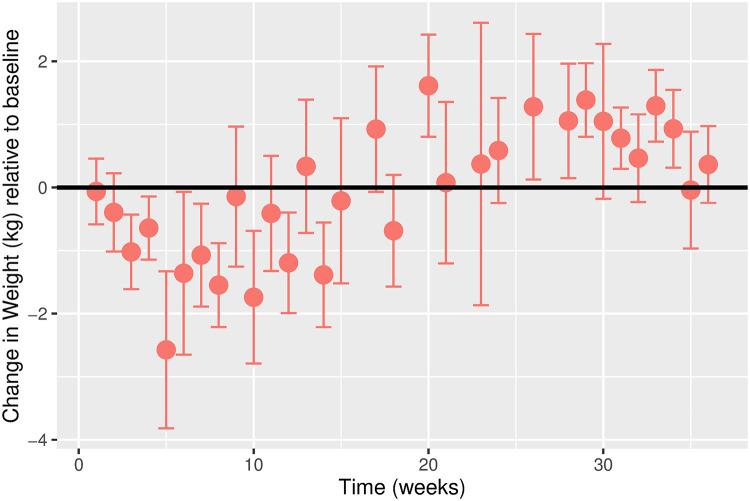
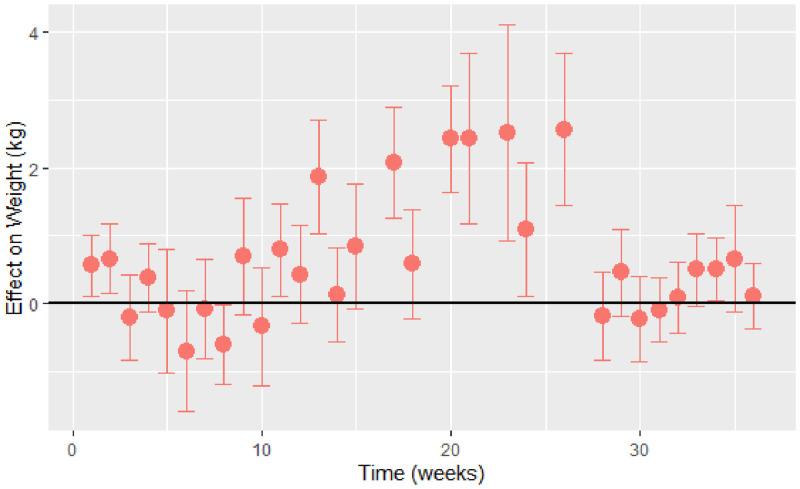
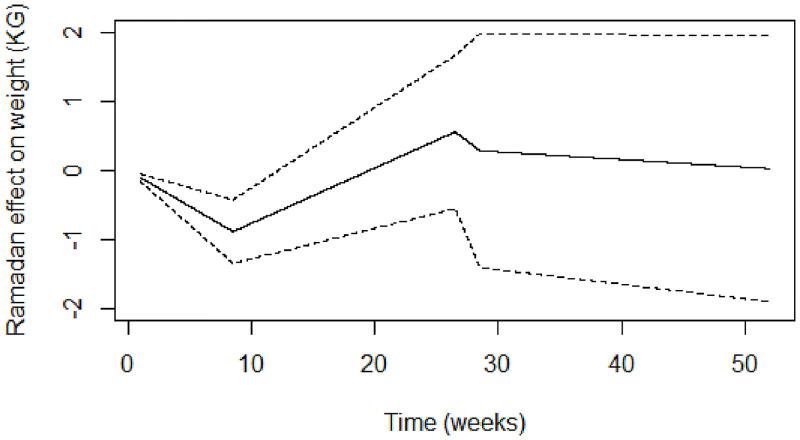
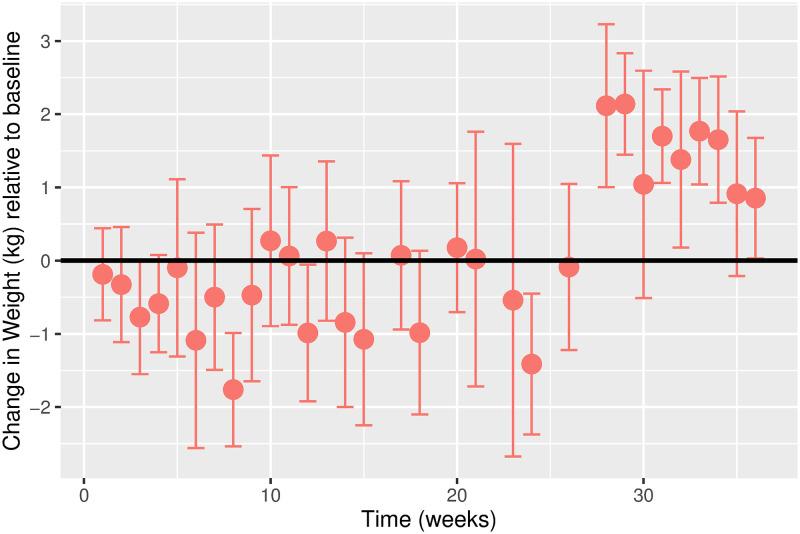
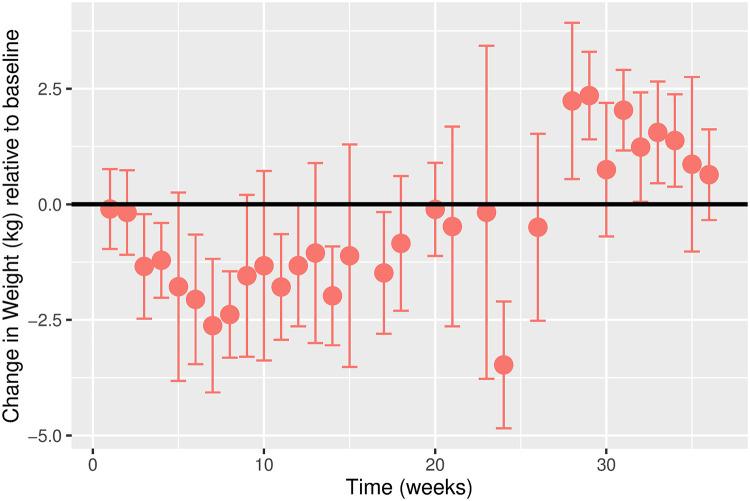
Obesity is a significant driver of the global burden of non-communicable diseases. Fasting is one approach that has been shown to improve health outcomes. However, the effects of Ramadan fasting differ in that the type, frequency, quantity, and time of food consumption vary. This phenomenon requires in-depth evaluation considering that 90% of Muslims (~2 billion people) fast during Ramadan. To address this issue, we evaluated the pattern of weight change during and following Ramadan for a total of 52 weeks. The study was conducted in Amman, Jordan. Between 2012 and 2015, 913 participants were recruited as part of a trial investigating the efficacy of a weight loss intervention among those with or at risk for diabetes. Weight was measured weekly starting at the beginning of Ramadan, and changes were analyzed using discrete and spline models adjusted for age, sex, and trial group. Results show slight weight gain within the first two weeks and weight loss in the subsequent weeks. During the first week of Ramadan, the estimate for a weight increase was 0·427 kg, (95% CI: -0·007, 0·861) relative to baseline, compared to an estimated weight reduction of 0·55kg (95% CI: 0·05, 1·05) by the 8th week relative to baseline. There was clear evidence of gradual weight gain from week 8 until week 26 with an estimated weight gain of 2.547 kg (95% CI: 1.567, 3.527) at week 26 relative to baseline. A sharp drop of 2.66kg in weight was observed between the 26th and 28th week before it stabilized. Our results show that weight changes occurred during and after Ramadan. Weight fluctuations may affect health risks, and thus, findings from this study can inform interventions. Public health agencies could leverage this period of dietary change to sustain some of the benefits of fasting. The authors (DEZ, EFD) acknowledge the Mulago Foundation, the Horace W. Goldsmith Foundation, Robert Wood Johnson Foundation, and the World Diabetes Foundation. TRIAL REGISTRATION. Clinicaltrials.gov registry identifier: NCT01596244.
肥胖是全球非传染性疾病负担的一个重要驱动因素。禁食是一种已被证明能改善健康状况的方法。然而,斋月禁食的影响有所不同,因为食物摄入的类型、频率、数量和时间都有所变化。鉴于90%的穆斯林(约20亿人)在斋月期间禁食,这一现象需要深入评估。为解决这一问题,我们评估了斋月期间及之后共52周的体重变化模式。该研究在约旦安曼进行。2012年至2015年期间,913名参与者被招募作为一项试验的一部分,该试验旨在调查减肥干预措施对糖尿病患者或糖尿病风险人群的疗效。从斋月开始每周测量体重,并使用针对年龄、性别和试验组进行调整的离散模型和样条模型分析体重变化。结果显示,在前两周内体重略有增加,随后几周体重下降。在斋月的第一周,相对于基线,体重增加估计为0.427千克(95%置信区间:-0.007,0.861),而到第8周相对于基线体重估计减少0.55千克(95%置信区间:0.05,1.05)。有明确证据表明,从第8周直到第26周体重逐渐增加,在第26周相对于基线体重增加估计为2.547千克(95%置信区间:1.567,3.527)。在第26周和第28周之间观察到体重急剧下降2.66千克,之后趋于稳定。我们的结果表明,在斋月期间及之后体重会发生变化。体重波动可能会影响健康风险,因此,本研究的结果可为干预措施提供参考。公共卫生机构可以利用这一饮食变化时期来维持禁食的一些益处。作者(DEZ、EFD)感谢穆拉戈基金会、霍勒斯·W·戈德史密斯基金会、罗伯特·伍德·约翰逊基金会和世界糖尿病基金会。试验注册。Clinicaltrials.gov注册标识符:NCT01596244。


 Zotero 插件