
新型生物标志物,包括 PCR 循环阈值,可预测复发性艰难梭菌感染。
Novel Biomarkers, Including PCR Cycle Threshold, for Predicting Recurrent Clostridioides difficile Infection.
机构信息
Division of Infectious Diseases & International Health, Department of Medicine, University of Virginia School of Medicine, Charlottesville, Virginia, USA.
School of Data Science, University of Virginia School of Medicine, Charlottesville, Virginia, USA.
出版信息
Infect Immun. 2023 Apr 18;91(4):e0009223. doi: 10.1128/iai.00092-23. Epub 2023 Mar 28.
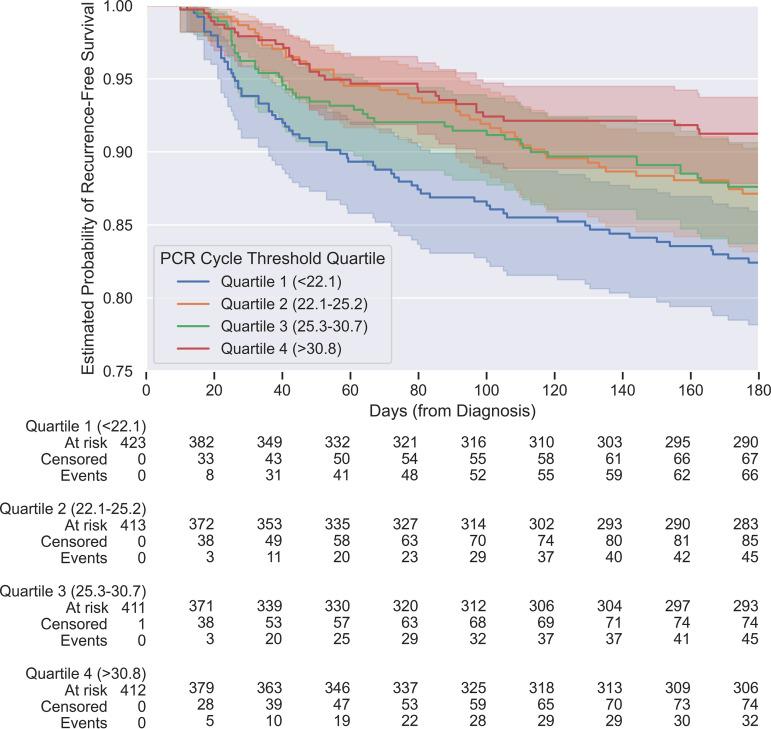
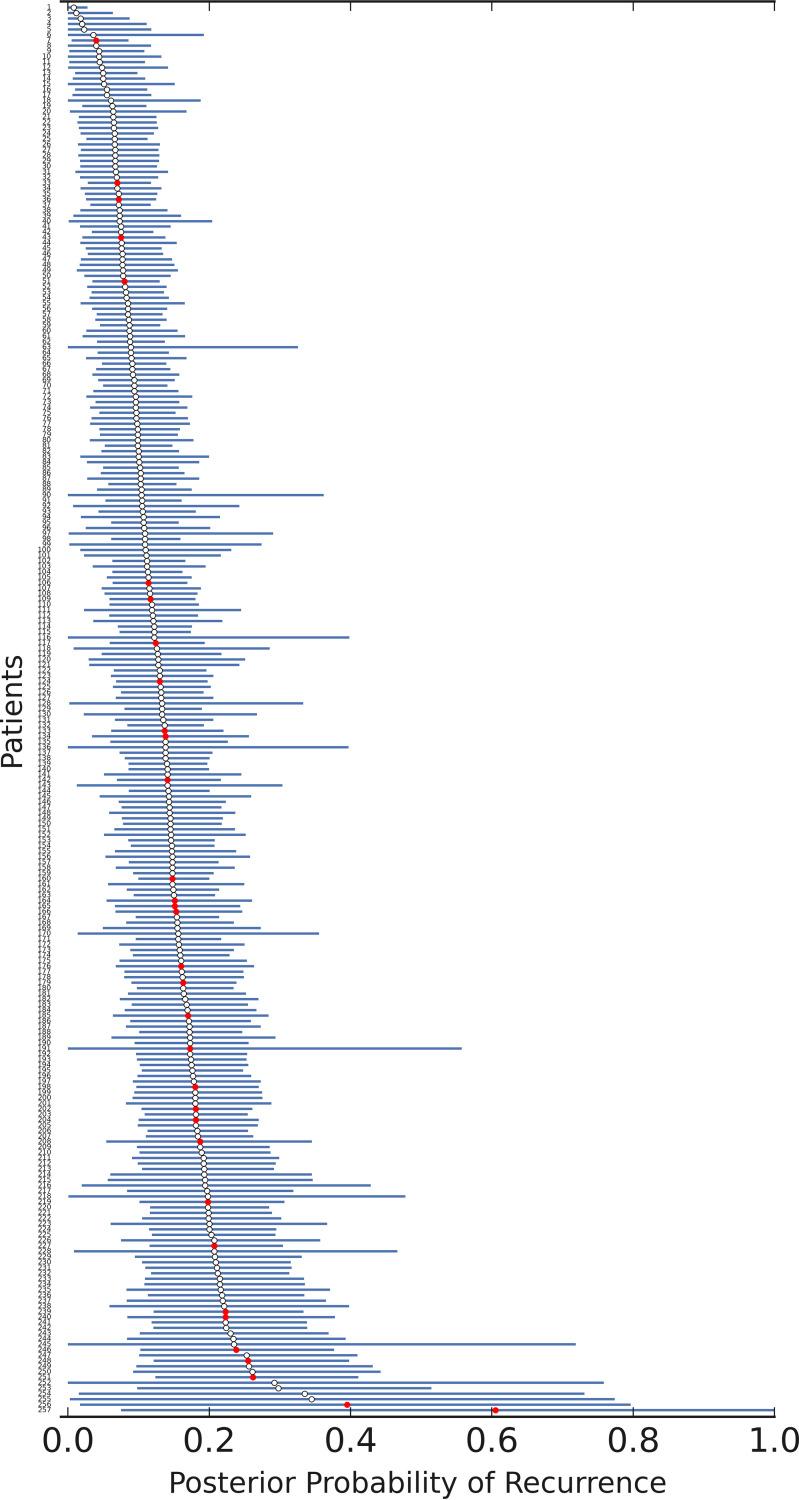
Traditional clinical models for predicting recurrent Clostridioides difficile infection do not perform well, likely owing to the complex host-pathogen interactions involved. Accurate risk stratification using novel biomarkers could help prevent recurrence by improving underutilization of effective therapies (i.e., fecal transplant, fidaxomicin, bezlotoxumab). We used a biorepository of 257 hospitalized patients with 24 features collected at diagnosis, including 17 plasma cytokines, total/neutralizing anti-toxin B IgG, stool toxins, and PCR cycle threshold () (a proxy for stool organism burden). The best set of predictors for recurrent infection was selected by Bayesian model averaging for inclusion in a final Bayesian logistic regression model. We then used a large PCR-only data set to confirm the finding that PCR predicts recurrence-free survival using Cox proportional hazards regression. The top model-averaged features were (probabilities of >0.05, greatest to least): interleukin 6 (IL-6), PCR , endothelial growth factor, IL-8, eotaxin, IL-10, hepatocyte growth factor, and IL-4. The accuracy of the final model was 0.88. Among 1,660 cases with PCR-only data, cycle threshold was significantly associated with recurrence-free survival (hazard ratio, 0.95; 0.005). Certain biomarkers associated with C. difficile infection severity were especially important for predicting recurrence; PCR and markers of type 2 immunity (endothelial growth factor [EGF], eotaxin) emerged as positive predictors of recurrence, while type 17 immune markers (IL-6, IL-8) were negative predictors. In addition to novel serum biomarkers (particularly, IL-6, EGF, and IL-8), the readily available PCR may be critical to augment underperforming clinical models for C. difficile recurrence.
传统的预测复发性艰难梭菌感染的临床模型表现不佳,这可能是由于涉及到复杂的宿主-病原体相互作用。使用新型生物标志物进行准确的风险分层,通过改善有效治疗(即粪便移植、非达霉素、贝洛妥珠单抗)的未充分利用,有助于预防复发。我们使用了一个 257 名住院患者的生物库,这些患者在诊断时收集了 24 个特征,包括 17 种血浆细胞因子、总/中和抗毒素 B IgG、粪便毒素和 PCR 循环阈值(Ct)(代表粪便中生物体负担的替代物)。通过贝叶斯模型平均法选择了最佳的预测因子集,以纳入最终的贝叶斯逻辑回归模型。然后,我们使用了一个大型的仅 PCR 数据集来证实 PCR 可通过 Cox 比例风险回归预测无复发生存率的发现。平均特征最高的模型是(概率 >0.05,从大到小):白细胞介素 6(IL-6)、PCR、内皮生长因子、白细胞介素 8、嗜酸性粒细胞趋化因子、白细胞介素 10、肝细胞生长因子和白细胞介素 4。最终模型的准确率为 0.88。在 1660 例仅有 PCR 数据的病例中,Ct 与无复发生存率显著相关(风险比,0.95;0.005)。与艰难梭菌感染严重程度相关的某些生物标志物对预测复发尤其重要;PCR 和 2 型免疫标志物(内皮生长因子[EGF]、嗜酸性粒细胞趋化因子)成为复发的阳性预测因子,而 17 型免疫标志物(IL-6、IL-8)则是阴性预测因子。除了新型血清生物标志物(特别是 IL-6、EGF 和 IL-8)外,易于获得的 PCR 可能对增强表现不佳的艰难梭菌复发临床模型至关重要。


 Zotero 插件