
肠道微生物组和代谢组的改变与脓毒症的临床转归相关。
Altered intestinal microbiome and metabolome correspond to the clinical outcome of sepsis.
机构信息
Department of Emergency, Ruijin Hospital, Shanghai Jiao Tong University School of Medicine, No. 197 Ruijin ER Road, Shanghai, 200025, China.
Department of Laboratory Medicine, Ruijin Hospital, Shanghai Jiao Tong University School of Medicine, No. 197 Ruijin ER Road, Shanghai, 200025, China.
出版信息
Crit Care. 2023 Mar 28;27(1):127. doi: 10.1186/s13054-023-04412-x.
BACKGROUND
The gut microbiome plays a pivotal role in the progression of sepsis. However, the specific mechanism of gut microbiota and its metabolites involved in the process of sepsis remains elusive, which limits its translational application.
METHOD
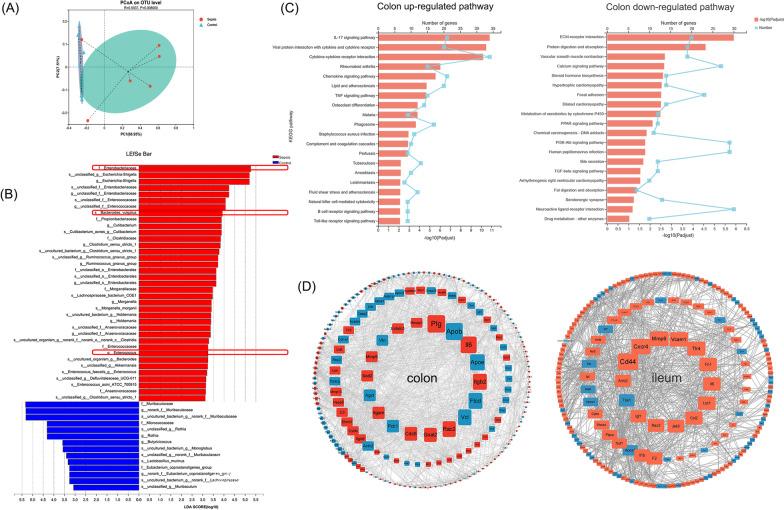
In this study, we used a combination of the microbiome and untargeted metabolomics to analyze stool samples from patients with sepsis enrolled at admission, then microbiota, metabolites, and potential signaling pathways that might play important roles in disease outcome were screened out. Finally, the above results were validated by the microbiome and transcriptomics analysis in an animal model of sepsis.
RESULTS
Patients with sepsis showed destruction of symbiotic flora and elevated abundance of Enterococcus, which were validated in animal experiments. Additionally, patients with a high burden of Bacteroides, especially B. vulgatus, had higher Acute Physiology and Chronic Health Evaluation II scores and longer stays in the intensive care unit. The intestinal transcriptome in CLP rats illustrated that Enterococcus and Bacteroides had divergent profiles of correlation with differentially expressed genes, indicating distinctly different roles for these bacteria in sepsis. Furthermore, patients with sepsis exhibited disturbances in gut amino acid metabolism compared with healthy controls; namely, tryptophan metabolism was tightly related to an altered microbiota and the severity of sepsis.
CONCLUSION
Alterations in microbial and metabolic features in the gut corresponded with the progression of sepsis. Our findings may help to predict the clinical outcome of patients in the early stage of sepsis and provide a translational basis for exploring new therapies.
背景
肠道微生物群在脓毒症的进展中起着关键作用。然而,涉及脓毒症过程中的肠道微生物群及其代谢物的具体机制仍不清楚,这限制了其转化应用。
方法
在这项研究中,我们使用微生物组和非靶向代谢组学相结合的方法来分析入院时患有脓毒症的患者的粪便样本,然后筛选出可能在疾病结局中发挥重要作用的微生物群、代谢物和潜在信号通路。最后,通过脓毒症动物模型中的微生物组和转录组学分析对上述结果进行验证。
结果
脓毒症患者表现出共生菌群的破坏和肠球菌丰度的升高,这些在动物实验中得到了验证。此外,具有高负担的拟杆菌,特别是脆弱拟杆菌的患者,具有更高的急性生理学和慢性健康评估 II 评分和更长的重症监护病房停留时间。CLP 大鼠的肠道转录组表明,肠球菌和拟杆菌与差异表达基因的相关性具有不同的特征,表明这些细菌在脓毒症中的作用明显不同。此外,与健康对照组相比,脓毒症患者的肠道氨基酸代谢存在紊乱;即色氨酸代谢与改变的微生物群和脓毒症的严重程度密切相关。
结论
肠道微生物和代谢特征的改变与脓毒症的进展相对应。我们的发现可能有助于预测脓毒症早期患者的临床结局,并为探索新疗法提供转化基础。


 Zotero 插件