
工程化外泌体和生物材料辅助外泌体作为骨再生的治疗载体。
Engineering exosomes and biomaterial-assisted exosomes as therapeutic carriers for bone regeneration.
机构信息
Stomatological Hospital, School of Stomatology, Southern Medical University, 510280, Guangzhou, China.
School of Dentistry, University of California, Los Angeles, Los Angeles, CA, 90095, USA.
出版信息
Stem Cell Res Ther. 2023 Mar 29;14(1):55. doi: 10.1186/s13287-023-03275-x.
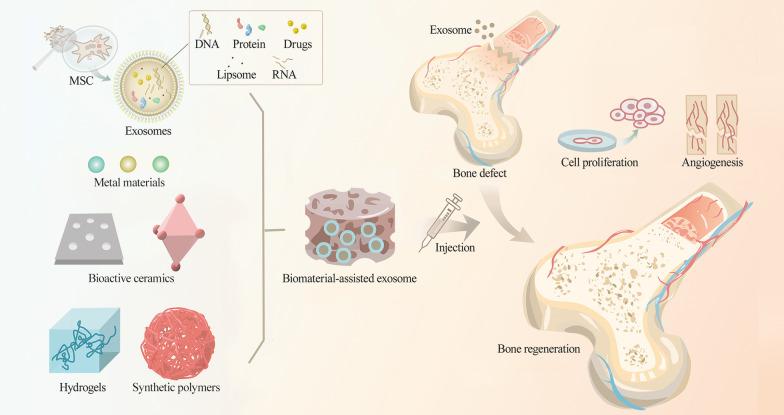
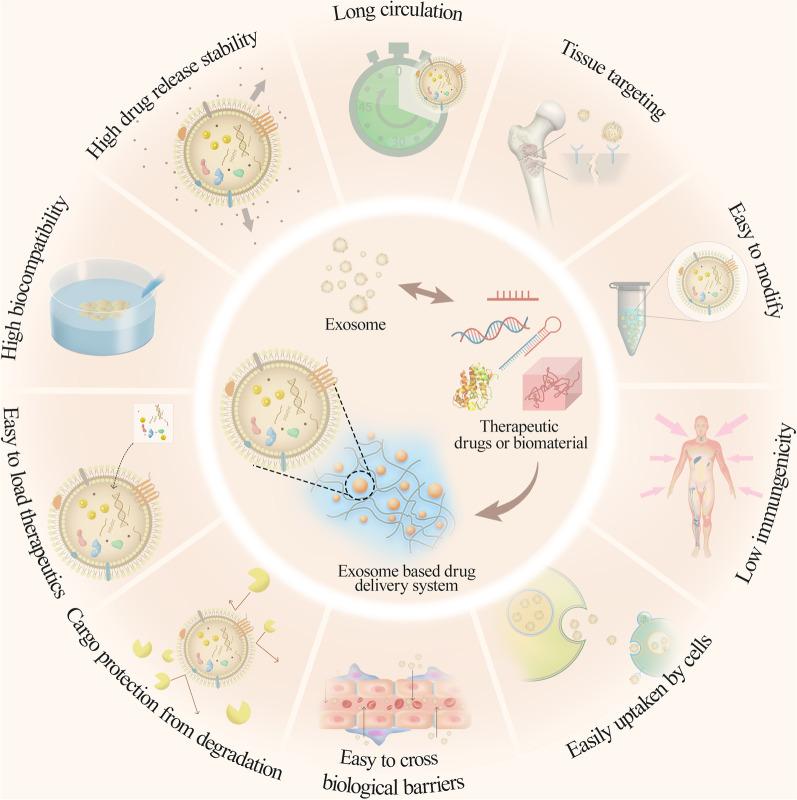
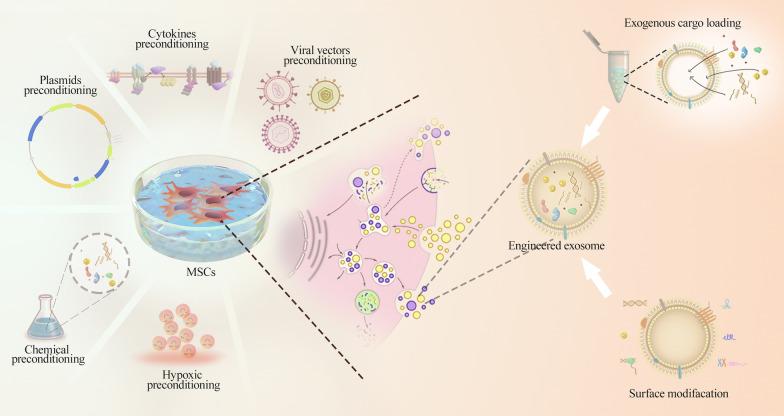
Mesenchymal stem cell-based therapy has become an effective therapeutic approach for bone regeneration. However, there are still limitations in successful clinical translation. Recently, the secretome of mesenchymal stem cells, especially exosome, plays a critical role in promoting bone repair and regeneration. Exosomes are nanosized, lipid bilayer-enclosed structures carrying proteins, lipids, RNAs, metabolites, growth factors, and cytokines and have attracted great attention for their potential application in bone regenerative medicine. In addition, preconditioning of parental cells and exosome engineering can enhance the regenerative potential of exosomes for treating bone defects. Moreover, with recent advancements in various biomaterials to enhance the therapeutic functions of exosomes, biomaterial-assisted exosomes have become a promising strategy for bone regeneration. This review discusses different insights regarding the roles of exosomes in bone regeneration and summarizes the applications of engineering exosomes and biomaterial-assisted exosomes as safe and versatile bone regeneration agent delivery platforms. The current hurdles of transitioning exosomes from bench to bedside are also discussed.
基于间充质干细胞的治疗方法已成为骨再生的有效治疗方法。然而,成功的临床转化仍然存在限制。最近,间充质干细胞的分泌组,特别是外泌体,在促进骨修复和再生方面发挥着关键作用。外泌体是纳米大小的、双层脂质包裹的结构,携带蛋白质、脂质、RNA、代谢物、生长因子和细胞因子,因其在骨再生医学中的潜在应用而受到广泛关注。此外,亲本细胞的预处理和外泌体工程可以增强外泌体治疗骨缺损的再生潜力。此外,随着各种生物材料在增强外泌体治疗功能方面的最新进展,生物材料辅助外泌体已成为骨再生的一种有前途的策略。本综述讨论了外泌体在骨再生中的作用的不同见解,并总结了工程外泌体和生物材料辅助外泌体作为安全且多功能的骨再生剂递药平台的应用。还讨论了将外泌体从实验室过渡到临床的当前障碍。
 Zotero 插件