
评估虚拟现实技术对头颈癌患者视觉空间记忆的刺激效果——初步研究
Evaluating the Effectiveness of Visuospatial Memory Stimulation Using Virtual Reality in Head and Neck Cancer Patients-Pilot Study.
作者信息
Serweta-Pawlik Anna, Lachowicz Maciej, Żurek Alina, Rosen Bill, Żurek Grzegorz
机构信息
Department of Physiotherapy, Wroclaw University of Health and Sport Sciences, J. I. Paderewskiego 35, 51-612 Wroclaw, Poland.
Department of Biostructure, Wroclaw University of Health and Sport Sciences, J. I. Paderewskiego 35, 51-612 Wroclaw, Poland.
出版信息
Cancers (Basel). 2023 Mar 7;15(6):1639. doi: 10.3390/cancers15061639.
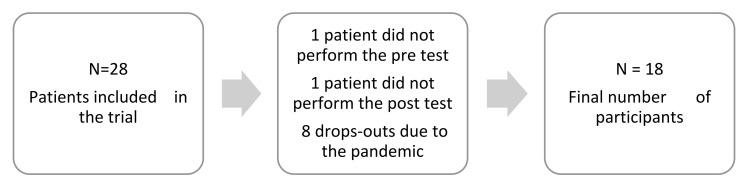
The prevalence of Cancer-related Cognitive Impairment (CRCI) in cancer patients necessitates the search for methods to help stimulate cognitive function. An innovative and repeatedly used method in oncology departments is virtual reality (VR). To date, no one has used VR for head and neck cancer patients in an attempt to stimulate their working memory. The goal of our research is to intervene with off-the-shelf VR applications in HNC patients to lower the risk of CRCI. Twenty-two patients with head and neck cancer were enrolled in this pilot study to characterize their visuospatial memory capacity, a form of working memory. During the oncological treatment, the patient had 30 min sessions, three times a week, using publicly available applications of VR. No significant changes were observed in the pre- and post-study. The individual patient results present a favorable trend of changes in their working memory after the intervention: despite oncological treatment, visual-spatial memory did not deteriorate in 88% of patients, including 28% of patients with higher scores than before the intervention. In this pilot study, VR was safely used in patients with head and neck cancer with no negative side effects. The use of VR may prevent CRCI in most HNC patients and, in some, VR may improve their cognitive functioning. A more rigorous study with larger numbers and controls is advised.
癌症患者中与癌症相关的认知障碍(CRCI)的患病率促使人们寻找有助于刺激认知功能的方法。肿瘤科室一种创新且反复使用的方法是虚拟现实(VR)。迄今为止,还没有人将VR用于头颈癌患者以试图刺激他们的工作记忆。我们研究的目标是对头颈癌患者使用现成的VR应用进行干预,以降低CRCI的风险。22名头颈癌患者参与了这项试点研究,以评估他们的视觉空间记忆能力,这是工作记忆的一种形式。在肿瘤治疗期间,患者每周三次,每次30分钟使用公开可用的VR应用。研究前后未观察到显著变化。个体患者的结果显示干预后他们的工作记忆有变化的有利趋势:尽管进行了肿瘤治疗,但88%的患者视觉空间记忆没有恶化,其中28%的患者得分高于干预前。在这项试点研究中,VR在头颈癌患者中安全使用,没有负面副作用。VR的使用可能会预防大多数头颈癌患者的CRCI,在一些患者中,VR可能会改善他们的认知功能。建议进行一项更严格、样本量更大且有对照的研究。
 Zotero 插件