
重新审视Syndecans:乳腺癌中具有预后和可靶向治疗价值的主要信号调节因子
Revisiting the Syndecans: Master Signaling Regulators with Prognostic and Targetable Therapeutic Values in Breast Carcinoma.
作者信息
Motta Juliana Maria, Hassan Hebatallah, Ibrahim Sherif Abdelaziz
机构信息
Instituto de Bioquímica Médica Leopoldo de Meis, Hospital Universitário Clementino Fraga Filho, Universidade Federal do Rio de Janeiro, Rio de Janeiro 21941, Brazil.
Department of Zoology, Faculty of Science, Cairo University, Giza 12613, Egypt.
出版信息
Cancers (Basel). 2023 Mar 16;15(6):1794. doi: 10.3390/cancers15061794.
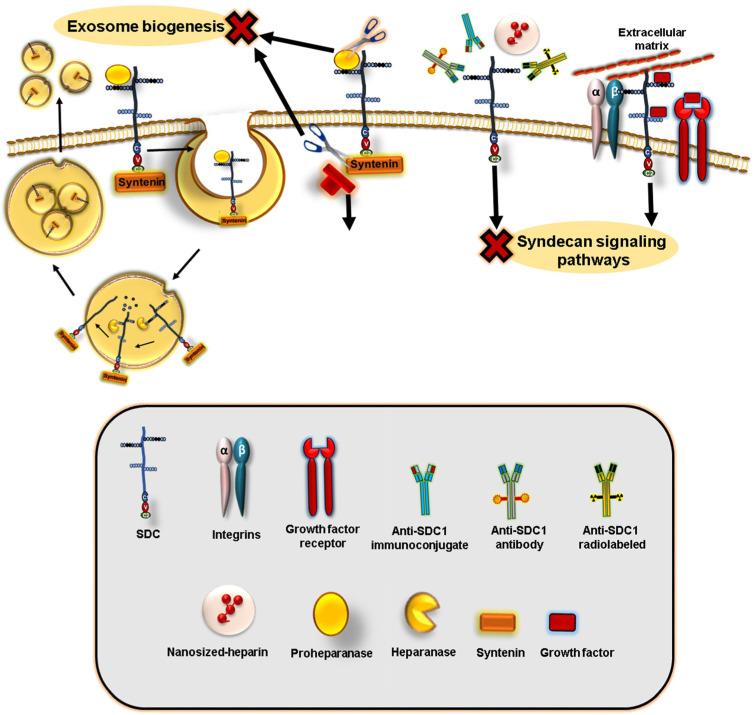
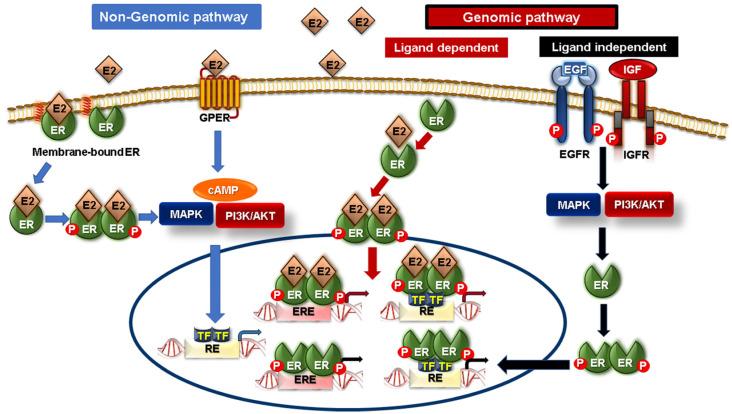
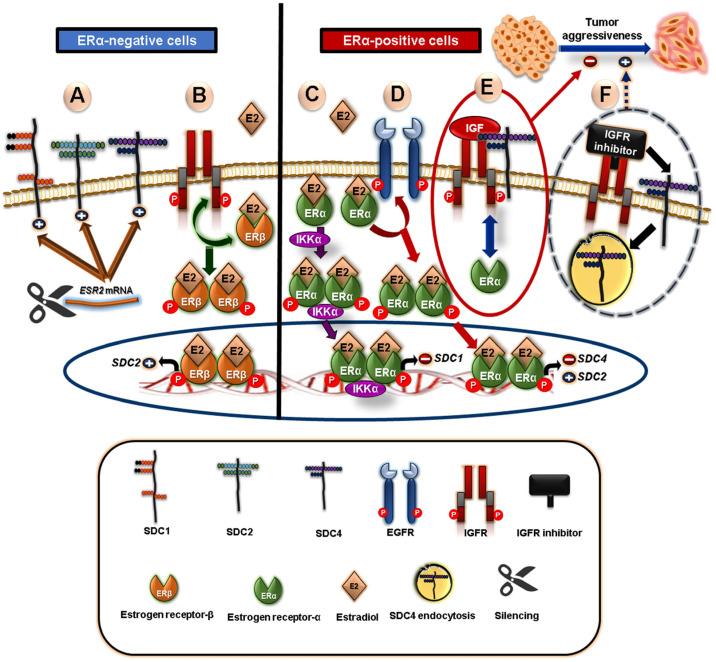
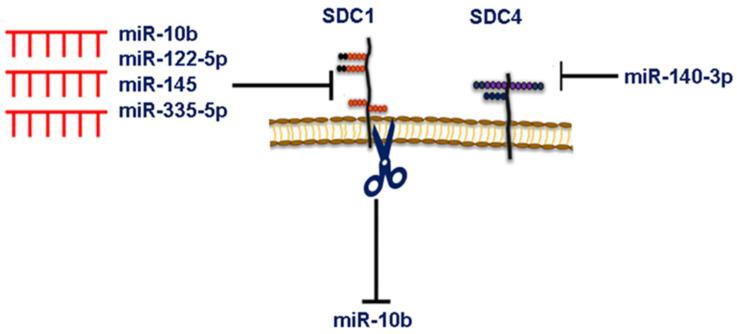
Syndecans (SDC1 to 4), a family of cell surface heparan sulfate proteoglycans, are frequently expressed in mammalian tissues. SDCs are aberrantly expressed either on tumor or stromal cells, influencing cancer initiation and progression through their pleiotropic role in different signaling pathways relevant to proliferation, cell-matrix adhesion, migration, invasion, metastasis, cancer stemness, and angiogenesis. In this review, we discuss the key roles of SDCs in the pathogenesis of breast cancer, the most common malignancy in females worldwide, focusing on the prognostic significance and molecular regulators of SDC expression and localization in either breast tumor tissue or its microenvironmental cells and the SDC-dependent epithelial-mesenchymal transition program. This review also highlights the molecular mechanisms underlying the roles of SDCs in regulating breast cancer cell behavior via modulation of nuclear hormone receptor signaling, microRNA expression, and exosome biogenesis and functions, as well as summarizing the potential of SDCs as promising candidate targets for therapeutic strategies against breast cancer.
Syndecans(SDC1至4)是一类细胞表面硫酸乙酰肝素蛋白聚糖家族,在哺乳动物组织中经常表达。SDCs在肿瘤细胞或基质细胞上异常表达,通过其在与增殖、细胞-基质黏附、迁移、侵袭、转移、癌症干性和血管生成相关的不同信号通路中的多效性作用,影响癌症的发生和发展。在本综述中,我们讨论了SDCs在乳腺癌(全球女性中最常见的恶性肿瘤)发病机制中的关键作用,重点关注SDC在乳腺肿瘤组织或其微环境细胞中的表达和定位的预后意义及分子调节因子,以及SDC依赖的上皮-间质转化程序。本综述还强调了SDCs通过调节核激素受体信号传导、微小RNA表达以及外泌体生物发生和功能来调控乳腺癌细胞行为的分子机制,并总结了SDCs作为乳腺癌治疗策略有前景的候选靶点的潜力。
 Zotero 插件