
毒理学方面、安全性评估和绿色毒理学的银纳米粒子(AgNPs)- 批判性评论:最新技术。
Toxicological Aspects, Safety Assessment, and Green Toxicology of Silver Nanoparticles (AgNPs)-Critical Review: State of the Art.
机构信息
Department of Regulatory and Forensic Toxicology, Institute of Medical Expertise, Łódź, ul. Aleksandrowska 67/93, 91-205 Łódź, Poland.
Laboratory of Innovative Toxicological Research and Analyses, Institute of Medical Studies, Medical College, Rzeszów University, Al. mjr. W. Kopisto 2a, 35-959 Rzeszów, Poland.
出版信息
Int J Mol Sci. 2023 Mar 7;24(6):5133. doi: 10.3390/ijms24065133.
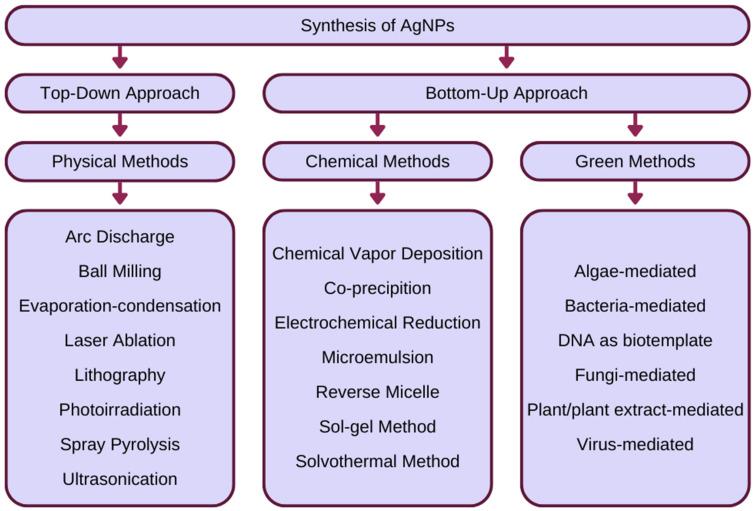
In recent years, research on silver nanoparticles (AgNPs) has attracted considerable interest among scientists because of, among other things, their alternative application to well-known medical agents with antibacterial properties. The size of the silver nanoparticles ranges from 1 to 100 nm. In this paper, we review the progress of research on AgNPs with respect to the synthesis, applications, and toxicological safety of AgNPs, and the issue of in vivo and in vitro research on silver nanoparticles. AgNPs' synthesis methods include physical, chemical, and biological routes, as well as "green synthesis". The content of this article covers issues related to the disadvantages of physical and chemical methods, which are expensive and can also have toxicity. This review pays special attention to AgNP biosafety concerns, such as potential toxicity to cells, tissues, and organs.
近年来,由于银纳米粒子(AgNPs)具有替代传统具有抗菌性能的医学制剂的应用潜力,因此引起了科学家们的广泛关注。AgNPs 的粒径范围为 1 至 100nm。本文综述了 AgNPs 的研究进展,包括 AgNPs 的合成、应用、毒理学安全性,以及体内和体外研究银纳米粒子的问题。AgNPs 的合成方法包括物理、化学和生物途径,以及“绿色合成”。本文涵盖了与物理和化学方法昂贵且可能有毒的缺点相关的问题。本文特别关注 AgNP 生物安全性问题,如对细胞、组织和器官的潜在毒性。
 Zotero 插件