
Toll样受体4/炎症小体相互作用及细胞焦亡在N-乙酰半胱氨酸和绿原酸对顺铂诱导肾毒性的保护作用中发挥作用
TLR4/Inflammasomes Cross-Talk and Pyroptosis Contribute to N-Acetyl Cysteine and Chlorogenic Acid Protection against Cisplatin-Induced Nephrotoxicity.
作者信息
Badr Amira M, Al-Kharashi Layla A, Attia Hala, Alshehri Samiyah, Alajami Hanaa N, Ali Rehab A, Mahran Yasmen F
机构信息
Department of Pharmacology and Toxicology, College of Pharmacy, King Saud University, Riyadh 11211, Saudi Arabia.
Department of Pharmacology & Toxicology, Faculty of Pharmacy, Ain Shams University, Cairo 11566, Egypt.
出版信息
Pharmaceuticals (Basel). 2023 Feb 22;16(3):337. doi: 10.3390/ph16030337.
BACKGROUND
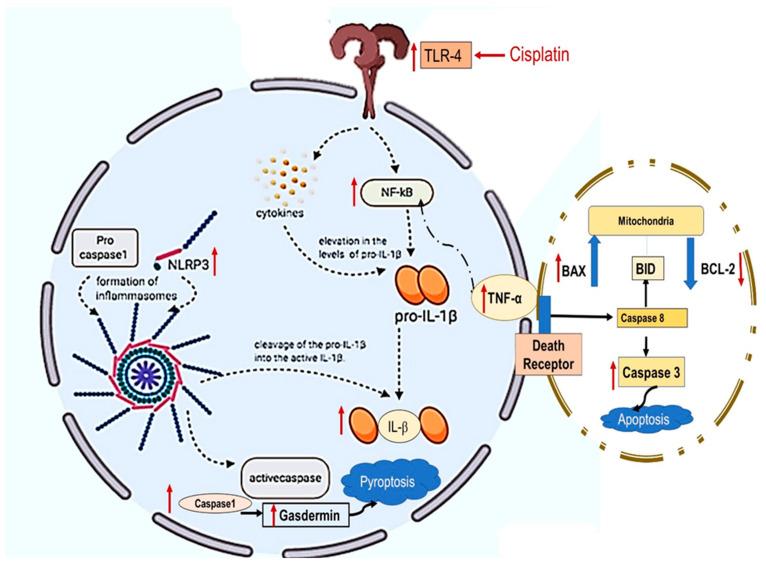
Cisplatin (Cp) is an antineoplastic agent with a dose-limiting nephrotoxicity. Cp-induced nephrotoxicity is characterized by the interplay of oxidative stress, inflammation, and apoptosis. Toll-4 receptors (TLR4) and NLPR3 inflammasome are pattern-recognition receptors responsible for activating inflammatory responses and are assigned to play a significant role with gasdermin (GSDMD) in acute kidney injuries. N-acetylcysteine (NAC) and chlorogenic acid (CGA) have documented nephroprotective effects by suppressing oxidative and inflammatory pathways. Therefore, the current study aimed to investigate the contribution of the upregulation of TLR4/inflammasomes/gasdermin signaling to Cp-induced nephrotoxicity and their modulation by NAC or CGA.
METHODS
A single injection of Cp (7 mg/kg, i.p.) was given to Wistar rats. Rats received either NAC (250 mg/kg, p.o.) and/or CGA (20 mg/kg, p.o.) one week before and after the Cp injection.
RESULTS
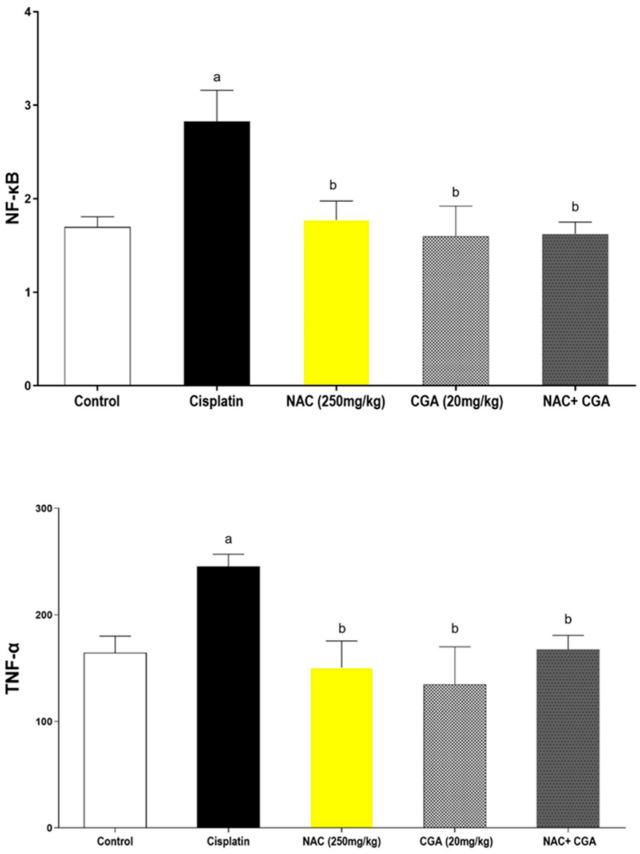
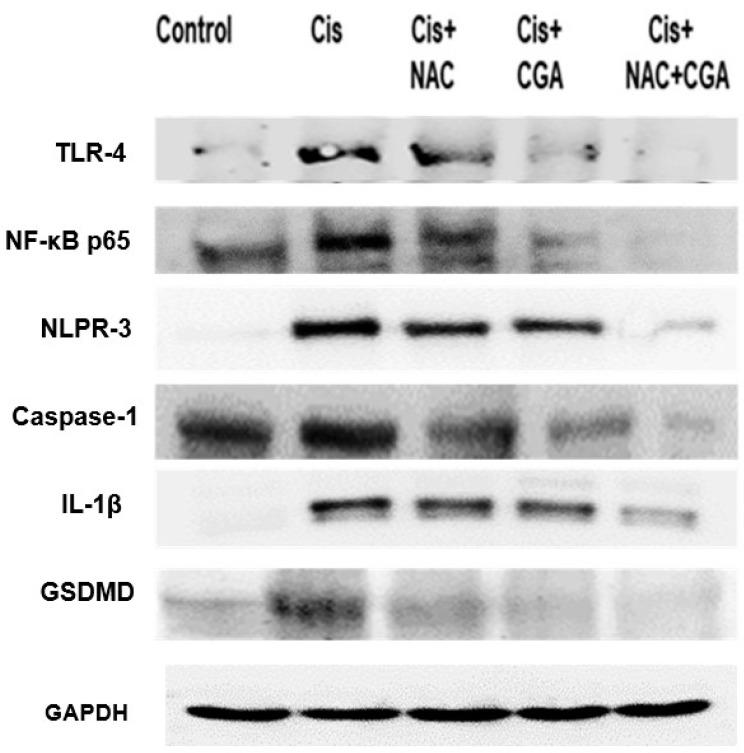
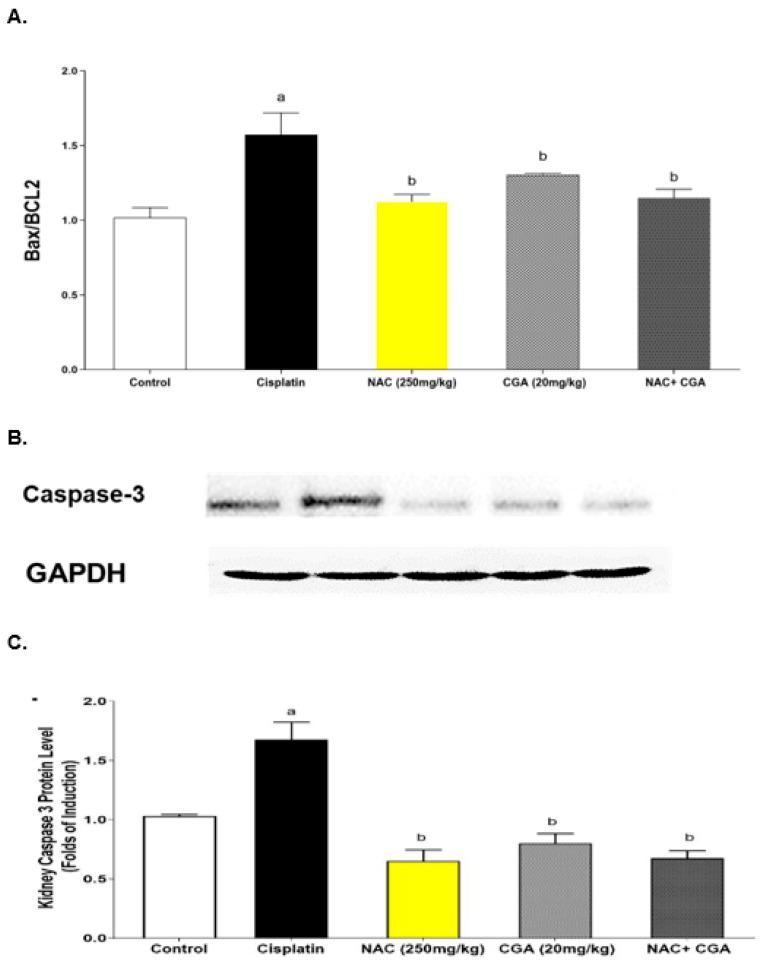
Cp-induced acute nephrotoxicity was evident by the increased blood urea nitrogen and serum creatinine and histopathological insults. Additionally, nephrotoxicity was associated with increased lipid peroxidation, reduced antioxidants, and elevated levels of inflammatory markers (NF-κB and TNF-α) in the kidney tissues. Moreover, Cp upregulated both TLR4/NLPR3/interleukin-1beta (IL-1β) and caspase-1/GSDMD-signaling pathways, accompanied by an increased Bax/BCL-2 ratio, indicating an inflammatory-mediated apoptosis. Both NAC and/or CGA significantly corrected these changes.
CONCLUSIONS
This study emphasizes that inhibition of TLR4/NLPR3/IL-1β/GSDMD might be a novel mechanism of the nephroprotective effects of NAC or CGA against Cp-induced nephrotoxicity in rats.
背景
顺铂(Cp)是一种具有剂量限制性肾毒性的抗肿瘤药物。Cp诱导的肾毒性的特征是氧化应激、炎症和细胞凋亡之间的相互作用。Toll样受体4(TLR4)和NLRP3炎性小体是负责激活炎症反应的模式识别受体,并被认为在急性肾损伤中与gasdermin(GSDMD)一起发挥重要作用。N-乙酰半胱氨酸(NAC)和绿原酸(CGA)已被证明通过抑制氧化和炎症途径具有肾保护作用。因此,本研究旨在探讨TLR4/炎性小体/GSDMD信号上调对Cp诱导的肾毒性的作用及其被NAC或CGA的调节作用。
方法
给Wistar大鼠单次腹腔注射Cp(7mg/kg)。大鼠在注射Cp前一周和后一周接受NAC(250mg/kg,口服)和/或CGA(20mg/kg,口服)。
结果
Cp诱导的急性肾毒性表现为血尿素氮和血清肌酐升高以及组织病理学损伤。此外,肾毒性与肾组织中脂质过氧化增加、抗氧化剂减少以及炎症标志物(NF-κB和TNF-α)水平升高有关。此外,Cp上调了TLR4/NLRP3/白细胞介素-1β(IL-1β)和半胱天冬酶-1/GSDMD信号通路,同时Bax/BCL-2比值增加,表明存在炎症介导的细胞凋亡。NAC和/或CGA均显著纠正了这些变化。
结论
本研究强调,抑制TLR4/NLRP3/IL-1β/GSDMD可能是NAC或CGA对大鼠Cp诱导的肾毒性具有肾保护作用的新机制。



 Zotero 插件