
负载蜗牛壳纳米颗粒和甘蔗渣纤维素纤维的聚乳酸生物塑料薄膜的热稳定性和吸水性评估及优化
Assessment and Optimization of Thermal Stability and Water Absorption of Loading Snail Shell Nanoparticles and Sugarcane Bagasse Cellulose Fibers on Polylactic Acid Bioplastic Films.
作者信息
Gbadeyan Oluwatoyin J, Linganiso Linda Z, Deenadayalu Nirmala
机构信息
Green Engineering Research Focus Area, Faculty of Engineering and Built Environment, Durban University of Technology, Durban 4001, South Africa.
Department of Chemistry, Durban University of Technology, Durban 4001, South Africa.
出版信息
Polymers (Basel). 2023 Mar 21;15(6):1557. doi: 10.3390/polym15061557.
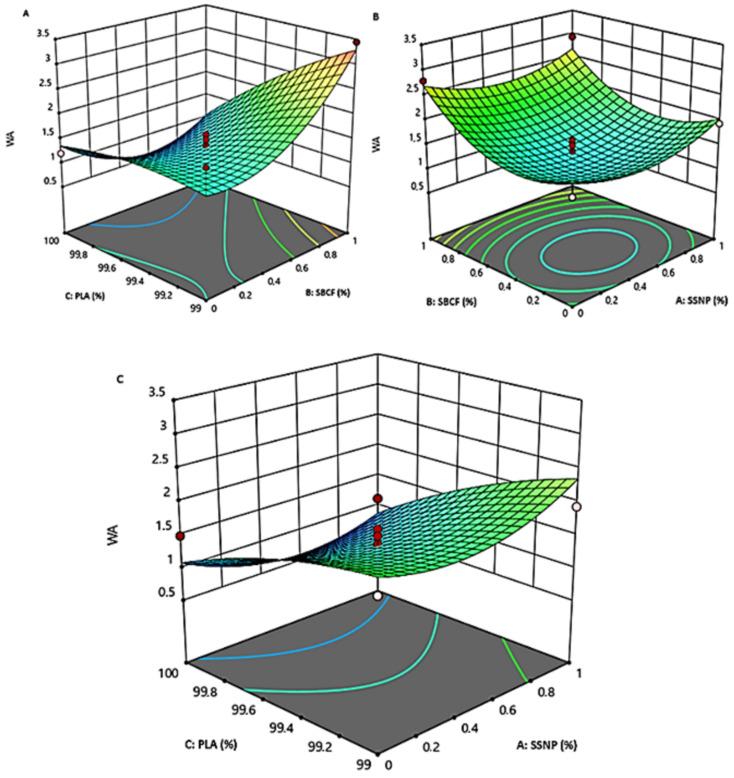
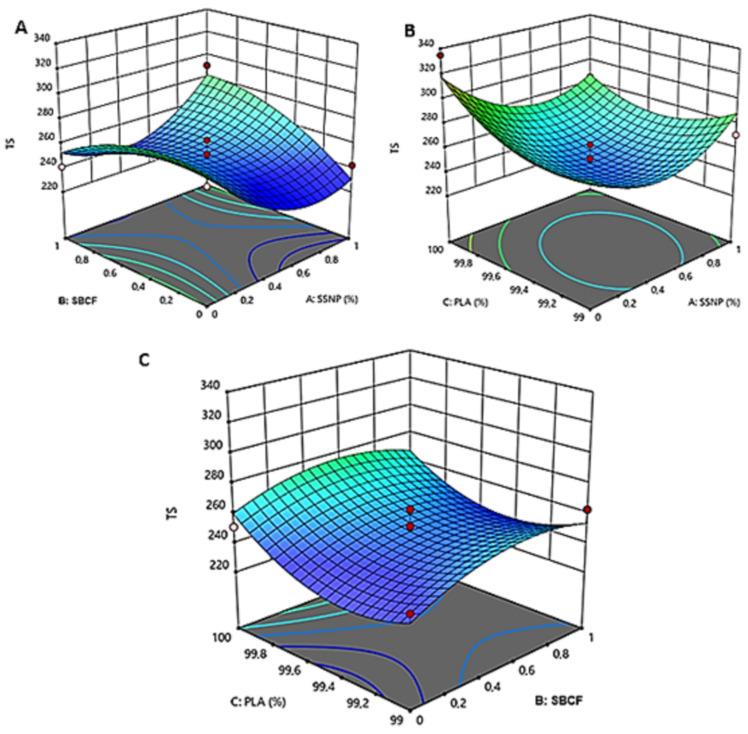
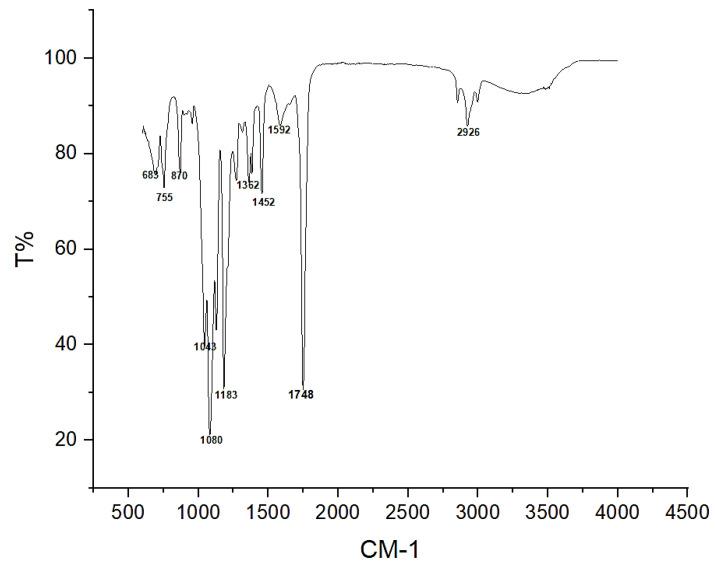
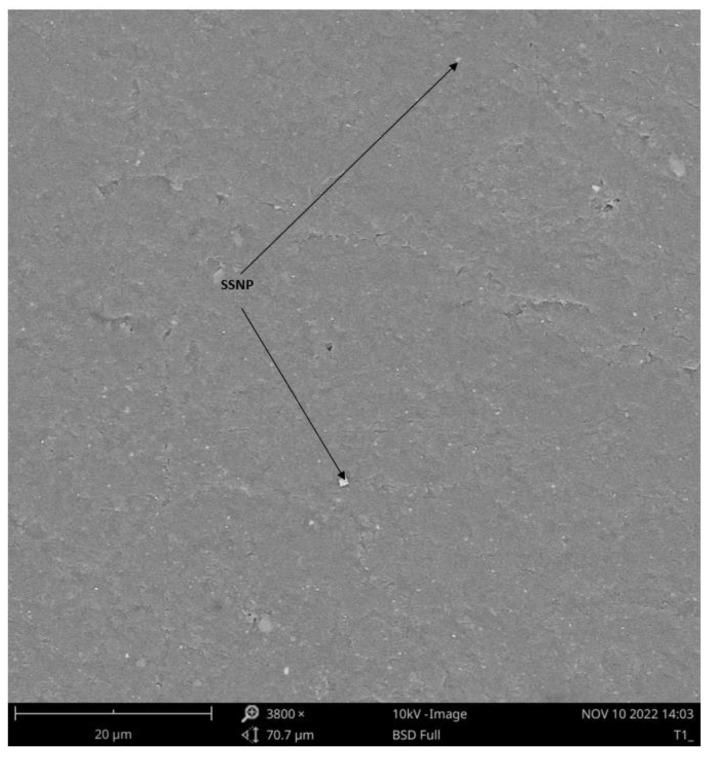
The optimization and modeling of the parameters, the concentration of polylactic acid (PLA), sugarcane bagasse cellulose fibers (SBCF), and snail shell nanoparticles (SSNP), were investigated for the development of bioplastic films. With the aid of the Box-Behnken experimental design, response surface methodology was used to assess the consequence of the parameters on the water absorption and thermal stability of fabricated bioplastic films. Varied water absorption and thermal stability with different component loading were obtained, evidencing the loading effect of snail shell nanoparticles and sugar bagasse cellulose fibers on bioplastic film's water absorption and thermal stability. The quadratic polynomial model experiment data offered a coefficient of determination (R) of 0.8422 for water absorption and 0.8318 for thermal stability, verifying the models' fitness to develop optimal concentration. The predicted optimal parameters were polylactic acid (99.815%), sugarcane bagasse cellulose fibers (0.036%), and snail shell nanoparticles (0.634%). The bioplastic developed with optimized concentrations of each component exhibited water absorption and thermal stability of 0.45% and 259.7 °C, respectively. The FTIR curves of bioplastic films show oxygen stretching in-plane carbon and single-bonded hydroxyl bending in the carboxylic acids functional group. SEM and TEM images of the bioplastic showed dispersion of the nanoparticles in the matrix, where SSNP is more visible than SBCF, which may be due to the lesser loading of SBCF. The improved properties suggest an optimum concentration of naturally sourced resources for developing bioplastic, which may be used for food and drug packaging for delivery.
为了开发生物塑料薄膜,研究了聚乳酸(PLA)、甘蔗渣纤维素纤维(SBCF)和蜗牛壳纳米颗粒(SSNP)的参数优化及建模。借助Box-Behnken实验设计,采用响应面法评估各参数对制备的生物塑料薄膜吸水性和热稳定性的影响。不同组分负载下获得了不同的吸水性和热稳定性,证明了蜗牛壳纳米颗粒和甘蔗渣纤维素纤维对生物塑料薄膜吸水性和热稳定性的负载效应。二次多项式模型实验数据给出了吸水性的决定系数(R)为0.8422,热稳定性的决定系数为0.8318,验证了模型对确定最佳浓度的适用性。预测的最佳参数为聚乳酸(99.815%)、甘蔗渣纤维素纤维(0.036%)和蜗牛壳纳米颗粒(0.634%)。用各组分优化浓度制备的生物塑料的吸水性和热稳定性分别为0.45%和259.7℃。生物塑料薄膜的FTIR曲线显示了羧酸官能团中面内碳氧伸缩和单键羟基弯曲。生物塑料的SEM和TEM图像显示纳米颗粒在基质中分散,其中SSNP比SBCF更明显,这可能是由于SBCF的负载量较少。这些改进的性能表明,开发生物塑料时天然来源资源存在最佳浓度,可用于食品和药物包装。


 Zotero 插件