
在 COVID-19 大流行期间,革兰氏阴性 ESKAPE 细菌血流感染患者。
Gram-negative ESKAPE bacteria bloodstream infections in patients during the COVID-19 pandemic.
机构信息
Unidad de Investigación en Medicina Experimental, Facultad de Medicina, Universidad Nacional Autónoma de México, Ciudad de México, Ciudad de México, Mexico.
Laboratorio de Bacteriología Médica, Escuela Nacional de Ciencias Biológicas, Instituto Politécnico Nacional, Ciudad de México, Ciudad de México, Mexico.
出版信息
PeerJ. 2023 Mar 29;11:e15007. doi: 10.7717/peerj.15007. eCollection 2023.
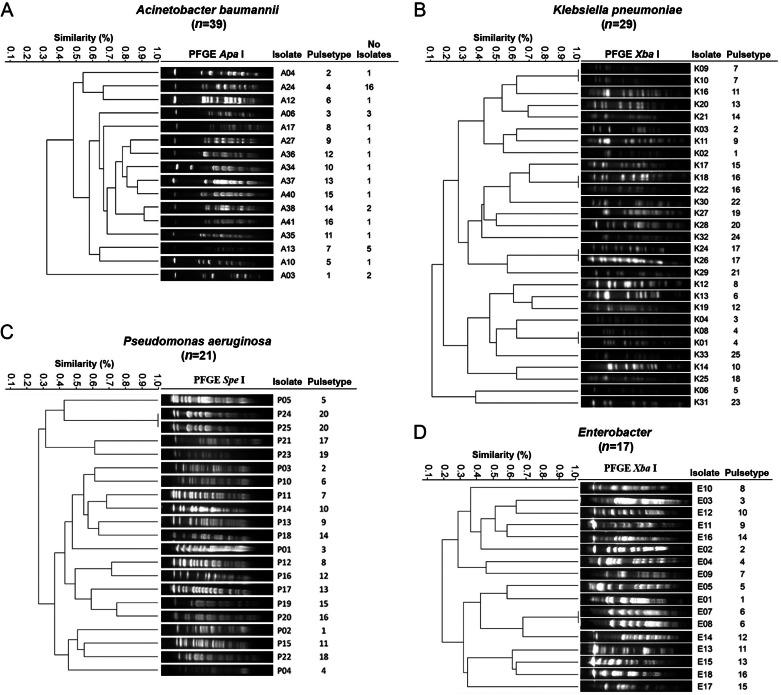
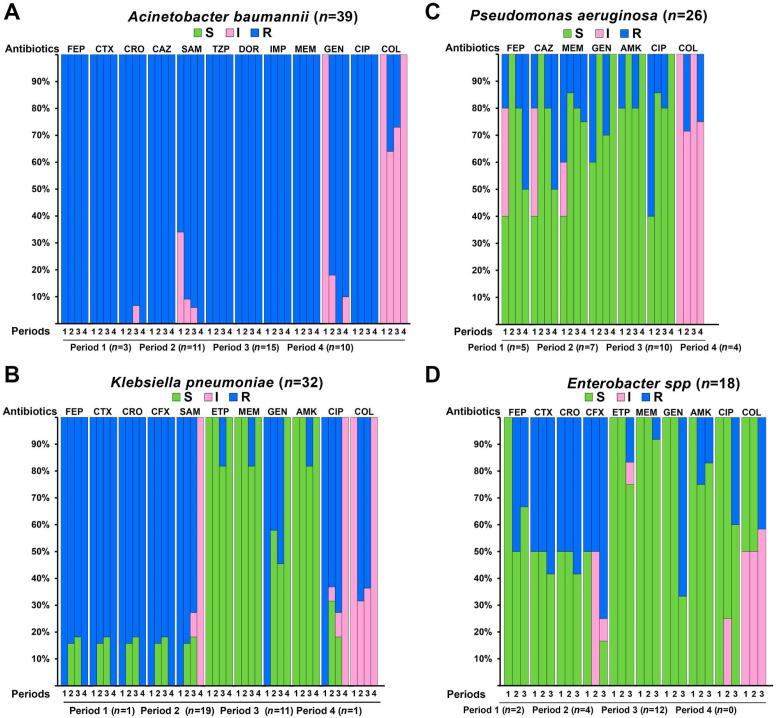
Bloodstream infections due to bacteria are a highly consequential nosocomial occurrences and the organisms responsible for them are usually multidrug-resistant. The aims of this study were to describe the incidence of bacteremia caused by Gram-negative ESKAPE bacilli during the COVID-19 pandemic and characterize the clinical and microbiological findings including antimicrobial resistance. A total of 115 Gram-negative ESKAPE isolates were collected from patients with nosocomial bacteremia (18% of the total bacteremias) in a tertiary care center in Mexico City from February 2020 to January 2021. These isolates were more frequently derived from the Respiratory Diseases Ward (27), followed by the Neurosurgery (12), Intensive Care Unit (11), Internal Medicine (11), and Infectious Diseases Unit (7). The most frequently isolated bacteria were (34%), followed by (28%), (23%) and spp (16%). showed the highest levels of multidrug-resistance (100%), followed by (87%), spp (34%) and (20%). The and genes were identified in all beta-lactam-resistant (27), while was found in 84.6% (33/39) of isolates. The carbapenemase gene was predominant among carbapenem-resistant (74%, 29/39) and was detected in four isolates. One isolate was gene carrier, while two and one spp were gene carriers. Among colistin-resistant isolates gene was not detected. Clonal diversity was observed in , and spp. Two outbreaks caused by ST208 and ST369 were detected, both belonging to the clonal complex CC92 and IC2. was associated with a death rate of 72% (28/32), most of them (86%, 24/28) extensively drug-resistant or pandrug-resistant isolates, mainly in patients with COVID-19 (86%, 24/28) in the Respiratory Diseases Ward. isolates had a higher mortality rate (72%), which was higher in patients with COVID-19. There was no statistically significant association between the multidrug-resistant profile in Gram-negative ESKAPE bacilli and COVID-19 disease. The results point to the important role of multidrug-resistant Gram-negative ESKAPE bacteria causing bacteremia in nosocomial settings before and during the COVID-19 epidemic. Additionally, we were unable to identify a local impact of the COVID-19 pandemic on antimicrobial resistance rates, at least in the short term.
血流感染是一种严重的医源性感染,引起这些感染的病原体通常是多药耐药菌。本研究的目的是描述 COVID-19 大流行期间革兰氏阴性 ESKAPE 杆菌引起的菌血症的发生率,并描述临床和微生物学发现,包括抗菌药物耐药性。从 2020 年 2 月至 2021 年 1 月,在墨西哥城的一家三级护理中心,从医院获得性菌血症患者(占总菌血症的 18%)中收集了 115 株革兰氏阴性 ESKAPE 分离株。这些分离株主要来自呼吸疾病病房(27%),其次是神经外科(12%)、重症监护病房(11%)、内科(11%)和传染病科(7%)。最常分离的细菌是 (34%),其次是 (28%)、 (23%)和 spp(16%)。 显示出最高水平的多药耐药性(100%),其次是 (87%)、 spp(34%)和 (20%)。所有β-内酰胺类耐药 (27%)均检出 和 基因,而 基因在 84.6%(33/39)的 分离株中检出。碳青霉烯酶基因 在碳青霉烯类耐药 (74%,29/39)中占优势,在 4 株 中检出。一株 为 基因携带者,两株 和一株 spp为 基因携带者。在多粘菌素耐药分离株中未检测到 基因。在 、 和 spp 中观察到克隆多样性。检测到由 ST208 和 ST369 引起的两起暴发,均属于克隆复合体 CC92 和 IC2。 与 72%(28/32)的死亡率相关,其中大多数(86%,24/28)为广泛耐药或泛耐药分离株,主要为呼吸疾病病房的 COVID-19 患者(86%,24/28)。 分离株的死亡率较高(72%),COVID-19 患者死亡率更高。革兰氏阴性 ESKAPE 杆菌的多药耐药谱与 COVID-19 疾病之间无统计学显著关联。结果表明,在 COVID-19 大流行之前和期间,耐多药革兰氏阴性 ESKAPE 细菌引起的血流感染在医院环境中起着重要作用。此外,至少在短期内,我们无法确定 COVID-19 大流行对抗菌药物耐药率的本地影响。

 Zotero 插件