
产热脂肪组织在能量调节和代谢健康中的作用。
Thermogenic adipose tissue in energy regulation and metabolic health.
机构信息
Division of Nutritional Sciences, Cornell University, Ithaca, NY, United States.
出版信息
Front Endocrinol (Lausanne). 2023 Mar 20;14:1150059. doi: 10.3389/fendo.2023.1150059. eCollection 2023.
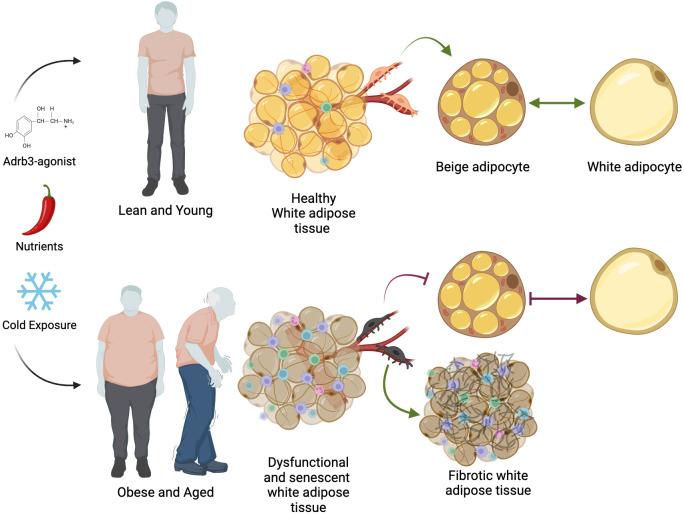
The ability to generate thermogenic fat could be a targeted therapy to thwart obesity and improve metabolic health. Brown and beige adipocytes are two types of thermogenic fat cells that regulate energy balance. Both adipocytes share common morphological, biochemical, and thermogenic properties. Yet, recent evidence suggests unique features exist between brown and beige adipocytes, such as their cellular origin and thermogenic regulatory processes. Beige adipocytes also appear highly plastic, responding to environmental stimuli and interconverting between beige and white adipocyte states. Additionally, beige adipocytes appear to be metabolically heterogenic and have substrate specificity. Nevertheless, obese and aged individuals cannot develop beige adipocytes in response to thermogenic fat-inducers, creating a key clinical hurdle to their therapeutic promise. Thus, elucidating the underlying developmental, molecular, and functional mechanisms that govern thermogenic fat cells will improve our understanding of systemic energy regulation and strive for new targeted therapies to generate thermogenic fat. This review will examine the recent advances in thermogenic fat biogenesis, molecular regulation, and the potential mechanisms for their failure.
产生生热脂肪的能力可能成为一种靶向治疗方法,以阻止肥胖并改善代谢健康。棕色和米色脂肪细胞是两种调节能量平衡的生热脂肪细胞。这两种脂肪细胞具有共同的形态、生化和生热特性。然而,最近的证据表明,棕色和米色脂肪细胞之间存在独特的特征,例如它们的细胞起源和生热调节过程。米色脂肪细胞似乎也具有高度的可塑性,能够对环境刺激做出反应,并在米色和白色脂肪细胞状态之间相互转化。此外,米色脂肪细胞似乎在代谢上具有异质性,并且具有底物特异性。然而,肥胖和老年个体不能对生热脂肪诱导剂产生米色脂肪细胞,这给它们的治疗前景带来了关键的临床障碍。因此,阐明控制生热脂肪细胞的潜在发育、分子和功能机制将提高我们对全身能量调节的理解,并努力开发新的靶向治疗方法来产生生热脂肪。本综述将探讨生热脂肪发生、分子调控的最新进展,以及它们失败的潜在机制。


 Zotero 插件