
分化中的人脂肪来源的成人间充质干细胞中的神经源性标志物表达
Neurogenic marker expression in differentiating human adipose derived adult mesenchymal stem cells.
作者信息
Pelegri Neus Gomila, Milthorpe Bruce K, Gorrie Catherine A, Santos Jerran
机构信息
Advanced Tissue Engineering and Stem Cell Biology Group, School of Life Sciences, University of Technology Sydney, Sydney, NSW, Australia.
Neural Injury Research Unit, School of Life Sciences, University of Technology Sydney, Sydney, NSW, Australia.
出版信息
Stem Cell Investig. 2023 Mar 23;10:7. doi: 10.21037/sci-2022-015. eCollection 2023.
BACKGROUND
Adipose-derived stem cells (ADSCs) are increasingly utilised in the field of neural regeneration due to their high accessibility and capacity for differentiation into neural like cells. Culturing ADSCs in the presence of various growth factors, small molecules and combinations thereof have shown promise in this regard; however, these protocols are generally complex, time-consuming and costly. The need for commercially available and chemically defined growth media/supplements is required to facilitate further developments in this area.
METHODS
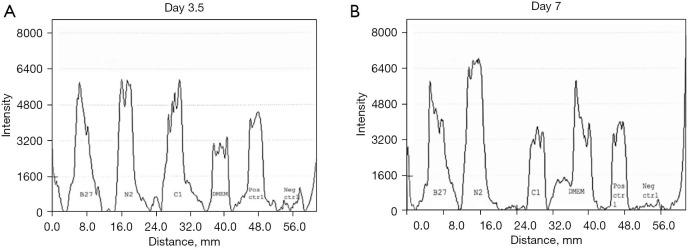
In this study, we have examined the neural differentiation and proliferation potential of the commercially available supplements B27, CultureOne (C1) and N2 on human ADSCs (hADSCs). Through a combination of immunocytochemistry, cytokine analysis, and CNPase enzymatic assays, we provide novel insight into the neural differentiation effects of B27, C1 and N2 on hADSCs.
RESULTS
The study found that C1 and N2 supplements initiated neural differentiation of the cells, with C1 pushing differentiation towards an oligodendrocytic lineage and N2 initiating neuronal differentiation. This suggests that C1 and N2 supplements can be used to drive neural differentiation in hADSCs. However, B27 did not show significant differentiation in the time frame in which the experiments took place and therefore is unsuitable for this purpose.
CONCLUSIONS
These findings highlight the utility of commercially available supplements in the neural differentiation of ADSCs and may assist in establishing simpler, more affordable differentiation protocols.
背景
脂肪来源干细胞(ADSCs)因其易于获取且具有分化为神经样细胞的能力,在神经再生领域的应用越来越广泛。在各种生长因子、小分子及其组合存在的情况下培养ADSCs在这方面已显示出前景;然而,这些方案通常复杂、耗时且成本高昂。需要有市售的、化学成分明确的生长培养基/补充剂来推动该领域的进一步发展。
方法
在本研究中,我们检测了市售补充剂B27、CultureOne(C1)和N2对人ADSCs(hADSCs)的神经分化和增殖潜力。通过免疫细胞化学、细胞因子分析和CNPase酶活性测定相结合的方法,我们对B27、C1和N2对hADSCs的神经分化作用提供了新的见解。
结果
研究发现,C1和N2补充剂启动了细胞的神经分化,C1促使分化向少突胶质细胞谱系发展,N2启动神经元分化。这表明C1和N2补充剂可用于驱动hADSCs的神经分化。然而,在实验进行的时间范围内,B27未显示出明显的分化,因此不适合用于此目的。
结论
这些发现突出了市售补充剂在ADSCs神经分化中的作用,并可能有助于建立更简单、更经济的分化方案。


 Zotero 插件