
鉴定 GPD1L 为肺腺癌的一个潜在预后生物标志物,并与免疫浸润有关。
Identification of GPD1L as a Potential Prognosis Biomarker and Associated with Immune Infiltrates in Lung Adenocarcinoma.
机构信息
Department of Cardiothoracic Surgery, Shanghai Sixth People's Hospital Affiliated to Shanghai Jiao Tong University School of Medicine, Shanghai, China.
Department of Oncology, Shanghai Sixth People's Hospital Affiliated to Shanghai Jiao Tong University School of Medicine, Shanghai, China.
出版信息
Mediators Inflamm. 2023 Mar 30;2023:9162249. doi: 10.1155/2023/9162249. eCollection 2023.
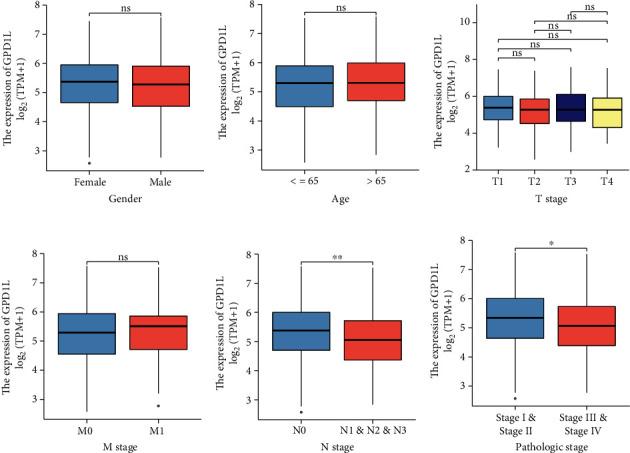
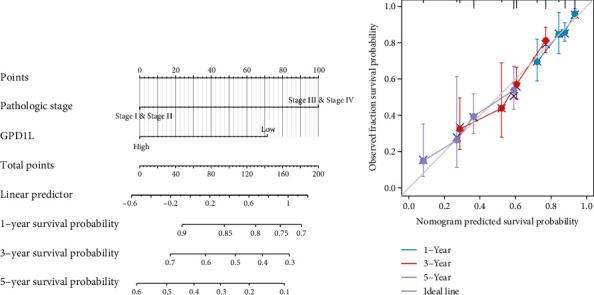
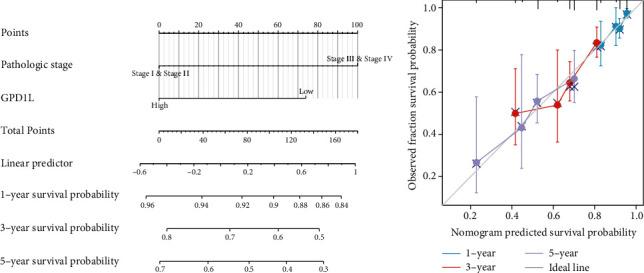
Lung adenocarcinoma (LUAD) is one of the most prevalent pathological kinds of lung cancer, which is a common form of cancer that has a high death rate. Over the past several years, growing studies have indicated that GPD1L was involved in the advancement of a number of different cancers. However, its clinical significance in LUAD has not been investigated. In this study, following an examination of the TGCA datasets, we found that GPD1L displayed a dysregulated state in a wide variety of cancers; this led us to believe that GPD1L is an essential regulator in the progression of malignancies. In addition, we found that the expression of GPD1L was much lower in LUAD tissues when compared with nontumor specimens. According to the findings of ROC tests, GPD1L was able to effectively identify LUAD specimens from nontumor samples with an AUC value of 0.828 (95% confidence interval: 0.793 to 0.863). On the basis of the clinical study, a low expression of GPD1L was clearly related with both the N stage and the clinical stage. Moreover, based on the findings of a Kaplan-Meier survival study, elevated GPD1L expression was a strong indicator of considerably improved overall survival (OS) and disease-specific survival (DSS). GPD1L expression and clinical stages were found to be independent prognostic indicators for overall survival and disease-free survival in LUAD patients, according to multivariate analyses. Based on multivariate analysis, the C-indexes and calibration plots of the nomogram demonstrated an effective prediction performance for LUAD patients. Besides, the expression of GPD1L was positively related to mast cells, eosinophils, Tcm, TFH, iDC, DC, and macrophages, while negatively associated with Th2 cells, NK CD56dim cells, Tgd, Treg, and neutrophils. Finally, qRT-PCR was able to demonstrate that GPD1L had a significant amount of expression in LUAD. Additionally, according to the results of functional tests, overexpression of GPD1L had a significant inhibiting effect on the proliferation of LUAD cells. In general, the results of our study suggested that GPD1L had the potential to serve as a diagnostic and prognostic marker for LUAD.
肺腺癌 (LUAD) 是最常见的肺癌病理类型之一,是一种常见的高死亡率癌症。近年来,越来越多的研究表明 GPD1L 参与了多种癌症的进展。然而,其在 LUAD 中的临床意义尚未得到研究。在这项研究中,我们在检查了 TGCA 数据集后发现,GPD1L 在多种癌症中表现出失调状态;这使我们相信 GPD1L 是恶性肿瘤进展的重要调节剂。此外,我们发现与非肿瘤标本相比,LUAD 组织中的 GPD1L 表达水平较低。根据 ROC 测试的结果,GPD1L 能够有效地将 LUAD 标本与非肿瘤样本区分开来,AUC 值为 0.828(95%置信区间:0.793 至 0.863)。基于临床研究,GPD1L 的低表达与 N 分期和临床分期明显相关。此外,基于 Kaplan-Meier 生存研究的结果,GPD1L 表达升高是总生存期 (OS) 和疾病特异性生存期 (DSS) 显著改善的强烈指标。根据多变量分析,GPD1L 表达和临床分期是 LUAD 患者总生存和无病生存的独立预后指标。基于多变量分析,列线图的 C 指数和校准图表明对 LUAD 患者具有有效的预测性能。此外,GPD1L 的表达与肥大细胞、嗜酸性粒细胞、Tcm、TFH、iDC、DC 和巨噬细胞呈正相关,与 Th2 细胞、NK CD56dim 细胞、Tgd、Treg 和中性粒细胞呈负相关。最后,qRT-PCR 能够证明 GPD1L 在 LUAD 中具有大量表达。此外,根据功能测试的结果,GPD1L 的过表达对 LUAD 细胞的增殖有明显的抑制作用。总的来说,我们的研究结果表明 GPD1L 有可能成为 LUAD 的诊断和预后标志物。





 Zotero 插件