
基于临床前和临床研究结果,胰高血糖素样肽-1对成瘾者的治疗潜力。
The therapeutic potential of glucagon-like peptide-1 for persons with addictions based on findings from preclinical and clinical studies.
作者信息
Jerlhag Elisabet
机构信息
Institute of Neuroscience and Physiology, Department of Pharmacology, The Sahlgrenska Academy at the University of Gothenburg, Gothenburg, Sweden.
出版信息
Front Pharmacol. 2023 Mar 30;14:1063033. doi: 10.3389/fphar.2023.1063033. eCollection 2023.
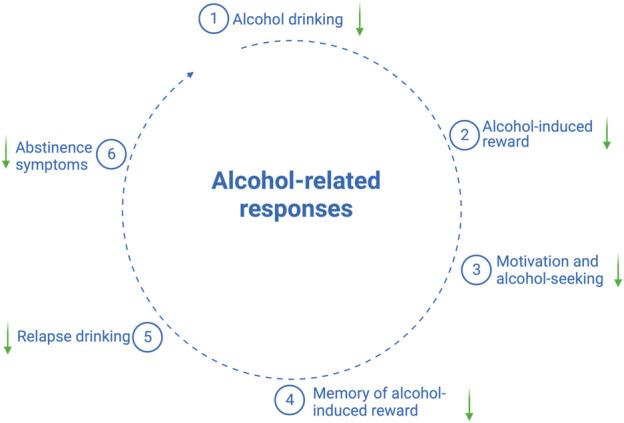
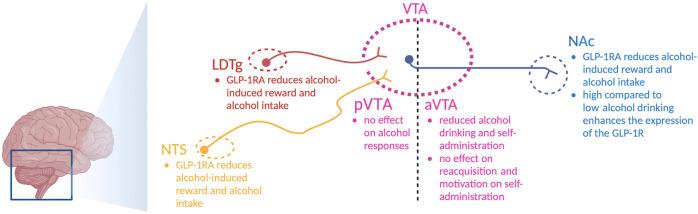
Although the multifaceted mechanisms underlying alcohol use disorder (AUD) have been partially defined, the neurobiological complexity of this disorder is yet to be unraveled. One of the systems that have gained attention in recent times is the gut-brain axis. Although numerous peptides participate in this axis, glucagon-like peptide-1 (GLP-1) plays a central role. GLP-1 is a crucial anorexigenic peptide, with potent abilities to reduce food intake and body weight. The physiological complexity of GLP-1 entails glucose homeostasis, gastrointestinal motility, and the release of insulin and glucagon. As reviewed in this study, acute or repeated treatment with GLP-1 receptor (GLP-1R) agonists decreases alcohol consumption in rodents. Moreover, the abilities of alcohol to promote hyperlocomotion, dopamine release in the nucleus accumbens, and reward in the conditioned place preference paradigm are all suppressed by GLP-1R ligands. Moreover, activation of GLP-1R suppresses the motivation to consume alcohol, alcohol-seeking behaviors, and relapse drinking in male rodents. Similarly, abstinence symptoms experienced during alcohol withdrawal are attenuated by activation of the GLP-1 pathway. On a similar note, the activation of GLP-1 receptors within areas of the brain that are processing reward modulates these alcohol-related responses. Another area that is crucial for this ability is the nucleus of the solitary tract, which is where GLP-1 is produced and from which GLP-1-containing neurons project to areas of reward. These findings may have clinical relevance as AUD is associated with polymorphisms in GLP-1-related genes. Although a GLP-1R agonist does not alter alcohol intake in AUD patients, it reduces this consumption in a sub-population of obese AUD individuals. Given the uncertainty of this outcome, additional clinical studies of obese AUD patients should explore the effects of the GLP-1R agonists on alcohol intake and body weight. Furthermore, GLP-1 receptors modulate the behavioral and neurochemical responses to addictive drugs. Taken together, these preclinical and clinical findings imply that the GLP-1 pathway plays a role in the complex mechanisms regulating alcohol and drug consumption patterns, unveiling a novel aspect of addiction medicine.
尽管酒精使用障碍(AUD)背后的多方面机制已得到部分明确,但该障碍的神经生物学复杂性仍有待揭示。近年来受到关注的系统之一是肠-脑轴。尽管众多肽参与此轴,但胰高血糖素样肽-1(GLP-1)发挥着核心作用。GLP-1是一种关键的厌食肽,具有降低食物摄入量和体重的强大能力。GLP-1的生理复杂性涉及葡萄糖稳态、胃肠蠕动以及胰岛素和胰高血糖素的释放。如本研究所述,用GLP-1受体(GLP-1R)激动剂进行急性或重复治疗可减少啮齿动物的酒精摄入量。此外,酒精促进运动亢进、伏隔核中多巴胺释放以及条件性位置偏爱范式中奖赏的能力均被GLP-1R配体抑制。此外,GLP-1R的激活抑制雄性啮齿动物的酒精消费动机、觅酒行为和复饮。同样,酒精戒断期间经历的戒断症状通过GLP-1途径的激活而减轻。同样,在处理奖赏的脑区激活GLP-1受体会调节这些与酒精相关的反应。对此能力至关重要的另一个区域是孤束核,GLP-1在那里产生,含GLP-1的神经元从该核投射到奖赏区域。这些发现可能具有临床相关性,因为AUD与GLP-1相关基因的多态性有关。尽管GLP-1R激动剂不会改变AUD患者的酒精摄入量,但它会降低肥胖AUD个体亚群中的酒精消费。鉴于这一结果的不确定性,对肥胖AUD患者的更多临床研究应探讨GLP-1R激动剂对酒精摄入量和体重影响。此外,GLP-1受体调节对成瘾药物的行为和神经化学反应。综上所述,这些临床前和临床研究结果表明,GLP-1途径在调节酒精和药物消费模式的复杂机制中发挥作用,揭示了成瘾医学的一个新方面。

 Zotero 插件