
生物合成的硒纳米颗粒的光催化活性所产生的氧化应激会引发细胞质泄漏,导致细菌细胞死亡。
Oxidative stress generated due to photocatalytic activity of biosynthesized selenium nanoparticles triggers cytoplasmic leakage leading to bacterial cell death.
作者信息
Sahoo Banishree, Leena Panigrahi Lipsa, Jena Sonali, Jha Suman, Arakha Manoranjan
机构信息
Center for Biotechnology, Siksha 'O' Anusandhan (Deemed to be University) Bhubaneswar 751003 Odisha India
Department of Life Science, National Institute of Technology Rourkela Odisha 769008 India.
出版信息
RSC Adv. 2023 Apr 12;13(17):11406-11414. doi: 10.1039/d2ra07827a. eCollection 2023 Apr 11.
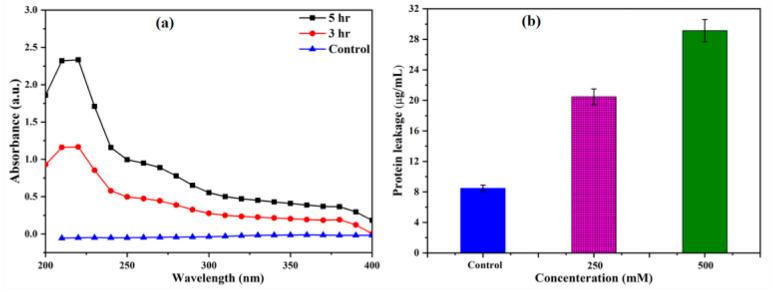
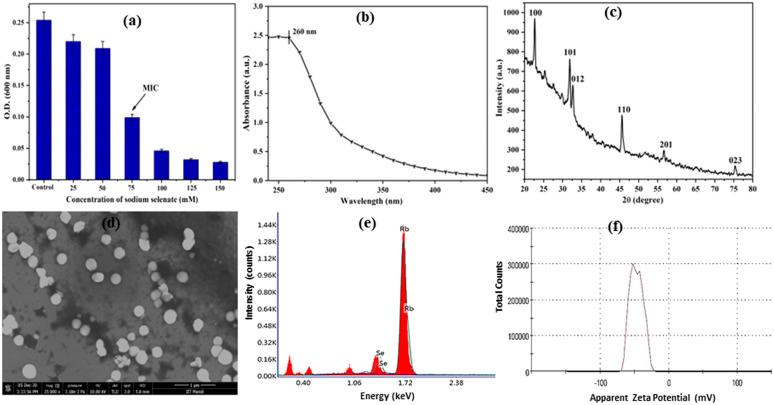
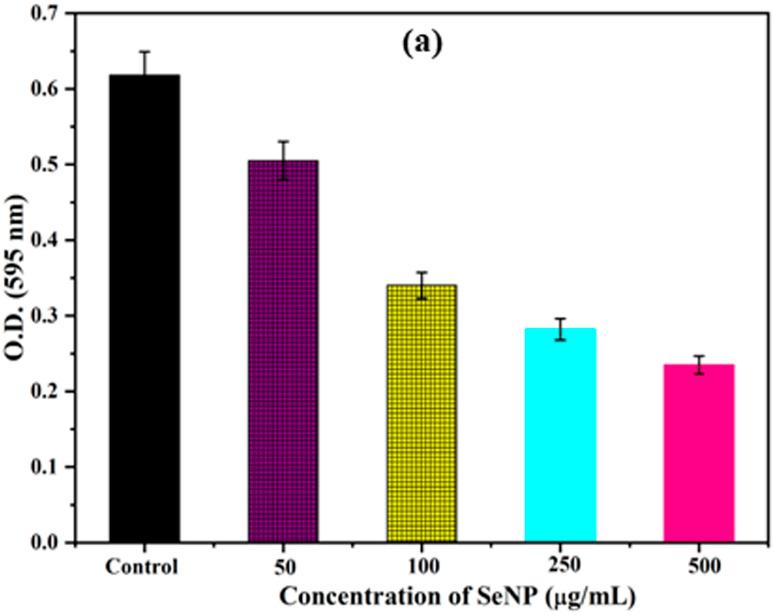
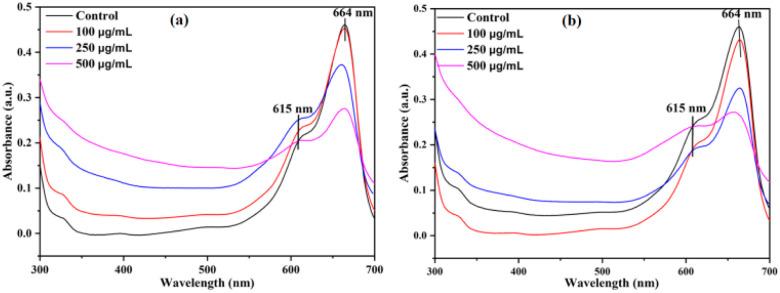
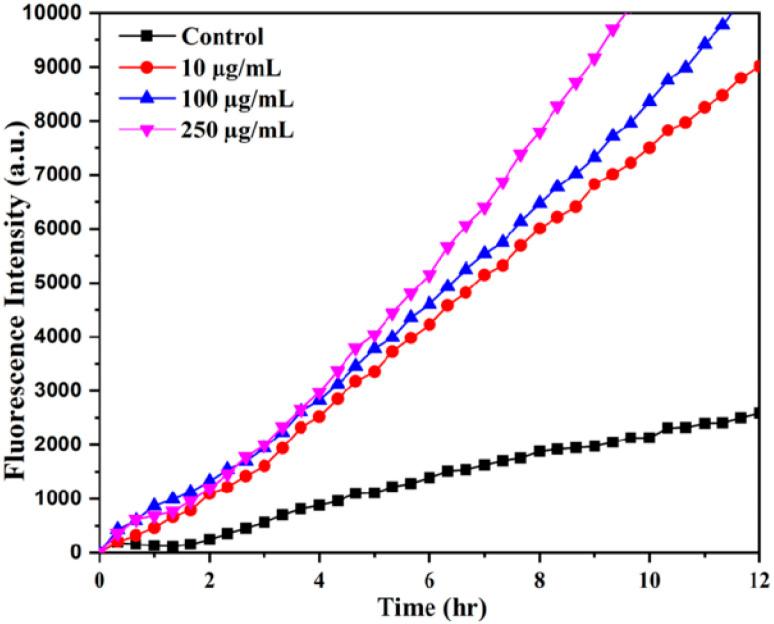
The present work investigates the role of oxidative stress generated at biosynthesized selenium nanoparticles (SeNPs) interface in defining the antimicrobial and anti-biofilm activity. To this end, SeNPs with average size of 119 nm were synthesized rapidly during the growth of using the principle of green chemistry. The synthesis of SeNPs was confirmed by using different biophysical techniques like UV-vis spectroscopy, X-ray diffraction (XRD), field-emission scanning electron microscope (FE-SEM), EDX and zeta potential analysis. The obtained data from antimicrobial study revealed strong antimicrobial activity against both Gram-positive bacteria like (MTCC 441) and Gram-negative bacteria like (MTCC 443) and anti-biofilm activity against biofilm forming bacteria. The mechanism behind antimicrobial activity of biosynthesized SeNPs was explored by evaluating the amount of reactive oxygen species (ROS) generated at SeNPs interface due to photocatalytic activity. The experimental data obtained altogether concluded that, the ROS generated at SeNPs interface put stress on bacterial cell membrane causing leakage of cytoplasmic contents, leading to bacterial cell death.
本研究探讨了生物合成的硒纳米颗粒(SeNPs)界面产生的氧化应激在确定其抗菌和抗生物膜活性中的作用。为此,利用绿色化学原理,在生长过程中快速合成了平均粒径为119 nm的SeNPs。通过紫外可见光谱、X射线衍射(XRD)、场发射扫描电子显微镜(FE-SEM)、能谱分析(EDX)和zeta电位分析等不同生物物理技术对SeNPs的合成进行了确认。抗菌研究获得的数据显示,其对革兰氏阳性菌如(MTCC 441)和革兰氏阴性菌如(MTCC 443)均具有较强的抗菌活性,并且对形成生物膜的细菌具有抗生物膜活性。通过评估由于光催化活性在SeNPs界面产生的活性氧(ROS)量,探索了生物合成的SeNPs抗菌活性背后的机制。综合获得的实验数据得出结论,SeNPs界面产生的ROS对细菌细胞膜造成压力,导致细胞质内容物泄漏,从而导致细菌细胞死亡。


 Zotero 插件