
磷脂酶 A 和酰基转移酶 4/维甲酸受体应答蛋白 3 在肿瘤抑制和病原体限制的交汇点。
Phospholipase A and acyltransferase 4/retinoic acid receptor responder 3 at the intersection of tumor suppression and pathogen restriction.
机构信息
Hospital of Integrated Traditional Chinese and Western Medicine, Hebei University of Chinese Medicine, Cangzhou, Hebei, China.
School of Medicine, Chongqing University, Chongqing, China.
出版信息
Front Immunol. 2023 Mar 31;14:1107239. doi: 10.3389/fimmu.2023.1107239. eCollection 2023.
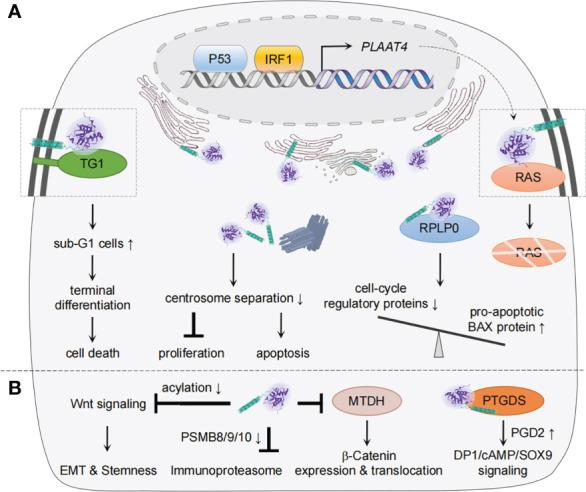
Phospholipase A and acyltransferase (PLAAT) 4 is a class II tumor suppressor with phospholipid metabolizing abilities. It was characterized in late 2000s, and has since been referred to as 'tazarotene-induced gene 3' (TIG3) or 'retinoic acid receptor responder 3' (RARRES3) as a key downstream effector of retinoic acid signaling. Two decades of research have revealed the complexity of its function and regulatory roles in suppressing tumorigenesis. However, more recent findings have also identified PLAAT4 as a key anti-microbial effector enzyme acting downstream of interferon regulatory factor 1 (IRF1) and interferons (IFNs), favoring protection from virus and parasite infections. Unveiling the molecular mechanisms underlying its action may thus open new therapeutic avenues for the treatment of both cancer and infectious diseases. Herein, we aim to summarize a brief history of PLAAT4 discovery, its transcriptional regulation, and the potential mechanisms in tumor prevention and anti-pathogen defense, and discuss potential future directions of PLAAT4 research toward the development of therapeutic approaches targeting this enzyme with pleiotropic functions.
磷脂酶 A 和酰基转移酶 (PLAAT) 4 是一种具有磷脂代谢能力的 II 类肿瘤抑制因子。它于 21 世纪 10 年代后期被描述为“维甲酸诱导基因 3”(TIG3)或“维甲酸受体应答基因 3”(RARRES3),是维甲酸信号的关键下游效应物。二十年的研究揭示了其功能的复杂性及其在抑制肿瘤发生中的调节作用。然而,最近的研究结果也表明 PLAAT4 是干扰素调节因子 1 (IRF1) 和干扰素 (IFNs) 下游的关键抗菌效应酶,有利于抵抗病毒和寄生虫感染。因此,揭示其作用的分子机制可能为癌症和传染病的治疗开辟新的治疗途径。本文旨在简要总结 PLAAT4 的发现历史、转录调控以及在肿瘤预防和抗病原体防御中的潜在机制,并讨论针对这种具有多种功能的酶的治疗方法开发中 PLAAT4 研究的潜在未来方向。


 Zotero 插件