
生物材料促进树突状细胞介导的癌症免疫治疗。
Biomaterials Facilitating Dendritic Cell-Mediated Cancer Immunotherapy.
机构信息
Nanjing Stomatological Hospital, Affiliated Hospital of Medical School, Nanjing University, 30 Zhongyang Road, Nanjing, Jiangsu, 210008, P. R. China.
Key Laboratory for Organic Electronics and Information Displays, Jiangsu Key Laboratory for Biosensors, Institute of Advanced Materials, Jiangsu National Synergetic Innovation Centre for Advanced Materials, Nanjing University of Posts and Telecommunications, 9 Wenyuan Road, Nanjing, Jiangsu, 210023, P. R. China.
出版信息
Adv Sci (Weinh). 2023 Jun;10(18):e2301339. doi: 10.1002/advs.202301339. Epub 2023 Apr 23.
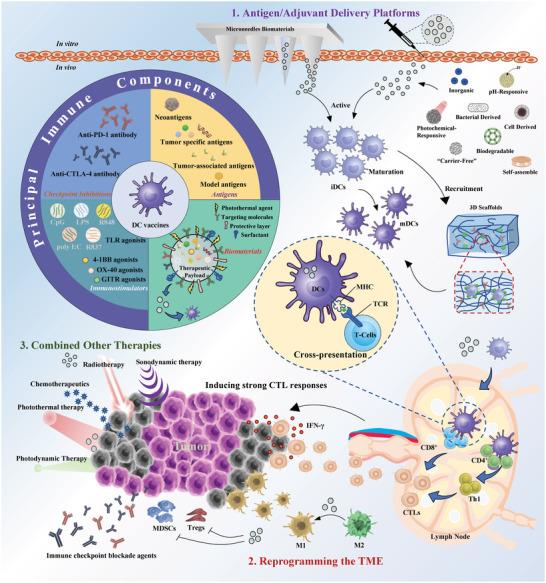
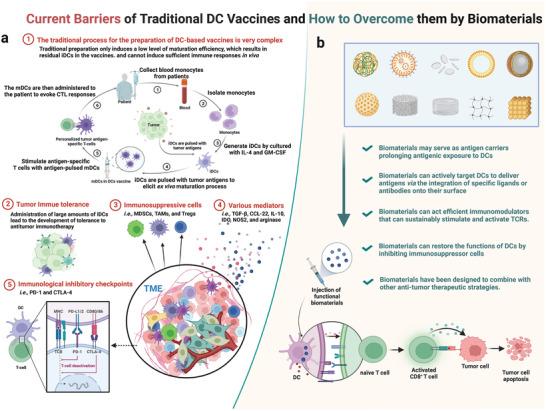
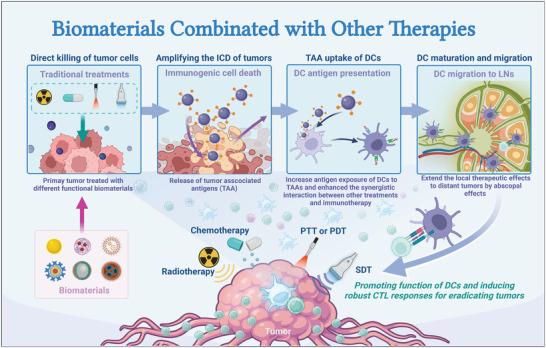
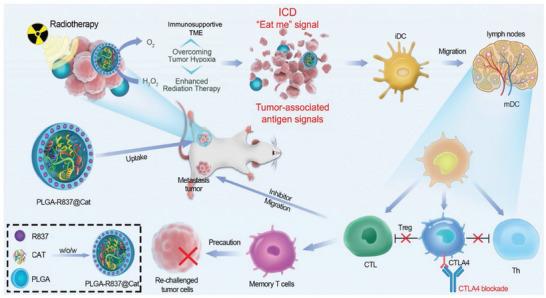
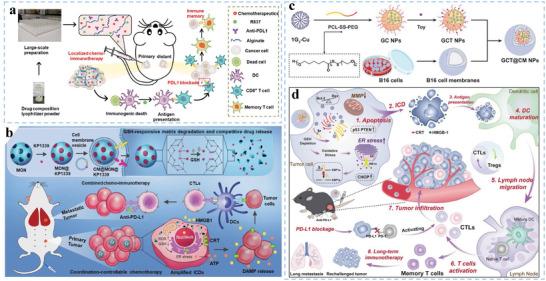
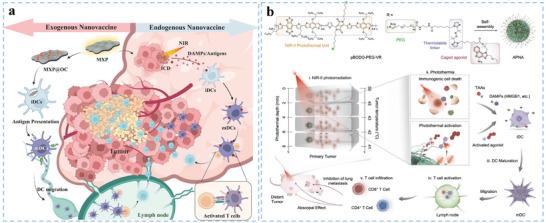
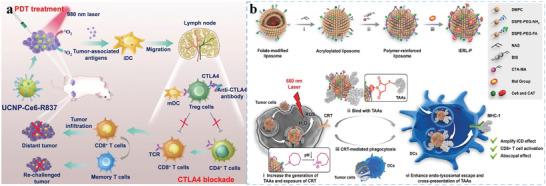
Dendritic cell (DC)-based cancer immunotherapy has exhibited remarkable clinical prospects because DCs play a central role in initiating and regulating adaptive immune responses. However, the application of traditional DC-mediated immunotherapy is limited due to insufficient antigen delivery, inadequate antigen presentation, and high levels of immunosuppression. To address these challenges, engineered biomaterials have been exploited to enhance DC-mediated immunotherapeutic effects. In this review, vital principal components that can enhance DC-mediated immunotherapeutic effects are first introduced. The parameters considered in the rational design of biomaterials, including targeting modifications, size, shape, surface, and mechanical properties, which can affect biomaterial optimization of DC functions, are further summarized. Moreover, recent applications of various engineered biomaterials in the field of DC-mediated immunotherapy are reviewed, including those serve as immune component delivery platforms, remodel the tumor microenvironment, and synergistically enhance the effects of other antitumor therapies. Overall, the present review comprehensively and systematically summarizes biomaterials related to the promotion of DC functions; and specifically focuses on the recent advances in biomaterial designs for DC activation to eradicate tumors. The challenges and opportunities of treatment strategies designed to amplify DCs via the application of biomaterials are discussed with the aim of inspiring the clinical translation of future DC-mediated cancer immunotherapies.
基于树突状细胞(DC)的癌症免疫疗法具有显著的临床前景,因为 DC 在启动和调节适应性免疫反应方面发挥着核心作用。然而,由于抗原传递不足、抗原呈递不足和免疫抑制水平高,传统的 DC 介导的免疫疗法的应用受到限制。为了解决这些挑战,已经开发了工程生物材料来增强 DC 介导的免疫治疗效果。在这篇综述中,首先介绍了可以增强 DC 介导的免疫治疗效果的重要基本成分。进一步总结了生物材料合理设计中考虑的参数,包括靶向修饰、大小、形状、表面和机械性能,这些参数可以影响生物材料对 DC 功能的优化。此外,还综述了各种工程生物材料在 DC 介导的免疫治疗领域的最新应用,包括作为免疫成分传递平台、重塑肿瘤微环境以及协同增强其他抗肿瘤疗法的效果。总的来说,本综述全面系统地总结了与促进 DC 功能相关的生物材料;并特别关注用于激活 DC 以消除肿瘤的生物材料设计的最新进展。讨论了通过应用生物材料放大 DC 的治疗策略的挑战和机遇,旨在激发未来 DC 介导的癌症免疫疗法的临床转化。





 Zotero 插件