
协同性容积性肌肉损失修复策略的转录组谱分析。
Transcriptome profiling of a synergistic volumetric muscle loss repair strategy.
机构信息
Cell & Molecular Biology Program, University of Arkansas Fayetteville, Arkansas, USA.
Department of Biomedical Engineering, University of Arkansas Fayetteville, Arkansas, USA.
出版信息
BMC Musculoskelet Disord. 2023 Apr 24;24(1):321. doi: 10.1186/s12891-023-06401-1.
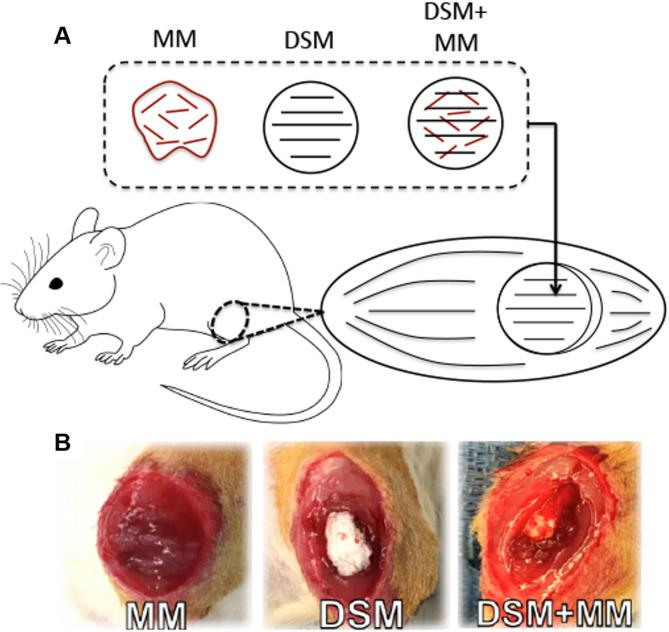
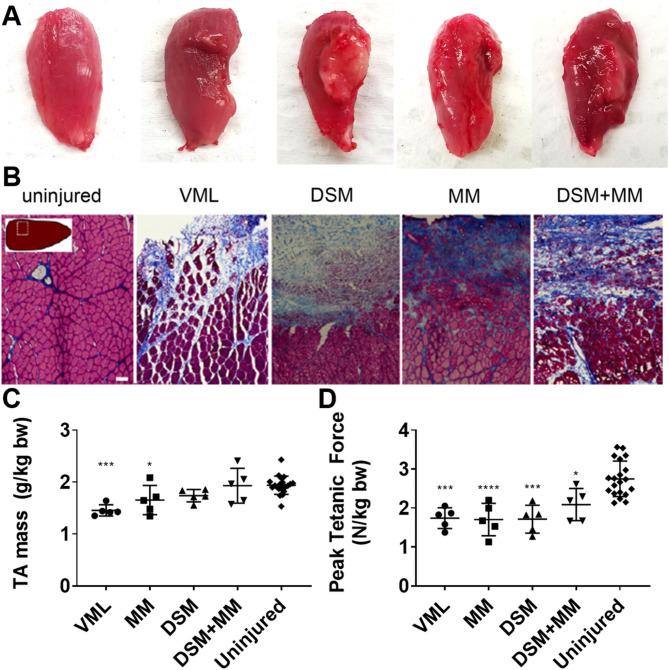
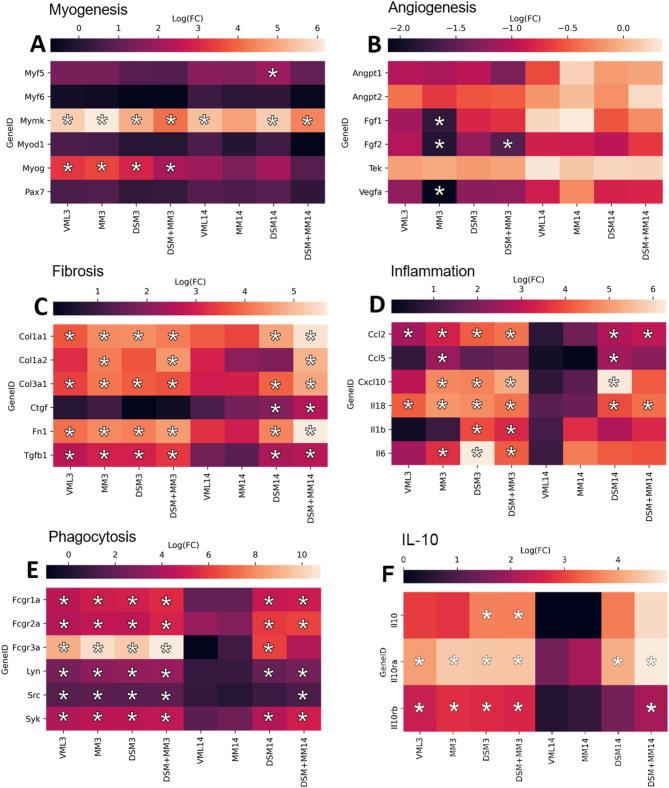
Volumetric muscle loss overwhelms skeletal muscle's ordinarily capable regenerative machinery, resulting in severe functional deficits that have defied clinical repair strategies. In this manuscript we pair the early in vivo functional response induced by differing volumetric muscle loss tissue engineering repair strategies that are broadly representative of those explored by the field (scaffold alone, cells alone, or scaffold + cells) to the transcriptomic response induced by each intervention. We demonstrate that an implant strategy comprising allogeneic decellularized skeletal muscle scaffolds seeded with autologous minced muscle cellular paste (scaffold + cells) mediates a pattern of increased expression for several genes known to play roles in axon guidance and peripheral neuroregeneration, as well as several other key genes related to inflammation, phagocytosis, and extracellular matrix regulation. The upregulation of several key genes in the presence of both implant components suggests a unique synergy between scaffolding and cells in the early period following intervention that is not seen when either scaffolds or cells are used in isolation; a finding that invites further exploration of the interactions that could have a positive impact on the treatment of volumetric muscle loss.
体积性肌肉损失压倒了骨骼肌通常具有的再生机制,导致严重的功能缺陷,这使得临床修复策略难以应对。在本文中,我们将不同的体积性肌肉损失组织工程修复策略(仅支架、仅细胞或支架+细胞)所诱导的早期体内功能反应与每种干预措施所诱导的转录组反应进行配对。我们证明,由同种异体去细胞化骨骼肌支架和自体切碎肌肉细胞糊(支架+细胞)组成的植入策略介导了几个已知在轴突导向和周围神经再生中发挥作用的基因的表达增加模式,以及几个其他与炎症、吞噬和细胞外基质调节相关的关键基因。在存在植入物两种成分的情况下,几个关键基因的上调表明,在干预后的早期阶段,支架和细胞之间存在独特的协同作用,而当单独使用支架或细胞时则不会出现这种情况;这一发现进一步探索了可能对体积性肌肉损失治疗产生积极影响的相互作用。



 Zotero 插件