
肠道微生物对胆汁酸组成的调节在心血管疾病发病机制中的新作用。
Emerging Roles of Gut Microbial Modulation of Bile Acid Composition in the Etiology of Cardiovascular Diseases.
机构信息
Department of Pediatrics, University of Groningen, University Medical Center Groningen, 9713 GZ Groningen, The Netherlands.
European Research Institute for the Biology of Ageing (ERIBA), University of Groningen, University Medical Center Groningen, 9713 GZ Groningen, The Netherlands.
出版信息
Nutrients. 2023 Apr 12;15(8):1850. doi: 10.3390/nu15081850.
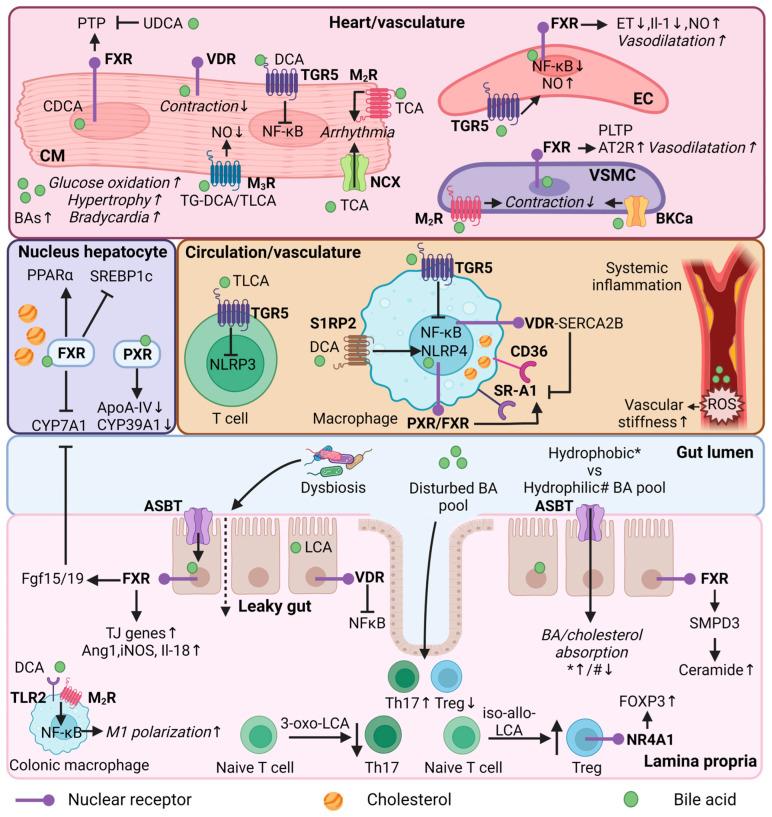
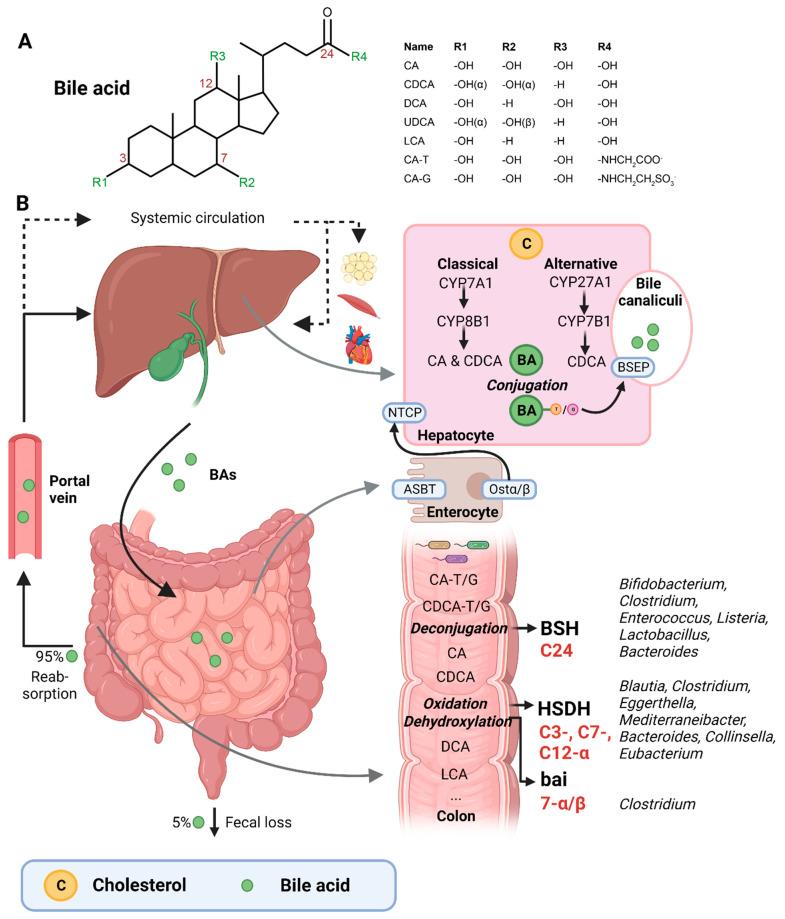
Despite advances in preventive measures and treatment options, cardiovascular disease (CVD) remains the number one cause of death globally. Recent research has challenged the traditional risk factor profile and highlights the potential contribution of non-traditional factors in CVD, such as the gut microbiota and its metabolites. Disturbances in the gut microbiota have been repeatedly associated with CVD, including atherosclerosis and hypertension. Mechanistic studies support a causal role of microbiota-derived metabolites in disease development, such as short-chain fatty acids, trimethylamine-N-oxide, and bile acids, with the latter being elaborately discussed in this review. Bile acids represent a class of cholesterol derivatives that is essential for intestinal absorption of lipids and fat-soluble vitamins, plays an important role in cholesterol turnover and, as more recently discovered, acts as a group of signaling molecules that exerts hormonal functions throughout the body. Studies have shown mediating roles of bile acids in the control of lipid metabolism, immunity, and heart function. Consequently, a picture has emerged of bile acids acting as integrators and modulators of cardiometabolic pathways, highlighting their potential as therapeutic targets in CVD. In this review, we provide an overview of alterations in the gut microbiota and bile acid metabolism found in CVD patients, describe the molecular mechanisms through which bile acids may modulate CVD risk, and discuss potential bile-acid-based treatment strategies in relation to CVD.
尽管预防措施和治疗选择取得了进展,但心血管疾病 (CVD) 仍然是全球头号死因。最近的研究挑战了传统的风险因素模式,并强调了非传统因素(如肠道微生物群及其代谢物)在 CVD 中的潜在贡献。肠道微生物群的失调与 CVD 包括动脉粥样硬化和高血压反复相关。机制研究支持微生物衍生代谢物在疾病发展中的因果作用,例如短链脂肪酸、三甲胺 N-氧化物和胆汁酸,后者在本综述中进行了详细讨论。胆汁酸代表一类胆固醇衍生物,对肠道吸收脂质和脂溶性维生素至关重要,在胆固醇周转中发挥重要作用,最近发现,还作为一组信号分子在全身发挥激素功能。研究表明,胆汁酸在控制脂质代谢、免疫和心脏功能方面发挥着介导作用。因此,出现了胆汁酸作为心脏代谢途径的整合和调节剂的图景,突出了它们作为 CVD 治疗靶点的潜力。在本综述中,我们概述了 CVD 患者中肠道微生物群和胆汁酸代谢的改变,描述了胆汁酸可能调节 CVD 风险的分子机制,并讨论了与 CVD 相关的潜在基于胆汁酸的治疗策略。
 Zotero 插件