
用于对过表达叶酸受体的癌细胞进行治疗的叶酸修饰的载依鲁替尼丝素蛋白纳米颗粒
Folic Acid-Modified Ibrutinib-Loaded Silk Fibroin Nanoparticles for Cancer Cell Therapy with Over-Expressed Folate Receptor.
作者信息
Fuster Marta G, Montalbán Mercedes G, Moulefera Imane, Víllora Gloria, Kaplan David L
机构信息
Department of Chemical Engineering, Faculty of Chemistry, University of Murcia (UMU), Campus de Espinardo, 30100 Murcia, Spain.
Department of Biomedical Engineering, Tufts University, Medford, MA 02155, USA.
出版信息
Pharmaceutics. 2023 Apr 7;15(4):1186. doi: 10.3390/pharmaceutics15041186.
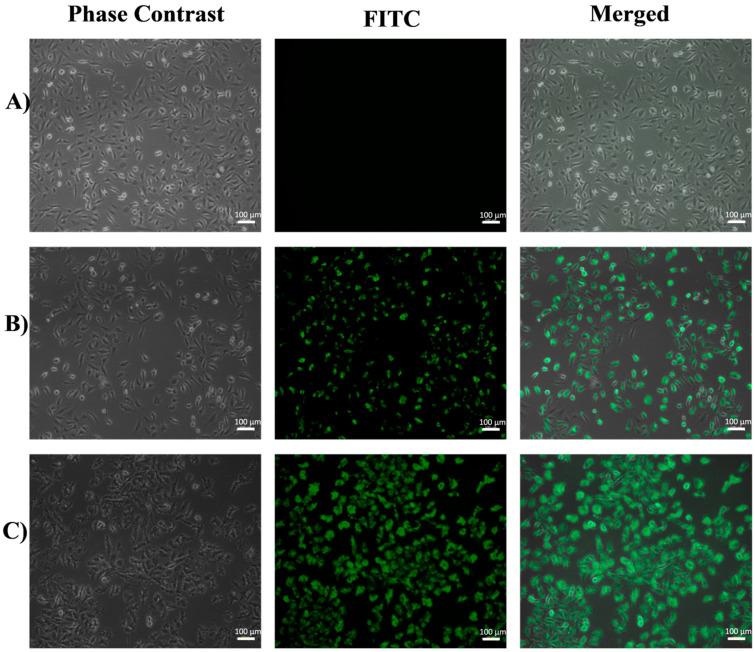
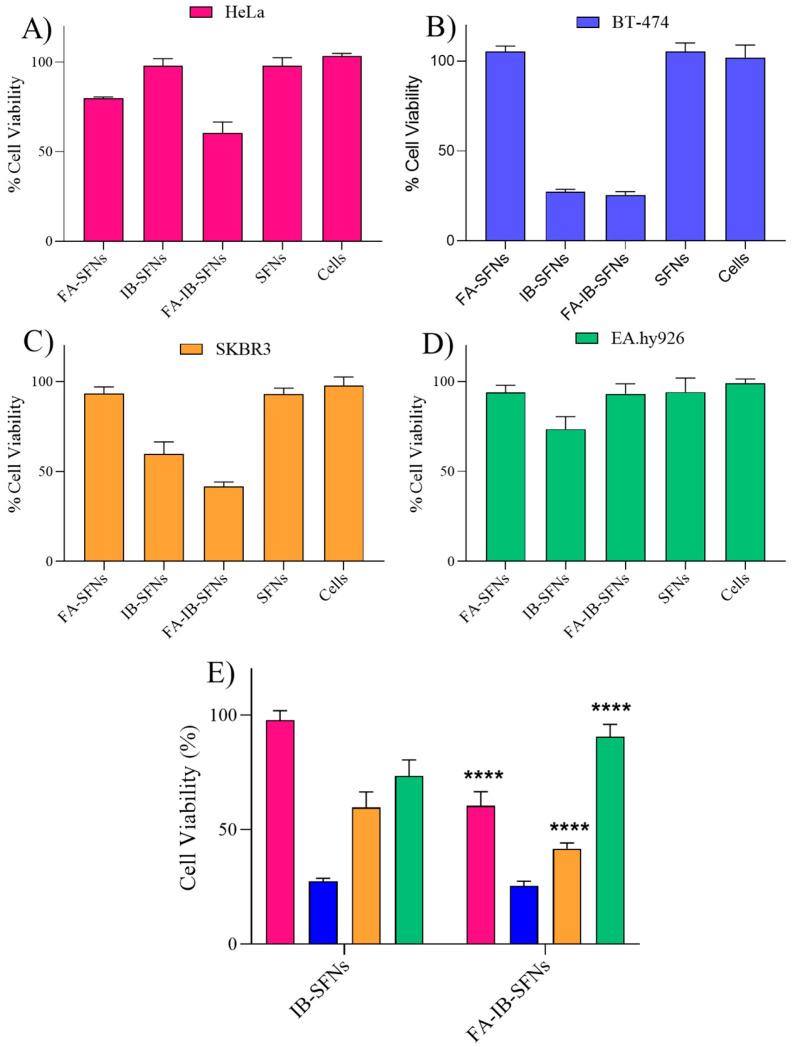
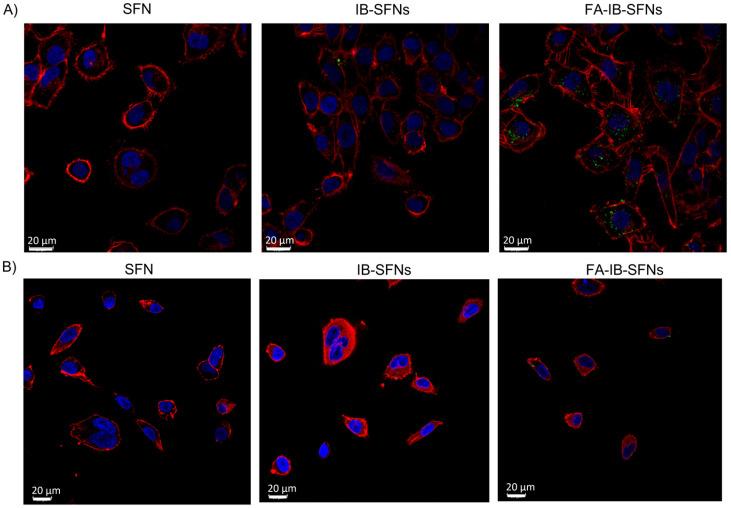
The anticancer drug ibrutinib (IB), also known as PCI-32765, is a compound that irreversibly inhibits Bruton's tyrosine kinase (BTK) and was initially developed as a treatment option for B-cell lineage neoplasms. Its action is not limited to B-cells, as it is expressed in all hematopoietic lineages and plays a crucial role in the tumor microenvironment. However, clinical trials with the drug have resulted in conflicting outcomes against solid tumors. In this study, folic acid-conjugated silk nanoparticles were used for the targeted delivery of IB to the cancer cell lines HeLa, BT-474, and SKBR3 by exploiting the overexpression of folate receptors on their surfaces. The results were compared with those of control healthy cells (EA.hy926). Cellular uptake studies confirmed total internalization of the nanoparticles functionalized by this procedure in the cancer cells after 24 h, compared to nanoparticles not functionalized with folic acid, suggesting that cellular uptake was mediated by folate receptors overexpressed in the cancer cells. The results indicate that the developed nanocarrier can be used for drug targeting applications by enhancing IB uptake in cancer cells with folate receptor overexpression.
抗癌药物依鲁替尼(IB),也称为PCI-32765,是一种不可逆抑制布鲁顿酪氨酸激酶(BTK)的化合物,最初被开发用作B细胞谱系肿瘤的治疗选择。它的作用不限于B细胞,因为它在所有造血谱系中都有表达,并在肿瘤微环境中起关键作用。然而,该药物针对实体瘤的临床试验结果相互矛盾。在本研究中,通过利用叶酸受体在癌细胞系HeLa、BT-474和SKBR3表面的过表达,将叶酸偶联的丝纳米颗粒用于将依鲁替尼靶向递送至这些细胞系。将结果与对照健康细胞(EA.hy926)的结果进行比较。细胞摄取研究证实,与未用叶酸功能化的纳米颗粒相比,经此程序功能化的纳米颗粒在24小时后在癌细胞中完全内化,这表明细胞摄取是由癌细胞中过表达的叶酸受体介导的。结果表明,所开发的纳米载体可通过增强依鲁替尼在叶酸受体过表达的癌细胞中的摄取,用于药物靶向应用。








 Zotero 插件