
非甾体抗炎药(NSAIDs)及具有胃肠道保护作用的NSAIDs对胃肠道的影响:一篇叙述性综述
Effects of Non-steroidal Anti-inflammatory Drugs (NSAIDs) and Gastroprotective NSAIDs on the Gastrointestinal Tract: A Narrative Review.
作者信息
Sohail Rohab, Mathew Midhun, Patel Khushbu K, Reddy Srija A, Haider Zaroon, Naria Mansi, Habib Ayesha, Abdin Zain U, Razzaq Chaudhry Waleed, Akbar Anum
机构信息
Internal Medicine, Quaid-e-Azam Medical College, Bahawalpur, PAK.
Department of Internal Medicine, Pennsylvania Hospital, Philadelphia, USA.
出版信息
Cureus. 2023 Apr 3;15(4):e37080. doi: 10.7759/cureus.37080. eCollection 2023 Apr.
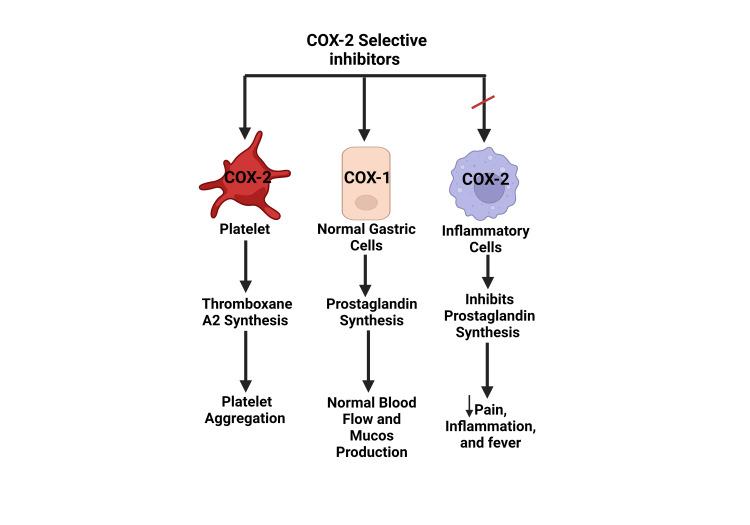
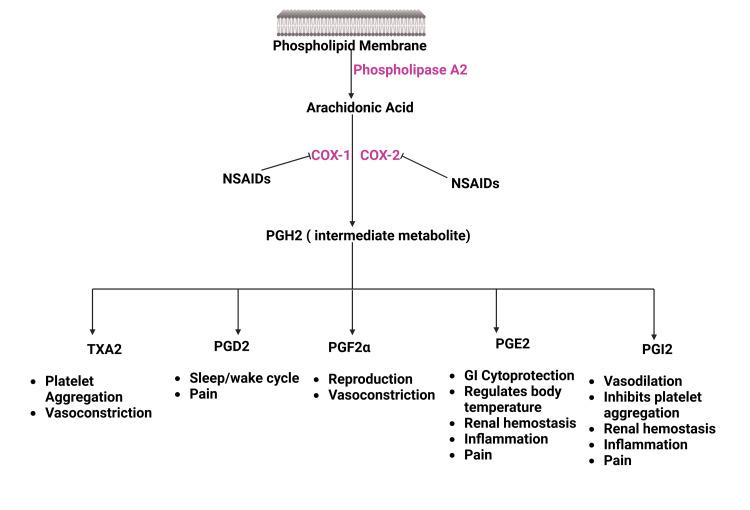
Non-steroidal anti-inflammatory drugs (NSAIDs) are commonly used for their anti-inflammatory, antipyretic, and analgesic properties. However, their use is often associated with gastrointestinal tract (GIT) side effects due to the inhibition of both cyclooxygenase (COX)-1 and COX-2 enzymes, leading to a decrease in gastroprotective prostaglandins (PG). To minimize these adverse effects, various approaches have been explored, including selective COX-2 inhibitors, NO-NSAIDs (nitric oxide-releasing NSAIDs), and dual COX/LOX (lipoxygenase) NSAIDs. However, the effects of these gastroprotective NSAIDs on the GIT and their efficacy remains uncertain. This review aims to provide an overview of the current understanding of the effects of traditional NSAIDs and gastroprotective NSAIDs on GIT. We discuss the underlying mechanisms of GIT damage caused by NSAIDs, including mucosal injury, ulceration, and bleeding, and the potential of gastroprotective NSAIDs to mitigate these effects. We also summarize recent studies on the efficacy and safety of various gastroprotective NSAIDs and highlight the limitations and challenges of these approaches. The review concludes with recommendations for future research in this field.
非甾体抗炎药(NSAIDs)因其抗炎、解热和镇痛特性而被广泛使用。然而,由于其对环氧化酶(COX)-1和COX-2酶的抑制作用,导致胃保护前列腺素(PG)减少,其使用往往与胃肠道(GIT)副作用相关。为了尽量减少这些不良反应,人们探索了各种方法,包括选择性COX-2抑制剂、NO-NSAIDs(释放一氧化氮的NSAIDs)和双重COX/LOX(脂氧合酶)NSAIDs。然而,这些胃保护NSAIDs对胃肠道的影响及其疗效仍不确定。本综述旨在概述目前对传统NSAIDs和胃保护NSAIDs对胃肠道影响的理解。我们讨论了NSAIDs引起胃肠道损伤的潜在机制,包括粘膜损伤、溃疡和出血,以及胃保护NSAIDs减轻这些影响的潜力。我们还总结了近期关于各种胃保护NSAIDs疗效和安全性的研究,并强调了这些方法的局限性和挑战。综述最后提出了该领域未来研究的建议。


 Zotero 插件