
从毒素到致肥胖物:丙烯酰胺潜在致肥胖作用的综述及其作用机制。
From a toxin to an obesogen: a review of potential obesogenic roles of acrylamide with a mechanistic approach.
机构信息
are with the Department of Nutrition and Dietetics, Hacettepe University, Ankara, Turkey.
出版信息
Nutr Rev. 2023 Dec 11;82(1):128-142. doi: 10.1093/nutrit/nuad041.
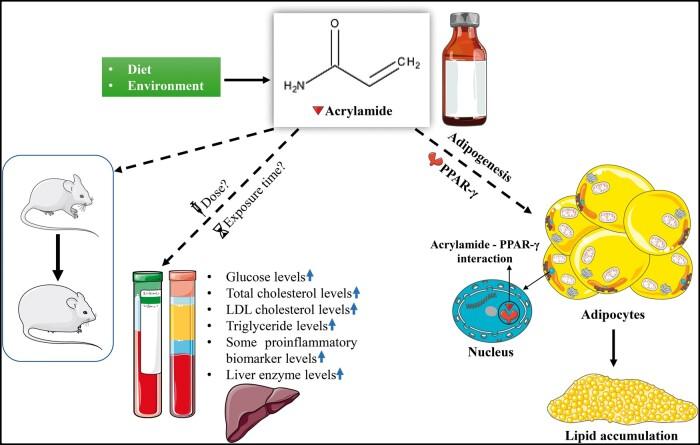
Obesity and obesity-related disorders such as cancer, type 2 diabetes, and fatty liver have become a global health problem. It is well known that the primary cause of obesity is positive energy balance. In addition, obesity is the consequence of complex gene and environment interactions that result in excess calorie intake being stored as fat. However, it has been revealed that there are other factors contributing to the worsening of obesity. The presence of nontraditional risk factors, such as environmental endocrine-disrupting chemicals, has recently been associated with obesity and comorbidities caused by obesity. The aim of this review was to examine the evidence and potential mechanisms for acrylamide having endocrine-disrupting properties contributing to obesity and obesity-related comorbidities. Recent studies have suggested that exposure to environmental endocrine-disrupting obesogens may be a risk factor contributing to the current obesity epidemic, and that one of these obesogens is acrylamide, an environmental and industrial compound produced by food processing, particularly the processing of foods such as potato chips, and coffee. In addition to the known harmful effects of acrylamide in humans and experimental animals, such as neurotoxicity, genotoxicity, and carcinogenicity, acrylamide also has an obesogenic effect. It has been shown in the literature to a limited extent that acrylamide may disrupt energy metabolism, lipid metabolism, adipogenesis, adipocyte differentiation, and various signaling pathways, and may exacerbate the disturbances in metabolic and biochemical parameters observed as a result of obesity. Acrylamide exerts its main potential obesogenic effects through body weight increase, worsening of the levels of obesity-related blood biomarkers, and induction of adipocyte differentiation and adipogenesis. Additional mechanisms may be discovered. Further experimental studies and prospective cohorts are needed, both to supplement existing knowledge about acrylamide and its effects, and to clarify its established relationship with obesity and its comorbidities.
肥胖和与肥胖相关的疾病,如癌症、2 型糖尿病和脂肪肝,已成为全球健康问题。众所周知,肥胖的主要原因是能量正平衡。此外,肥胖是复杂的基因与环境相互作用的结果,导致摄入的多余卡路里被储存为脂肪。然而,已经发现还有其他因素导致肥胖恶化。非传统危险因素的存在,如环境内分泌干扰化学物质,最近与肥胖和肥胖相关的合并症有关。本综述的目的是检查丙烯酰胺具有内分泌干扰特性导致肥胖和肥胖相关合并症的证据和潜在机制。最近的研究表明,暴露于环境内分泌干扰肥胖物可能是导致当前肥胖流行的一个危险因素,其中一种肥胖物是丙烯酰胺,这是一种环境和工业化合物,由食品加工产生,特别是薯片和咖啡等食品的加工。除了丙烯酰胺在人类和实验动物中已知的有害影响,如神经毒性、遗传毒性和致癌性外,丙烯酰胺还具有肥胖作用。文献中有限地表明,丙烯酰胺可能会破坏能量代谢、脂质代谢、脂肪生成、脂肪细胞分化和各种信号通路,并可能加剧肥胖导致的代谢和生化参数的紊乱。丙烯酰胺通过体重增加、肥胖相关血液生物标志物水平恶化以及诱导脂肪细胞分化和脂肪生成来发挥其主要潜在的肥胖作用。可能会发现其他机制。需要进一步的实验研究和前瞻性队列研究,以补充关于丙烯酰胺及其作用的现有知识,并阐明其与肥胖及其合并症的既定关系。
 Zotero 插件