
小檗碱通过增加磷酸酶和张力蛋白并抑制水通道蛋白 1、3 和 5 的表达来抑制人结肠癌细胞系的生长和迁移。
Berberine Inhibited Growth and Migration of Human Colon Cancer Cell Lines by Increasing Phosphatase and Tensin and Inhibiting Aquaporins 1, 3 and 5 Expressions.
机构信息
Department of Biological Sciences, School of Science, The University of Jordan, Amman 11942, Jordan.
Department of Pharmacy, Faculty of Pharmacy, Al-Zaytoonah University, Amman 11733, Jordan.
出版信息
Molecules. 2023 Apr 29;28(9):3823. doi: 10.3390/molecules28093823.
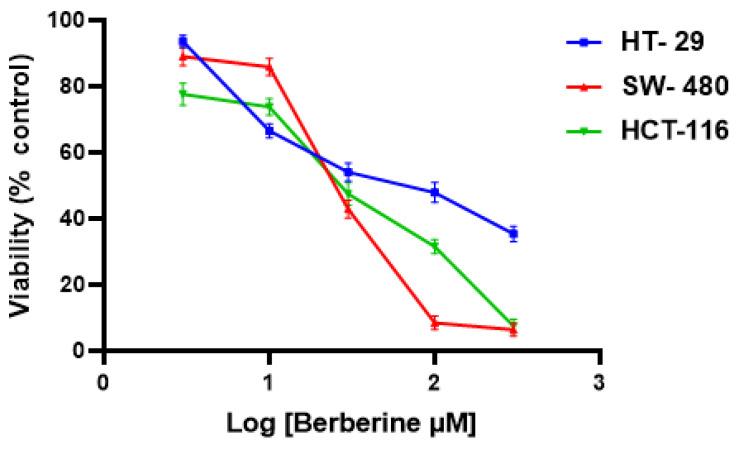
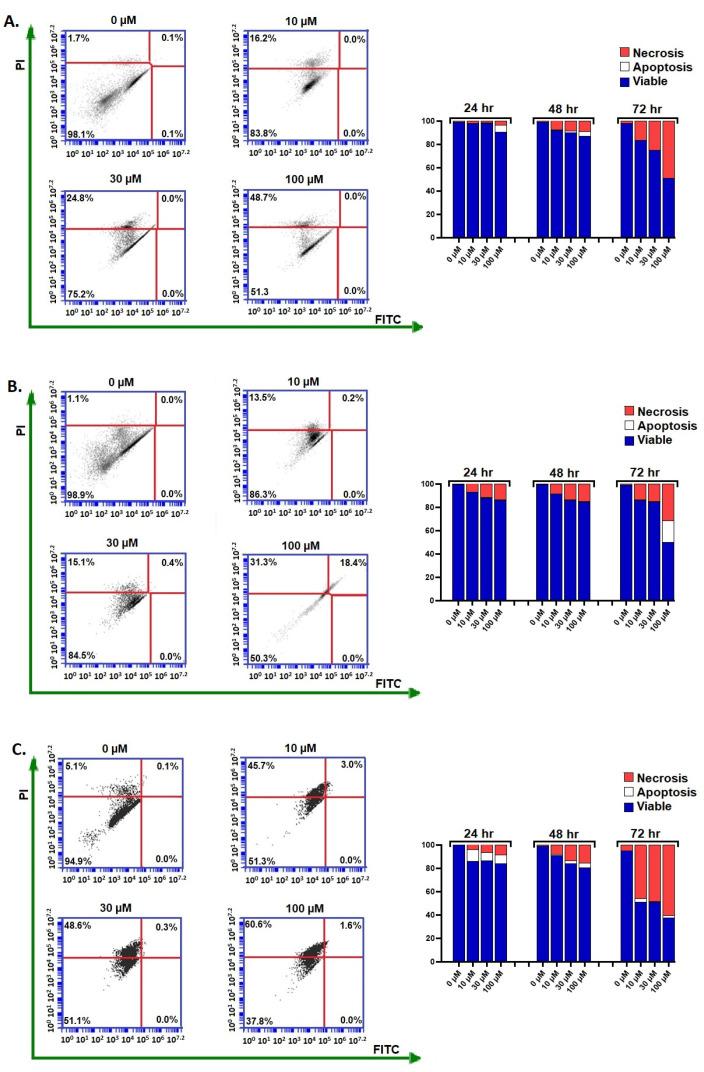
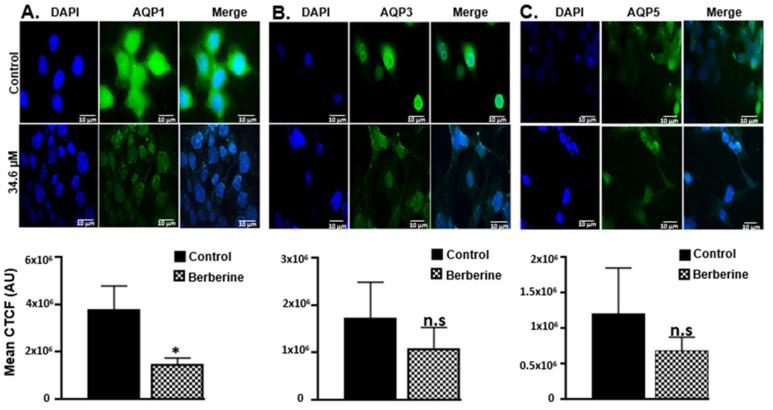
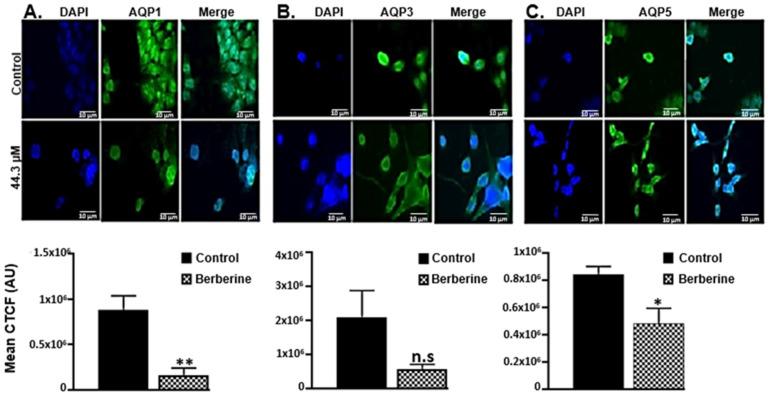
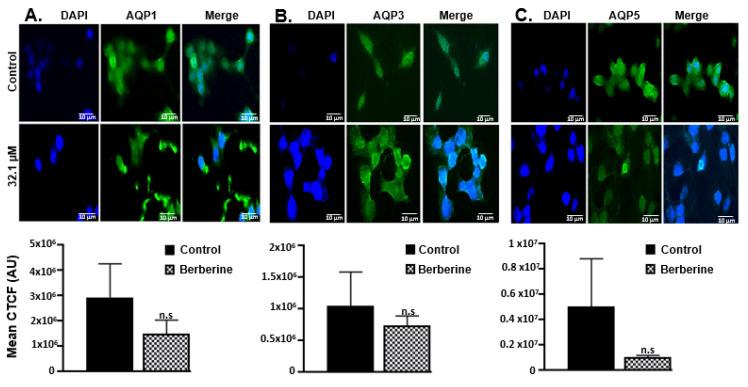
: Berberine is a natural isoquinoline alkaloid with anti-cancer properties. Nevertheless, the underlying mechanism of its action in human colorectal cancer (CRC) has not been thoroughly elucidated. We investigated the anti-cancer effect of berberine on HT-29, SW-480 and HCT-116 human CRC cell lines. Cell proliferation, migration and invasion were studied by MTT assay, wound healing, transwell chambers and flow cytometry. Reverse transcription-quantitative polymerase chain reaction (RT-qPCR) and immunostaining were used to evaluate the expression of aquaporins (AQPs) 1, 3 and 5 in colon cancer cell lines before and after treatment with berberine (10, 30 and 100 µM). RT-qPCR and Western blotting were used to further explore the PI3K/AKT signaling pathway and the molecular mechanisms underlying berberine-induced inhibition of cell proliferation. We demonstrated that treatment of these CRC cell lines with berberine inhibited cell proliferation, migration and invasion through induction of apoptosis and necrosis. HT-29, SW-480 and HCT-116 stained positively for AQP 1, 3 and 5, and berberine treatment down-regulated the expression of all three types of AQPs. Berberine also modulated PI3K/AKT pathway activity through up-regulating PTEN and down-regulating PI3K, AKT and p-AKT expression as well as suppressing its downstream targets, mTOR and p-mTOR at the protein level. These findings indicate that berberine inhibited growth, migration and invasion of these colon cancer cell lines via down-regulation of AQP 1, 3 and 5 expressions, up-regulating PTEN which inhibited the PI3K/AKT pathway at the gene and protein levels, and that AQP 1, 3 and 5 expression level can be used as prognostic biomarkers for colon cancer metastasis.
小檗碱是一种天然异喹啉生物碱,具有抗癌特性。然而,其在人结直肠癌(CRC)中的作用机制尚未彻底阐明。我们研究了小檗碱对 HT-29、SW-480 和 HCT-116 人结直肠癌细胞系的抗癌作用。通过 MTT 测定、划痕愈合、transwell 室和流式细胞术研究细胞增殖、迁移和侵袭。逆转录定量聚合酶链反应(RT-qPCR)和免疫染色用于评估在用小檗碱(10、30 和 100μM)处理前后结肠癌细胞系中水通道蛋白(AQPs)1、3 和 5 的表达。RT-qPCR 和 Western blot 进一步探讨了 PI3K/AKT 信号通路和小檗碱抑制细胞增殖的分子机制。
我们证明,用小檗碱处理这些 CRC 细胞系通过诱导细胞凋亡和坏死抑制细胞增殖、迁移和侵袭。HT-29、SW-480 和 HCT-116 对 AQP1、3 和 5 呈阳性染色,小檗碱处理下调了所有三种类型的 AQP 的表达。小檗碱还通过上调 PTEN 和下调 PI3K、AKT 和 p-AKT 表达以及抑制其下游靶标 mTOR 和 p-mTOR 来调节 PI3K/AKT 通路活性。
这些发现表明,小檗碱通过下调 AQP1、3 和 5 的表达来抑制这些结肠癌细胞系的生长、迁移和侵袭,上调 PTEN 抑制 PI3K/AKT 通路在基因和蛋白水平上的表达,并且 AQP1、3 和 5 的表达水平可作为结直肠癌转移的预后标志物。





 Zotero 插件