
氧化锌纳米粒子对 SARS-CoV-2 的抗病毒活性。
Antiviral Activity of Zinc Oxide Nanoparticles against SARS-CoV-2.
机构信息
Diagnostic and Research Center for Molecular Biomedicine, Institute of Pathology, Medical University of Graz, 8010 Graz, Austria.
PHORNANO Holding GmbH, Kleinengersdorferstrasse 24, 2100 Korneuburg, Austria.
出版信息
Int J Mol Sci. 2023 May 8;24(9):8425. doi: 10.3390/ijms24098425.
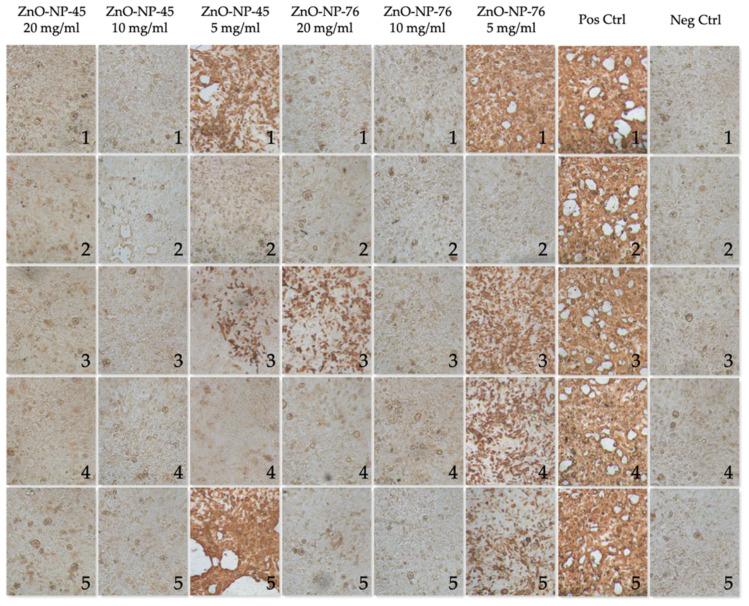
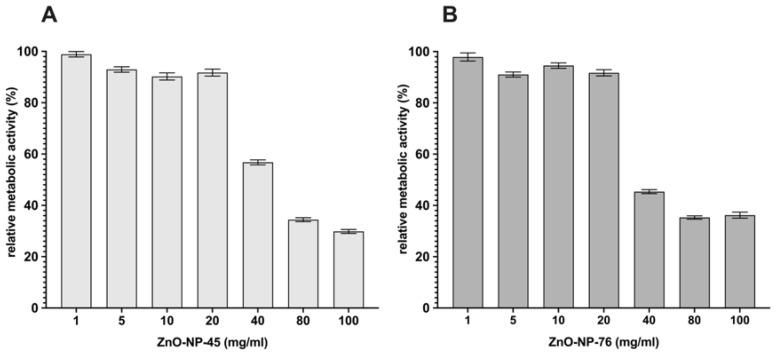
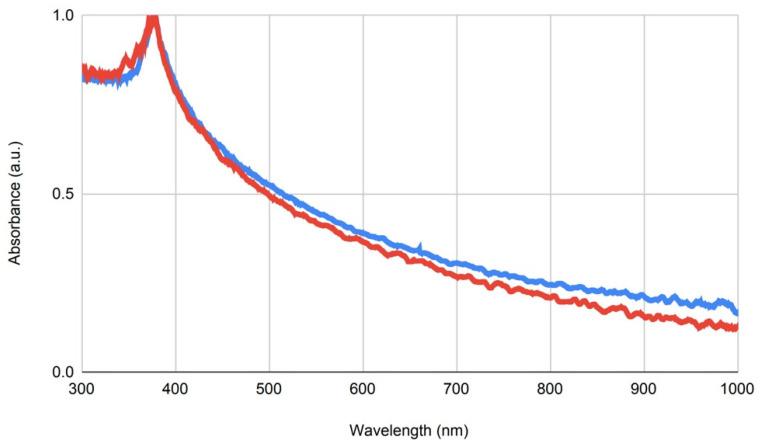
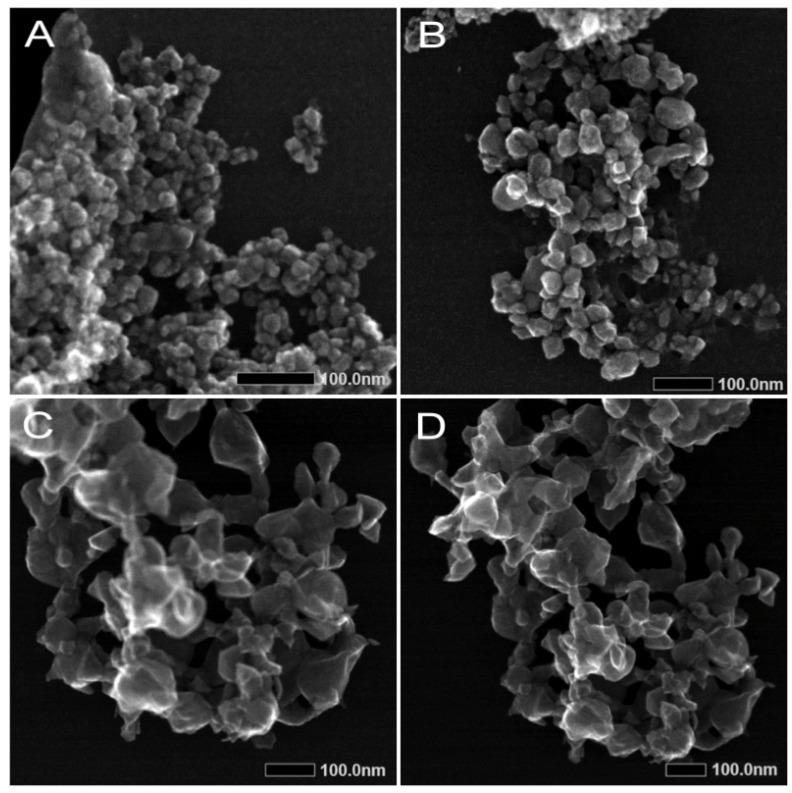
The highly contagious SARS-CoV-2 virus is primarily transmitted through respiratory droplets, aerosols, and contaminated surfaces. In addition to antiviral drugs, the decontamination of surfaces and personal protective equipment (PPE) is crucial to mitigate the spread of infection. Conventional approaches, including ultraviolet radiation, vaporized hydrogen peroxide, heat and liquid chemicals, can damage materials or lack comprehensive, effective disinfection. Consequently, alternative material-compatible and sustainable methods, such as nanomaterial coatings, are needed. Therefore, the antiviral activity of two novel zinc-oxide nanoparticles (ZnO-NP) against SARS-CoV-2 was investigated in vitro. Each nanoparticle was produced by applying highly efficient "green" synthesis techniques, which are free of fossil derivatives and use nitrate, chlorate and sulfonate salts as starting materials and whey as chelating agents. The two "green" nanomaterials differ in size distribution, with ZnO-NP-45 consisting of particles ranging from 30 nm to 60 nm and ZnO-NP-76 from 60 nm to 92 nm. Human lung epithelial cells (Calu-3) were infected with SARS-CoV-2, pre-treated in suspensions with increasing ZnO-NP concentrations up to 20 mg/mL. Both "green" materials were compared to commercially available ZnO-NP as a reference. While all three materials were active against both virus variants at concentrations of 10-20 mg/mL, ZnO-NP-45 was found to be more active than ZnO-NP-76 and the reference material, resulting in the inactivation of the Delta and Omicron SARS-CoV-2 variants by a factor of more than 10. This effect could be due to its greater total reactive surface, as evidenced by transmission electron microscopy and dynamic light scattering. Higher variations in virus inactivation were found for the latter two nanomaterials, ZnO-NP-76 and ZnO-NP-ref, which putatively may be due to secondary infections upon incomplete inactivation inside infected cells caused by insufficient NP loading of the virions. Taken together, inactivation with 20 mg/mL ZnO-NP-45 seems to have the greatest effect on both SARS-CoV-2 variants tested. Prospective ZnO-NP applications include an antiviral coating of filters or PPE to enhance user protection.
高度传染性的 SARS-CoV-2 病毒主要通过呼吸道飞沫、气溶胶和受污染的表面传播。除了抗病毒药物外,表面和个人防护设备 (PPE) 的消毒对于减轻感染传播至关重要。传统方法,包括紫外线辐射、汽化过氧化氢、热和液体化学品,可能会损坏材料或缺乏全面、有效的消毒。因此,需要替代的材料兼容和可持续的方法,例如纳米材料涂层。因此,研究了两种新型氧化锌纳米粒子 (ZnO-NP) 对 SARS-CoV-2 的抗病毒活性。每个纳米粒子都是通过应用高效的“绿色”合成技术生产的,该技术不使用化石衍生产品,并且使用硝酸盐、氯酸盐和磺酸盐作为起始材料,乳清作为螯合剂。这两种“绿色”纳米材料在粒径分布上有所不同,其中 ZnO-NP-45 由 30nm 至 60nm 的颗粒组成,而 ZnO-NP-76 由 60nm 至 92nm 的颗粒组成。人肺上皮细胞 (Calu-3) 被 SARS-CoV-2 感染,在用浓度高达 20mg/mL 的 ZnO-NP 悬浮液预先处理。将这两种“绿色”材料与市售的 ZnO-NP 进行比较作为参考。虽然所有三种材料在 10-20mg/mL 浓度下对两种病毒变体都有效,但 ZnO-NP-45 的活性比 ZnO-NP-76 和参考材料更高,导致 Delta 和 Omicron SARS-CoV-2 变体的灭活率超过 10 倍。这种效果可能是由于其更大的总反应表面积,这可以通过透射电子显微镜和动态光散射来证明。对于后两种纳米材料 ZnO-NP-76 和 ZnO-NP-ref,病毒灭活的变化更大,这可能是由于病毒粒子的 NP 负载不足,导致感染细胞内不完全灭活后二次感染。总的来说,用 20mg/mL 的 ZnO-NP-45 进行灭活似乎对两种测试的 SARS-CoV-2 变体都有最大的影响。潜在的 ZnO-NP 应用包括抗病毒过滤材料或 PPE 的涂层,以增强使用者的保护。


 Zotero 插件