
生物膜的蛋白质组学和生物膜结合合成纳米抗体的开发。
and proteomics of biofilms and the development of biofilm-binding synthetic nanobodies.
机构信息
Faculty of Medicine and Health Technology, Tampere University , Tampere, Finland.
European Molecular Biology Laboratory , Heidelberg, Germany.
出版信息
mSystems. 2023 Jun 29;8(3):e0107322. doi: 10.1128/msystems.01073-22. Epub 2023 May 15.
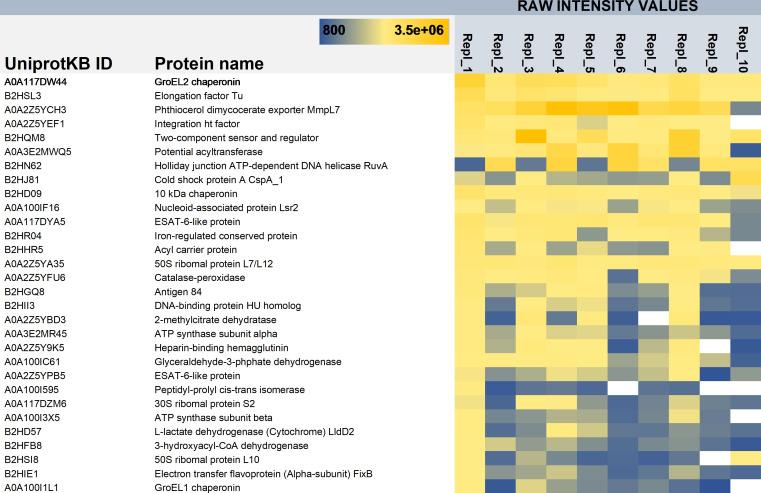
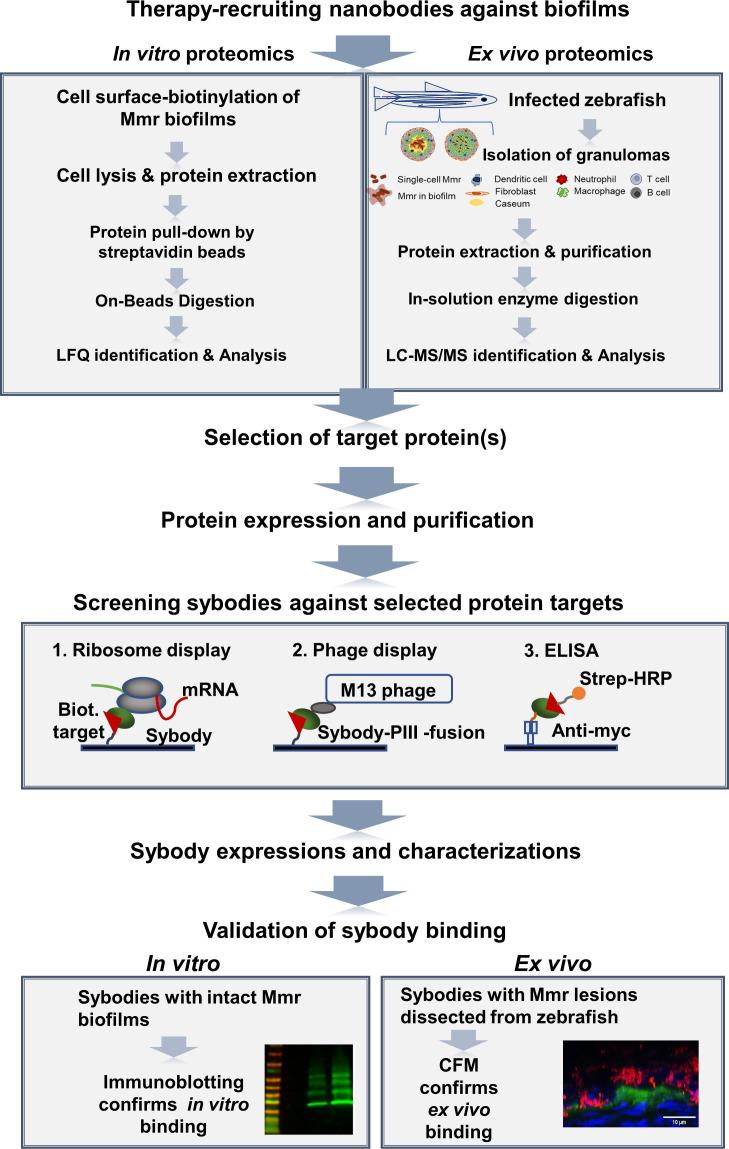
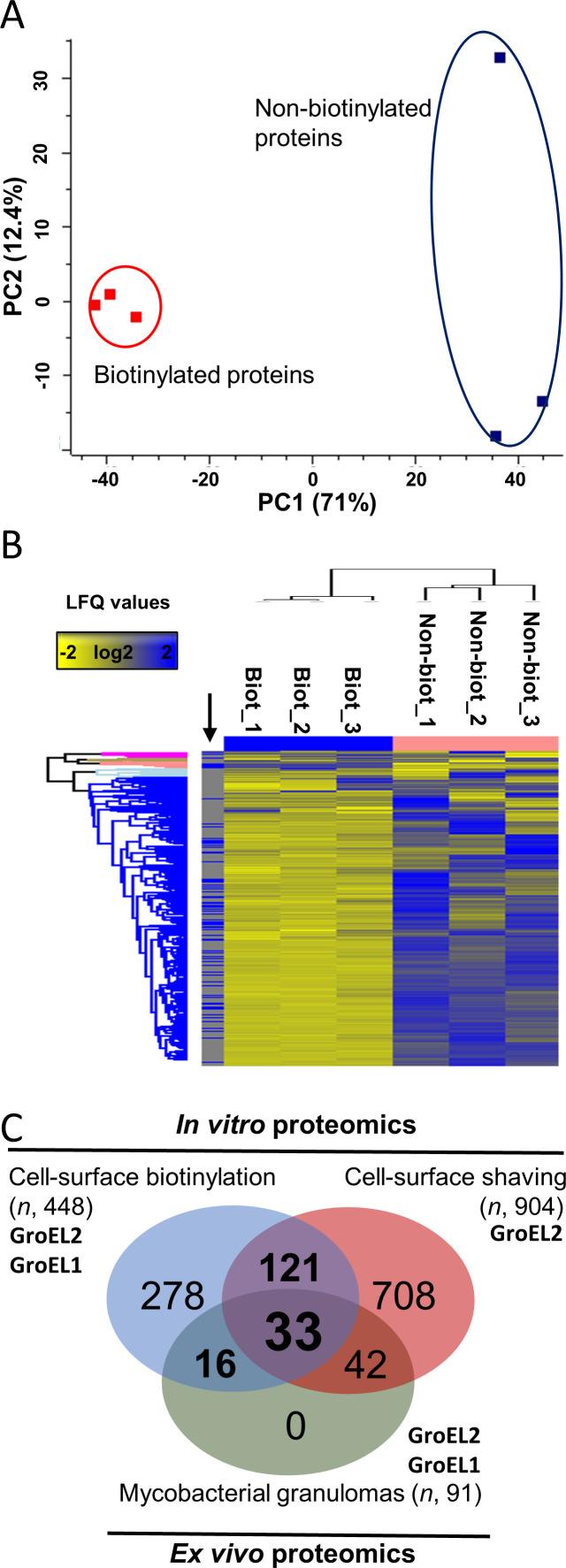
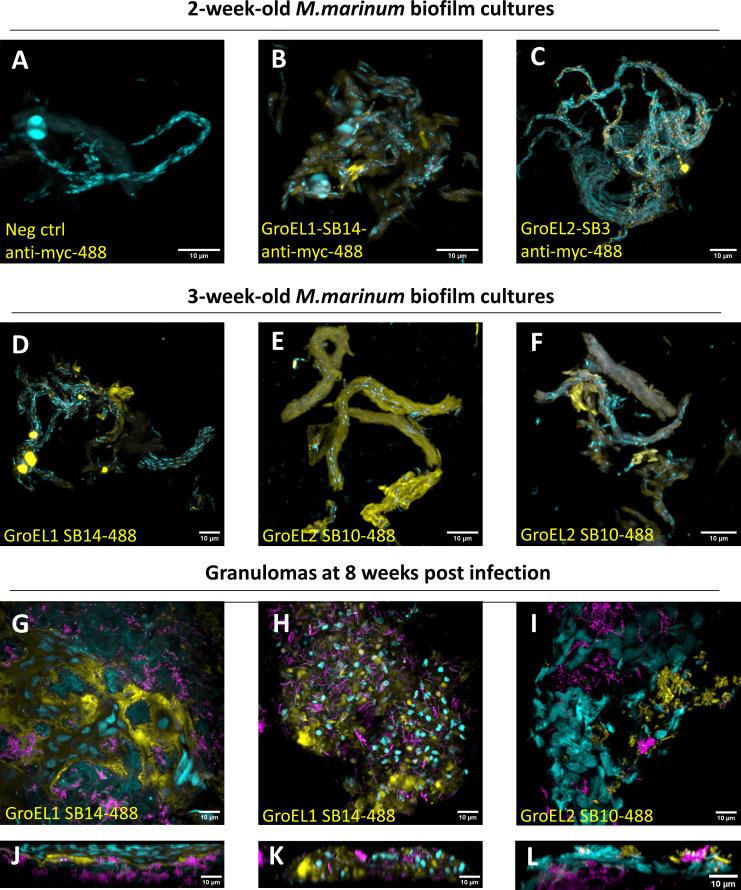
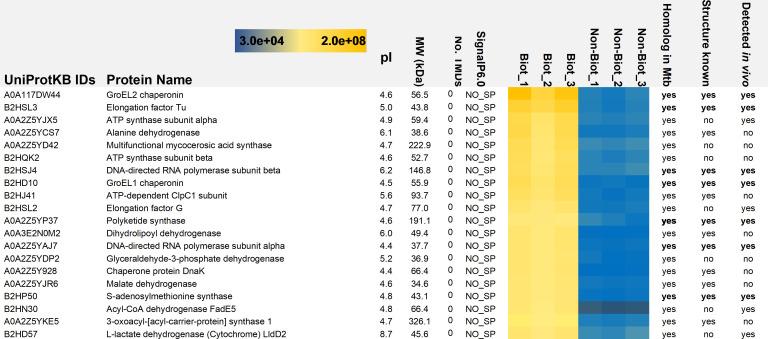
The antibiotic-tolerant biofilms present in tuberculous granulomas add an additional layer of complexity when treating mycobacterial infections, including tuberculosis (TB). For a more efficient treatment of TB, the biofilm forms of mycobacteria warrant specific attention. Here, we used (Mmr) as a biofilm-forming model to identify the abundant proteins covering the biofilm surface. We used biotinylation/streptavidin-based proteomics on the proteins exposed at the Mmr biofilm matrices to identify 448 proteins and proteomics to detect 91 Mmr proteins from the mycobacterial granulomas isolated from adult zebrafish. and proteomics data are available via ProteomeXchange with identifiers PXD033425 and PXD039416, respectively. Data comparisons pinpointed the molecular chaperone GroEL2 as the most abundant Mmr protein within the and proteomes, while its paralog, GroEL1, with a known role in biofilm formation, was detected with slightly lower intensity values. To validate the surface exposure of these targets, we created in-house synthetic nanobodies (sybodies) against the two chaperones and identified sybodies that bind the mycobacterial biofilms and those present in granulomas. Taken together, the present study reports a proof-of-concept showing that surface proteomics and proteomics combined is a valuable strategy to identify surface-exposed proteins on the mycobacterial biofilm. Biofilm surface-binding nanobodies could be eventually used as homing agents to deliver biofilm-targeting treatments to the sites of persistent biofilm infection. IMPORTANCE With the currently available antibiotics, the treatment of TB takes months. The slow response to treatment is caused by antibiotic tolerance, which is especially common among bacteria that form biofilms. Such biofilms are composed of bacterial cells surrounded by the extracellular matrix. Both the matrix and the dormant lifestyle of the bacterial cells are thought to hinder the efficacy of antibiotics. To be able to develop faster-acting treatments against TB, the biofilm forms of mycobacteria deserve specific attention. In this work, we characterize the protein composition of Mmr biofilms in bacterial cultures and in mycobacteria extracted from infected adult zebrafish. We identify abundant surface-exposed targets and develop the first sybodies that bind to mycobacterial biofilms. As nanobodies can be linked to other therapeutic compounds, in the future, they can provide means to target therapies to biofilms.
结核肉芽肿中存在的抗生素耐受生物膜为治疗分枝杆菌感染(包括结核病)增加了一个额外的复杂性。为了更有效地治疗结核病,有必要特别关注分枝杆菌的生物膜形式。在这里,我们使用 (Mmr) 作为生物膜形成模型,以确定覆盖生物膜表面的丰富蛋白质。我们使用生物素化/链霉亲和素基于蛋白质组学方法对 Mmr 生物膜基质中暴露的蛋白质进行分析,以鉴定 448 种蛋白质, 蛋白质组学检测从成年斑马鱼分离的分枝杆菌肉芽肿中的 91 种 Mmr 蛋白质。 和 蛋白质组学数据可通过 ProteomeXchange 获得,标识符分别为 PXD033425 和 PXD039416。数据比较指出分子伴侣 GroEL2 是 和 蛋白质组中最丰富的 Mmr 蛋白质,而其同源物 GroEL1 已知在生物膜形成中具有作用,但其强度值略低。为了验证这些靶标的表面暴露,我们针对这两种伴侣蛋白创建了内部合成纳米抗体 (sybodies),并鉴定了与分枝杆菌生物膜 和 肉芽肿中存在的生物膜结合的 sybodies。总的来说,本研究报告了一个概念验证,表明表面蛋白质组学 和 蛋白质组学联合是一种有价值的策略,可以鉴定分枝杆菌生物膜表面暴露的蛋白质。生物膜表面结合的纳米抗体最终可被用作归巢剂,将针对生物膜的治疗药物靶向递送至持续生物膜感染部位。
重要性 目前可用的抗生素治疗结核病需要数月时间。治疗反应缓慢是由于抗生素耐药性引起的,尤其是在形成生物膜的细菌中更为常见。这种生物膜由被细胞外基质包围的细菌细胞组成。基质和细菌细胞的休眠生活方式都被认为会阻碍抗生素的疗效。为了能够开发出针对结核病的更有效的治疗方法,分枝杆菌的生物膜形式值得特别关注。在这项工作中,我们描述了细菌培养物和从感染成年斑马鱼中提取的分枝杆菌中 Mmr 生物膜的蛋白质组成。我们鉴定了丰富的表面暴露靶标,并开发了第一个与分枝杆菌生物膜结合的 sybodies。由于纳米抗体可以与其他治疗化合物结合,因此在未来,它们可以为靶向生物膜的治疗方法提供手段。

 Zotero 插件