
雄激素受体激活诱导甲状腺癌细胞衰老。
Androgen Receptor Activation Induces Senescence in Thyroid Cancer Cells.
作者信息
Gupta Anvita, Carnazza Michelle, Jones Melanie, Darzynkiewicz Zbigniew, Halicka Dorota, O'Connell Timmy, Zhao Hong, Dadafarin Sina, Shin Edward, Schwarcz Monica D, Moscatello Augustine, Tiwari Raj K, Geliebter Jan
机构信息
Department of Pathology, Microbiology, and Immunology, New York Medical College, Valhalla, NY 10595, USA.
Department of Medicine, New York Medical College, Valhalla, NY 10595, USA.
出版信息
Cancers (Basel). 2023 Apr 7;15(8):2198. doi: 10.3390/cancers15082198.
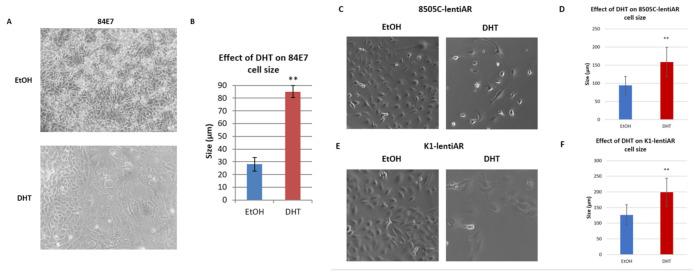
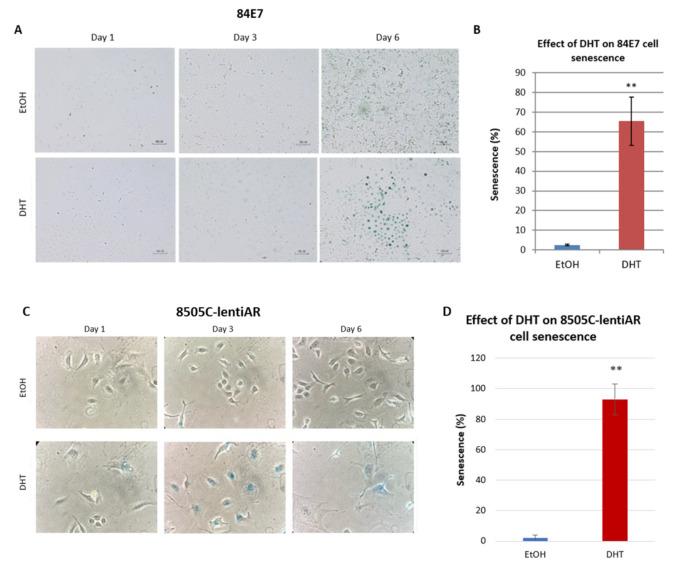
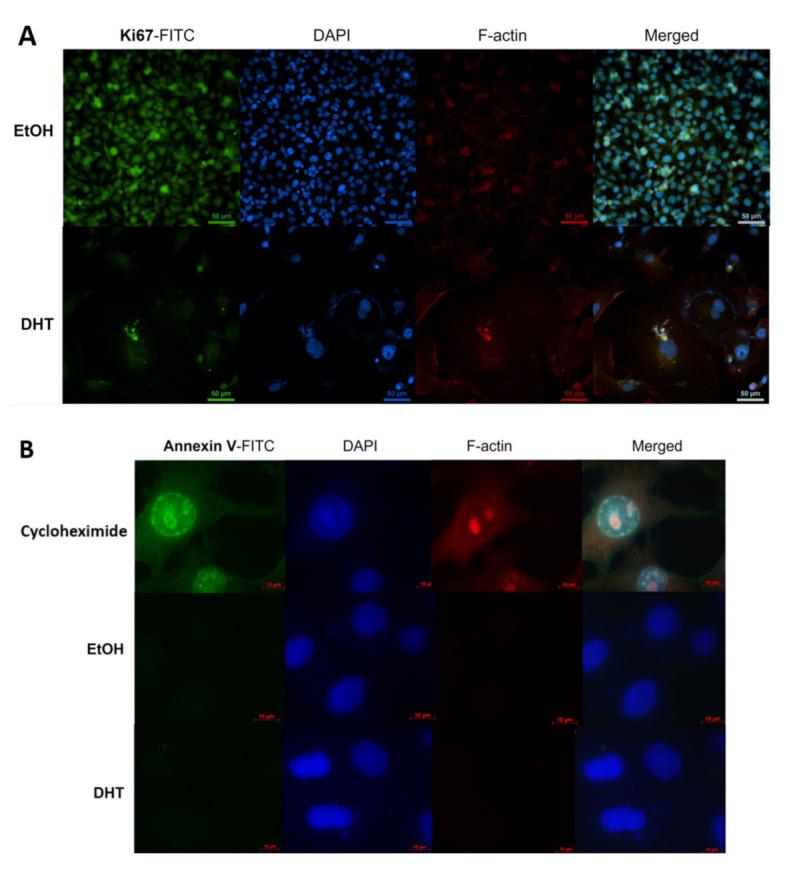
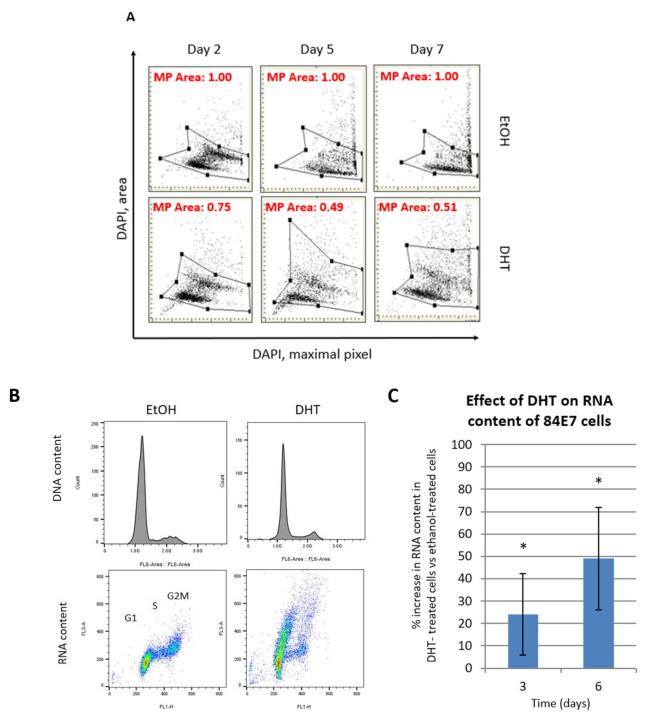
Thyroid cancer (TC) is the most common endocrine malignancy, with an approximately three-fold higher incidence in women. TCGA data indicate that androgen receptor (AR) RNA is significantly downregulated in PTC. In this study, AR-expressing 8505C (anaplastic TC) (84E7) and K1 (papillary TC) cells experienced an 80% decrease in proliferation over 6 days of exposure to physiological levels of 5α-dihydrotestosterone (DHT). In 84E7, continuous AR activation resulted in G1 growth arrest, accompanied by a flattened, vacuolized cell morphology, with enlargement of the cell and the nuclear area, which is indicative of senescence; this was substantiated by an increase in senescence-associated β-galactosidase activity, total RNA and protein content, and reactive oxygen species. Additionally, the expression of tumor suppressor proteins p16, p21, and p27 was significantly increased. A non-inflammatory senescence-associated secretory profile was induced, significantly decreasing inflammatory cytokines and chemokines such as IL-6, IL-8, TNF, RANTES, and MCP-1; this is consistent with the lower incidence of thyroid inflammation and cancer in men. Migration increased six-fold, which is consistent with the clinical observation of increased lymph node metastasis in men. Proteolytic invasion potential was not significantly altered, which is consistent with unchanged MMP/TIMP expression. Our studies provide evidence that the induction of senescence is a novel function of AR activation in thyroid cancer cells, and may underlie the protective role of AR activation in the decreased incidence of TC in men.
甲状腺癌(TC)是最常见的内分泌恶性肿瘤,女性发病率约为男性的三倍。TCGA数据表明,在乳头状甲状腺癌(PTC)中雄激素受体(AR)RNA显著下调。在本研究中,表达AR的8505C(间变性甲状腺癌)(84E7)和K1(乳头状甲状腺癌)细胞在暴露于生理水平的5α-二氢睾酮(DHT)6天后,增殖率降低了80%。在84E7细胞中,持续的AR激活导致G1期生长停滞,伴有细胞形态扁平、空泡化,细胞和核面积增大,这表明细胞衰老;衰老相关β-半乳糖苷酶活性、总RNA和蛋白质含量以及活性氧的增加证实了这一点。此外,肿瘤抑制蛋白p16、p21和p27的表达显著增加。诱导了一种非炎症性衰老相关分泌谱,显著降低了炎症细胞因子和趋化因子,如白细胞介素-6(IL-6)、白细胞介素-8(IL-8)、肿瘤坏死因子(TNF)、调节激活正常T细胞表达和分泌的趋化因子(RANTES)和单核细胞趋化蛋白-1(MCP-1);这与男性甲状腺炎症和癌症发病率较低一致。迁移增加了六倍,这与男性淋巴结转移增加的临床观察结果一致。蛋白水解侵袭潜力没有显著改变,这与基质金属蛋白酶(MMP)/组织金属蛋白酶抑制剂(TIMP)表达未改变一致。我们的研究提供了证据,表明衰老的诱导是AR激活在甲状腺癌细胞中的一种新功能,可能是AR激活对男性TC发病率降低起到保护作用的基础。



 Zotero 插件