
脊髓刺激治疗下肢和/或下肢疼痛性周围神经病变:一项叙述性综合系统评价
Painful Peripheral Neuropathies of the Lower Limbs and/or Lower Extremities Treated with Spinal Cord Stimulation: A Systematic Review with Narrative Synthesis.
作者信息
Burkey Adam R, Chen Jeffrey, Argoff Charles E, Edgar Deborah R, Petersen Erika A
机构信息
Anesis Spine and Pain Care, Renton, WA, USA.
UCSD Department of Anesthesiology Center for Pain, University of California San Diego Medical Center, La Jolla, CA, USA.
出版信息
J Pain Res. 2023 May 18;16:1607-1636. doi: 10.2147/JPR.S403715. eCollection 2023.
INTRODUCTION
Painful peripheral neuropathy (PPN) is a debilitating condition with varied etiologies. Spinal cord stimulation (SCS) is increasingly used when conservative treatments fail to provide adequate pain relief. Few published reviews have examined SCS outcomes in all forms of PPN.
METHODS
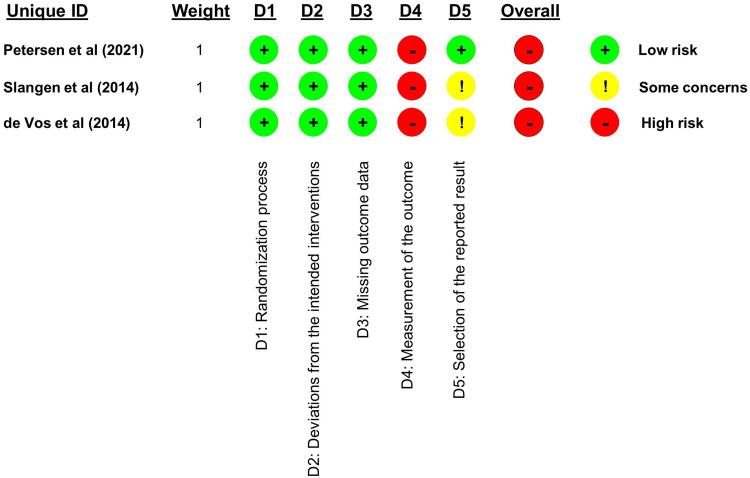
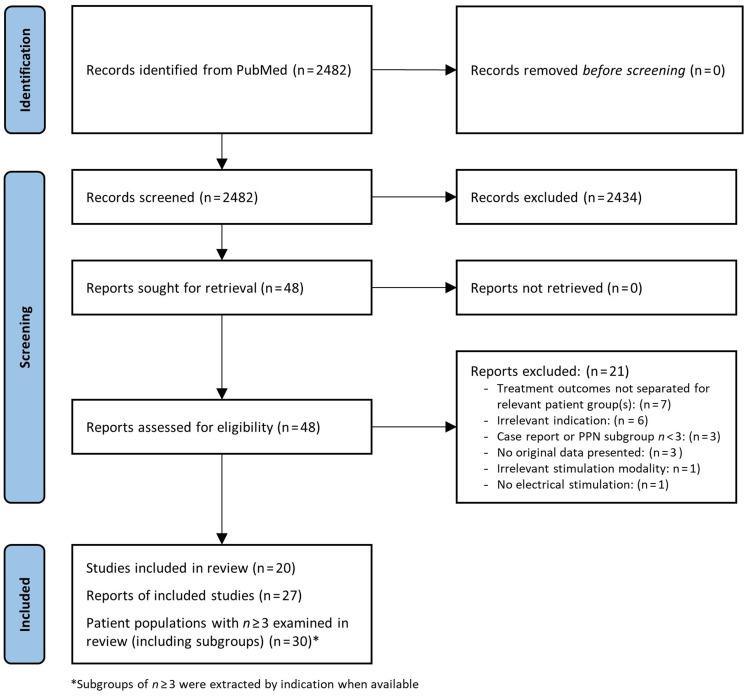
We conducted a systematic review of SCS in PPN. The PubMed database was searched up to February 7th, 2022, for peer-reviewed studies of SCS that enrolled PPN patients with pain symptoms in their lower limbs and/or lower extremities. We assessed the quality of randomized controlled trial (RCT) evidence using the Cochrane risk of bias tool. Data were tabulated and presented narratively.
RESULTS
Twenty eligible studies documented SCS treatment in PPN patients, including 10 kHz SCS, traditional low-frequency SCS (t-SCS), dorsal root ganglion stimulation (DRGS), and burst SCS. In total, 451 patients received a permanent implant (10 kHz SCS, n=267; t-SCS, n=147; DRGS, n=25; burst SCS, n=12). Approximately 88% of implanted patients had painful diabetic neuropathy (PDN). Overall, we found clinically meaningful pain relief (≥30%) with all SCS modalities. Among the studies, RCTs supported the use of 10 kHz SCS and t-SCS to treat PDN, with 10 kHz SCS providing a higher reduction in pain (76%) than t-SCS (38-55%). Pain relief with 10 kHz SCS and DRGS in other PPN etiologies ranged from 42-81%. In addition, 66-71% of PDN patients and 38% of nondiabetic PPN patients experienced neurological improvement with 10 kHz SCS.
CONCLUSION
Our review found clinically meaningful pain relief in PPN patients after SCS treatment. RCT evidence supported the use of 10 kHz SCS and t-SCS in the diabetic neuropathy subpopulation, with more robust pain relief evident with 10 kHz SCS. Outcomes in other PPN etiologies were also promising for 10 kHz SCS. In addition, a majority of PDN patients experienced neurological improvement with 10 kHz SCS, as did a notable subset of nondiabetic PPN patients.
引言
疼痛性周围神经病变(PPN)是一种病因多样的使人衰弱的病症。当保守治疗无法充分缓解疼痛时,脊髓刺激(SCS)的应用越来越广泛。很少有已发表的综述研究过SCS在所有形式的PPN中的治疗效果。
方法
我们对PPN中SCS的应用进行了系统综述。截至2022年2月7日,在PubMed数据库中检索了关于SCS的同行评审研究,这些研究纳入了下肢和/或下肢有疼痛症状的PPN患者。我们使用Cochrane偏倚风险工具评估随机对照试验(RCT)证据的质量。数据制成表格并进行叙述性呈现。
结果
20项符合条件的研究记录了PPN患者的SCS治疗情况,包括10kHz SCS、传统低频SCS(t-SCS)、背根神经节刺激(DRGS)和爆发式SCS。共有451例患者接受了永久性植入(10kHz SCS,n = 267;t-SCS,n = 147;DRGS,n = 25;爆发式SCS,n = 12)。约88%的植入患者患有疼痛性糖尿病神经病变(PDN)。总体而言,我们发现所有SCS方式都能带来具有临床意义的疼痛缓解(≥30%)。在这些研究中,RCT支持使用10kHz SCS和t-SCS治疗PDN,10kHz SCS的疼痛缓解程度(76%)高于t-SCS(38 - 55%)。10kHz SCS和DRGS在其他PPN病因中的疼痛缓解率在42% - 81%之间。此外,66% - 71%的PDN患者和38%的非糖尿病PPN患者在接受10kHz SCS治疗后神经功能得到改善。
结论
我们的综述发现,SCS治疗后PPN患者有具有临床意义的疼痛缓解。RCT证据支持在糖尿病神经病变亚组中使用10kHz SCS和t-SCS,10kHz SCS的疼痛缓解效果更显著。10kHz SCS在其他PPN病因中的治疗效果也很有前景。此外,大多数PDN患者以及相当一部分非糖尿病PPN患者在接受10kHz SCS治疗后神经功能得到改善。
 Zotero 插件