
视觉皮层的非侵入性混合超声体内刺激
Non-Invasive Hybrid Ultrasound Stimulation of Visual Cortex In Vivo.
作者信息
Gong Chen, Li Runze, Lu Gengxi, Ji Jie, Zeng Yushun, Chen Jiawen, Chang Chifeng, Zhang Junhang, Xia Lily, Nair Deepthi S Rajendran, Thomas Biju B, Song Brian J, Humayun Mark S, Zhou Qifa
机构信息
Department of Biomedical Engineering, University of Southern California, Los Angeles, CA 90089, USA.
USC Roski Eye Institute, Keck School of Medicine of University of Southern California, Los Angeles, CA 90033, USA.
出版信息
Bioengineering (Basel). 2023 May 10;10(5):577. doi: 10.3390/bioengineering10050577.
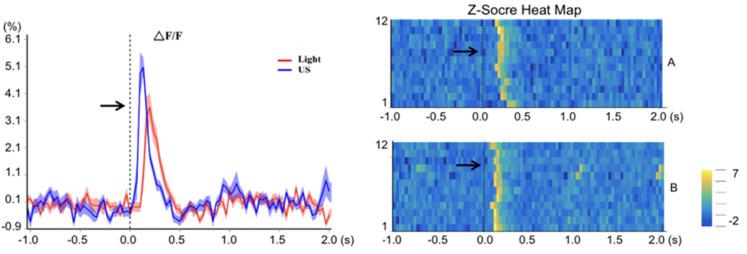
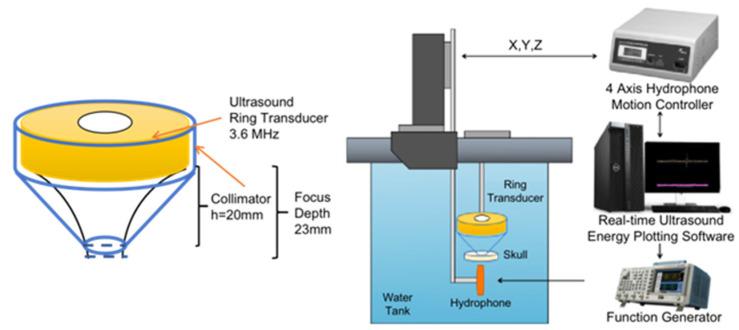
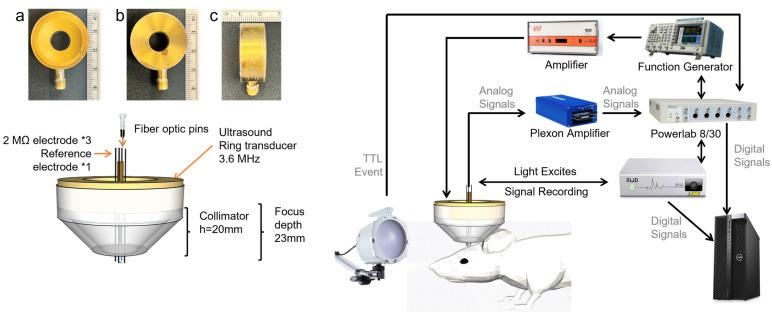
The optic nerve is the second cranial nerve (CN II) that connects and transmits visual information between the retina and the brain. Severe damage to the optic nerve often leads to distorted vision, vision loss, and even blindness. Such damage can be caused by various types of degenerative diseases, such as glaucoma and traumatic optic neuropathy, and result in an impaired visual pathway. To date, researchers have not found a viable therapeutic method to restore the impaired visual pathway; however, in this paper, a newly synthesized model is proposed to bypass the damaged portion of the visual pathway and set up a direct connection between a stimulated visual input and the visual cortex (VC) using Low-frequency Ring-transducer Ultrasound Stimulation (LRUS). In this study, by utilizing and integrating various advanced ultrasonic and neurological technologies, the following advantages are achieved by the proposed LRUS model: 1. This is a non-invasive procedure that uses enhanced sound field intensity to overcome the loss of ultrasound signal due to the blockage of the skull. 2. The simulated visual signal generated by LRUS in the visual-cortex-elicited neuronal response in the visual cortex is comparable to light stimulation of the retina. The result was confirmed by a combination of real-time electrophysiology and fiber photometry. 3. VC showed a faster response rate under LRUS than light stimulation through the retina. These results suggest a potential non-invasive therapeutic method for restoring vision in optic-nerve-impaired patients using ultrasound stimulation (US).
视神经是第二对脑神经(CN II),它在视网膜和大脑之间连接并传输视觉信息。视神经的严重损伤通常会导致视力扭曲、视力丧失,甚至失明。这种损伤可能由多种退行性疾病引起,如青光眼和外伤性视神经病变,并导致视觉通路受损。迄今为止,研究人员尚未找到恢复受损视觉通路的可行治疗方法;然而,在本文中,提出了一种新合成的模型,以绕过视觉通路的受损部分,并使用低频环形换能器超声刺激(LRUS)在受刺激的视觉输入和视觉皮层(VC)之间建立直接连接。在本研究中,通过利用和整合各种先进的超声和神经技术,所提出的LRUS模型具有以下优点:1. 这是一种非侵入性程序,使用增强的声场强度来克服由于颅骨阻挡而导致的超声信号损失。2. LRUS在视觉皮层中产生的模拟视觉信号引发的视觉皮层神经元反应与视网膜的光刺激相当。实时电生理学和光纤光度法相结合证实了这一结果。3. 与通过视网膜的光刺激相比,VC在LRUS下显示出更快的反应速度。这些结果表明,使用超声刺激(US)为视神经受损患者恢复视力提供了一种潜在的非侵入性治疗方法。


 Zotero 插件