
基于细胞表面标志物的方法从转移性肿瘤组织中捕获新抗原反应性 CD8 T 细胞受体。
Cell surface marker-based capture of neoantigen-reactive CD8 T-cell receptors from metastatic tumor digests.
机构信息
Surgery Branch, Center for Cancer Research, National Cancer Institute, National Institutes of Health, Bethesda, Maryland, USA.
Surgery Branch, Center for Cancer Research, National Cancer Institute, National Institutes of Health, Bethesda, Maryland, USA
出版信息
J Immunother Cancer. 2023 May;11(5). doi: 10.1136/jitc-2022-006264.
BACKGROUND
Cellular immunotherapies using autologous tumor-infiltrating lymphocytes (TIL) can induce durable regression of epithelial cancers in selected patients with treatment-refractory metastatic disease. As the genetic engineering of T cells with tumor-reactive T-cell receptors (TCRs) comes to the forefront of clinical investigation, the rapid, scalable, and cost-effective detection of patient-specific neoantigen-reactive TIL remains a top priority.
METHODS
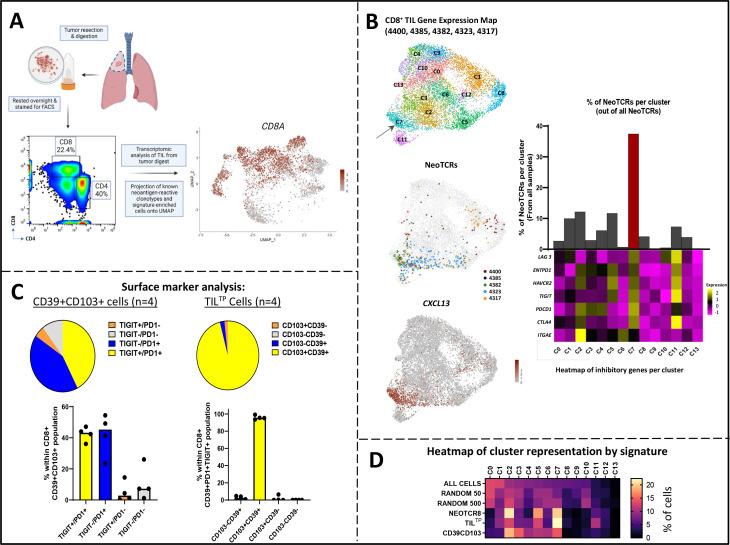
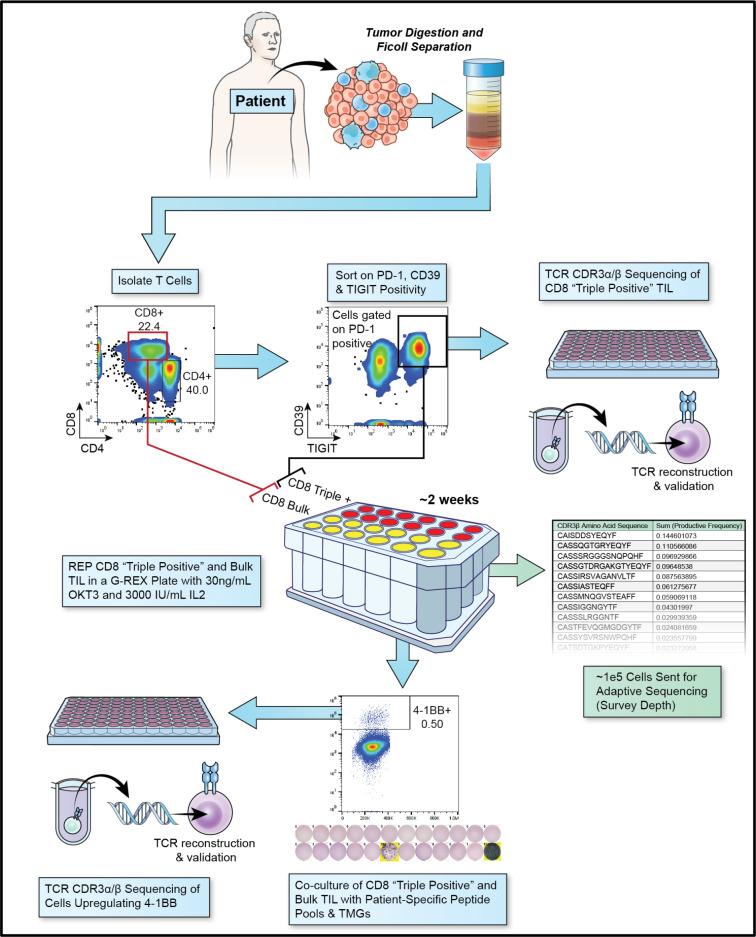
We analyzed the single-cell transcriptomic states of 31 neoantigen-specific T-cell clonotypes to identify cell surface dysfunction markers that best identified the metastatic transcriptional states enriched with antitumor TIL. We developed an efficient method to capture neoantigen-reactive TCRs directly from resected human tumors based on cell surface co-expression of CD39, programmed cell death protein-1, and TIGIT dysfunction markers (CD8 TIL).
RESULTS
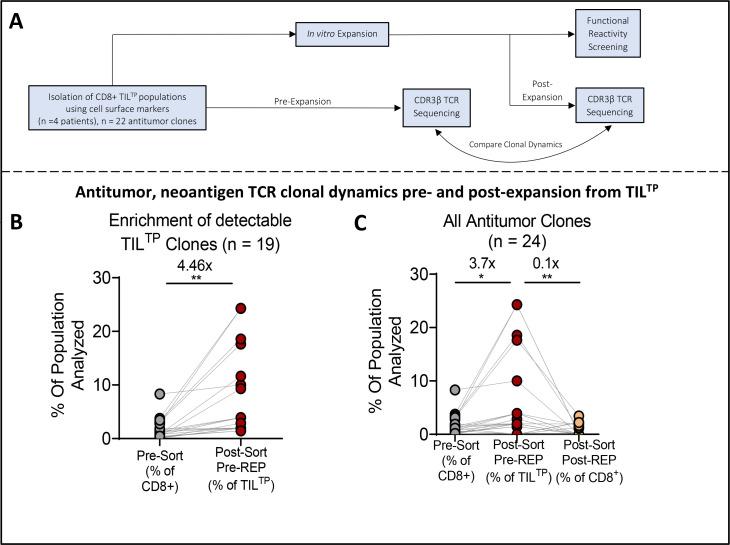
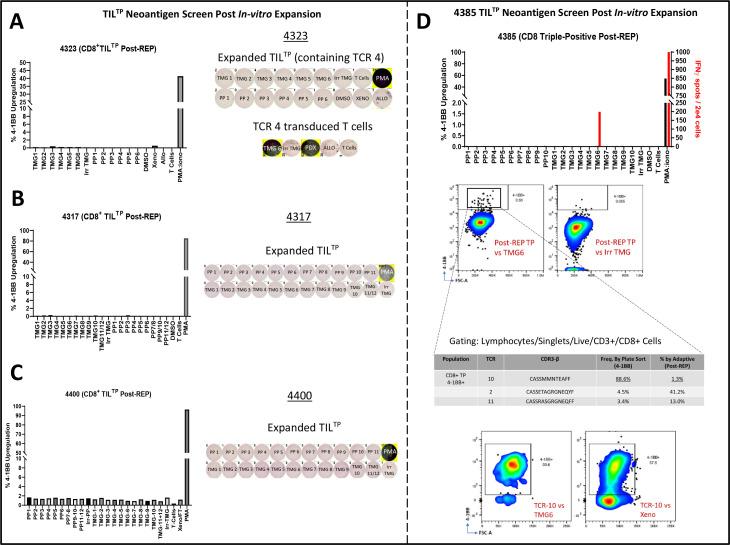
TIL TCR isolation achieved a high degree of correlation with single-cell transcriptomic signatures that identify neoantigen-reactive TCRs, making it a cost-effective strategy using widely available resources. Reconstruction of additional TIL TCRs from tumors identified known and novel antitumor TCRs, showing that at least 39.5% of TIL TCRs are neoantigen-reactive or tumor-reactive. Despite their substantial enrichment for neoantigen-reactive TCR clonotypes, clonal dynamics of 24 unique antitumor TIL clonotypes from four patients indicated that most in vitro expanded TIL populations failed to demonstrate neoantigen reactivity, either by loss of neoantigen-reactive clones during TIL expansion, or through functional impairment during cognate neoantigen recognition.
CONCLUSIONS
While direct usage of in vitro-expanded CD8 TIL as a source for cellular therapy might be precluded by profound TIL dysfunction, isolating TIL represents a streamlined effective approach to rapidly identify neoantigen-reactive TCRs to design engineered cellular immunotherapies against cancer.
背景
利用自体肿瘤浸润淋巴细胞(TIL)的细胞免疫疗法可以诱导治疗抵抗性转移性疾病患者中上皮癌的持久消退。随着针对肿瘤反应性 T 细胞受体(TCR)的 T 细胞基因工程成为临床研究的前沿,快速、可扩展且具有成本效益的检测患者特异性新抗原反应性 TIL 仍然是当务之急。
方法
我们分析了 31 个新抗原特异性 T 细胞克隆型的单细胞转录组状态,以确定最佳识别富含抗肿瘤 TIL 的转移性转录状态的细胞表面功能障碍标志物。我们开发了一种从切除的人类肿瘤中直接捕获新抗原反应性 TCR 的有效方法,该方法基于 CD39、程序性细胞死亡蛋白 1 和 TIGIT 功能障碍标志物(CD8 TIL)的细胞表面共表达。
结果
TIL TCR 分离与鉴定新抗原反应性 TCR 的单细胞转录组特征高度相关,使其成为一种使用广泛可用资源的具有成本效益的策略。从肿瘤中重建其他 TIL TCR 可鉴定已知和新的抗肿瘤 TCR,表明至少 39.5%的 TIL TCR 是新抗原反应性或肿瘤反应性的。尽管它们对新抗原反应性 TCR 克隆型有很大的富集,但来自四名患者的 24 个独特抗肿瘤 TIL 克隆型的克隆动力学表明,大多数体外扩增的 TIL 群体未能表现出新抗原反应性,要么是在 TIL 扩增过程中失去了新抗原反应性克隆,要么是在同源新抗原识别过程中功能受损。
结论
虽然体外扩增的 CD8 TIL 的直接使用可能由于 TIL 功能障碍而受到限制,但分离 TIL 代表了一种简化有效的方法,可以快速鉴定新抗原反应性 TCR,从而设计针对癌症的工程细胞免疫疗法。

 Zotero 插件