
COVID-19 患者中的多药耐药革兰氏阴性菌:一项流行病学和临床研究。
Multidrug-resistant gram-negative bacteria in patients with COVID-19: An epidemiological and clinical study.
机构信息
Laboratório de Pesquisa em Ciências da Saúde, Universidade Federal da Grande Dourados - UFGD, Dourados, Mato Grosso do Sul, Brazil.
Hospital Universitário da Universidade Federal da Grande Dourados - HU/UFGD/EBSERH, Dourados, Mato Grosso do Sul, Brazil.
出版信息
J Infect Public Health. 2023 Aug;16(8):1184-1192. doi: 10.1016/j.jiph.2023.05.017. Epub 2023 May 17.
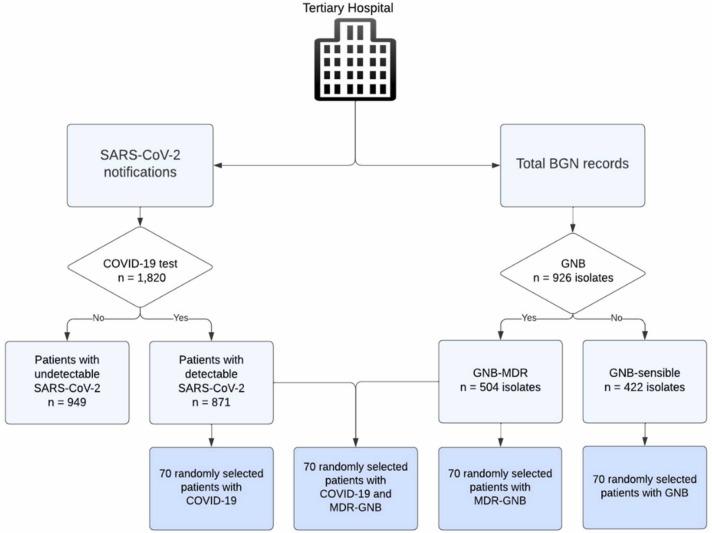
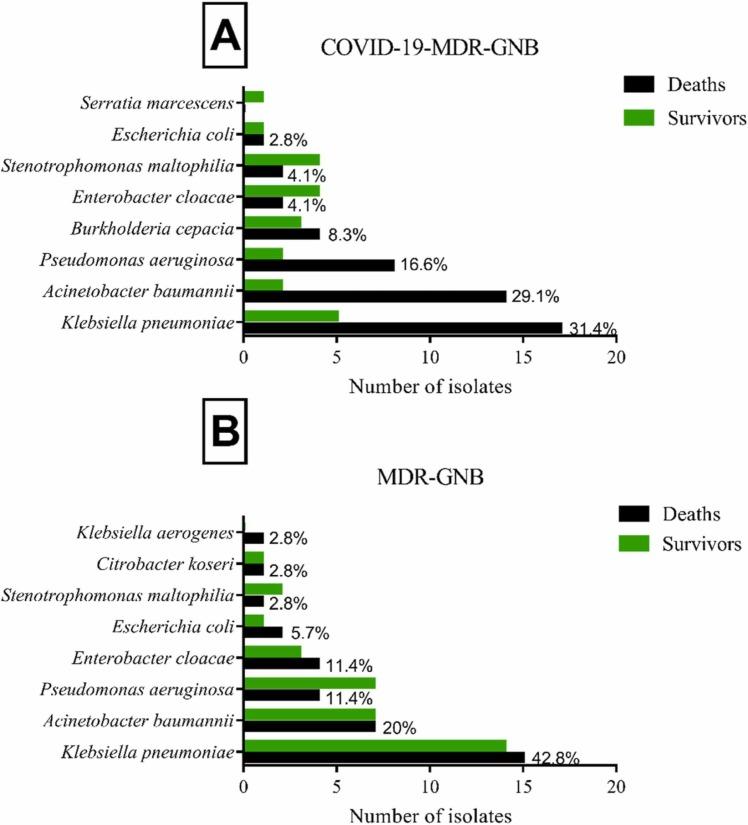
Epidemiological data regarding the incidence of secondary multidrug-resistant (MDR) Gram-negative infection in patients with coronavirus disease (COVID-19) in Brazil are still ambiguous. Thus, a case-control study was designed to determine factors associated with the acquisition of MDR Gram-negative bacteria (GNB) in patients with and without COVID-19 and describe the mortality rates and clinical features associated with unfavorable outcomes. In total, we assessed 280 patients admitted to Brazilian intensive care units from March/2020 to December/2021. During the study, 926 GNB were isolated. Out of those, 504 were MDR-GNB, representing 54.4% of the resistance rate. In addition, out of 871 patients positive for COVID-19, 73 had secondary MDR-GNB infection, which represented 8.38% of documented community-acquired GNB-MDR infections. The factors associated with patients COVID-19-MDR-GNB infections were obesity, heart failure, use of mechanical ventilation, urinary catheter, and previous use of β-lactams. Several factors associated with mortality were identified among patients with COVID-19 infected with MDR-GNB, including the use of a urinary catheter; renal failure; and the origin of bacterial cultures such as tracheal secretion, exposure to carbapenem antibiotics, and polymyxin. Mortality was significantly higher in patients with COVID-19-MDR-GNB (68.6%) compared to control groups, where COVID-19 was 35.7%, MDR-GNB was 50%, and GNB was 21.4%. Our findings demonstrate that MDR-GNB infection associated with COVID-19 has an expressive impact on increasing the case fatality rate, reinforcing the importance of minimizing the use of invasive devices and prior exposure to antimicrobials to control the bacterial spread in healthcare environments to improve the prognosis among critical patients.
关于巴西冠状病毒病(COVID-19)患者继发性多重耐药(MDR)革兰氏阴性感染发病率的流行病学数据仍存在不确定性。因此,设计了一项病例对照研究,以确定 COVID-19 患者和非 COVID-19 患者获得 MDR 革兰氏阴性菌(GNB)的相关因素,并描述与不良结局相关的死亡率和临床特征。总共评估了 2020 年 3 月至 2021 年 12 月期间入住巴西重症监护病房的 280 名患者。在此期间,共分离出 926 株 GNB。其中,504 株为 MDR-GNB,占耐药率的 54.4%。此外,在 871 例 COVID-19 阳性患者中,有 73 例发生继发性 MDR-GNB 感染,占社区获得性 GNB-MDR 感染的 8.38%。与 COVID-19 患者 MDR-GNB 感染相关的因素是肥胖、心力衰竭、使用机械通气、导尿管和先前使用β-内酰胺类药物。在感染 MDR-GNB 的 COVID-19 患者中发现了与死亡率相关的几个因素,包括使用导尿管、肾衰竭以及细菌培养物的来源,如气管分泌物、暴露于碳青霉烯类抗生素和多粘菌素。与 COVID-19-MDR-GNB 患者相比,COVID-19 患者的死亡率显著更高(68.6%),而 COVID-19 为 35.7%、MDR-GNB 为 50%、GNB 为 21.4%。我们的研究结果表明,与 COVID-19 相关的 MDR-GNB 感染对增加病死率具有显著影响,这强调了减少侵入性设备的使用和预先接触抗生素以控制医疗机构中细菌传播的重要性,从而改善重症患者的预后。

 Zotero 插件