
老年人心血管疾病负担:基于 2019 年全球疾病负担研究。
Burden of cardiovascular disease among elderly: based on the Global Burden of Disease Study 2019.
机构信息
Department of Neurosurgery, Xiangya Hospital, Central South University, Changsha, Hunan, China.
National Clinical Research Center for Geriatric Disorders, Xiangya Hospital, Central South University, Changsha, Hunan, China.
出版信息
Eur Heart J Qual Care Clin Outcomes. 2024 Mar 1;10(2):143-153. doi: 10.1093/ehjqcco/qcad033.
BACKGROUND
The burden of elderly cardiovascular disease (CVD) has received increasing attention with population ageing worldwide.
AIMS
We reported on the global CVD burden in elderly individuals over 70, 1990-2019.
METHODS AND RESULTS
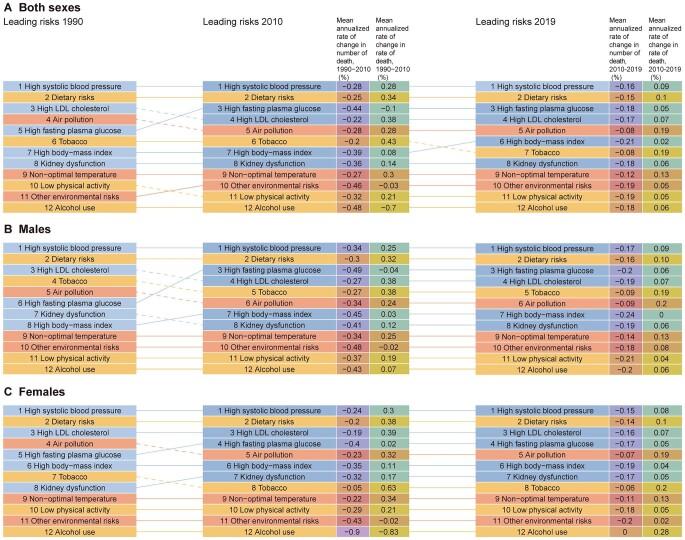
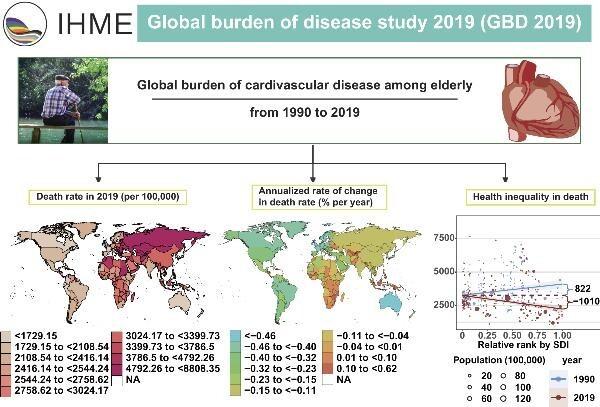
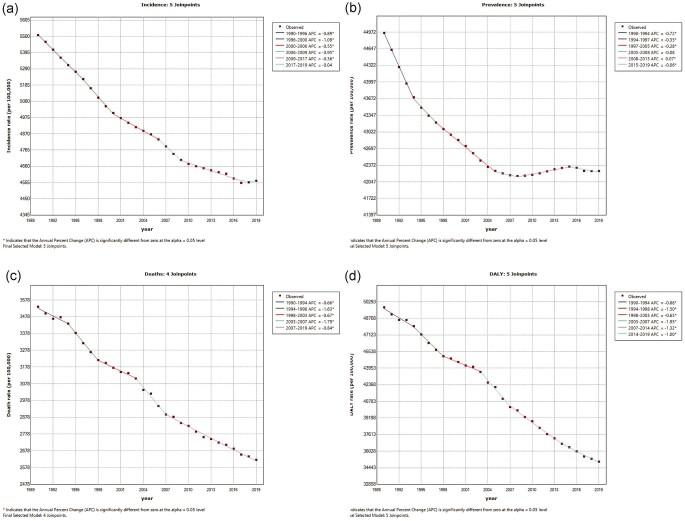
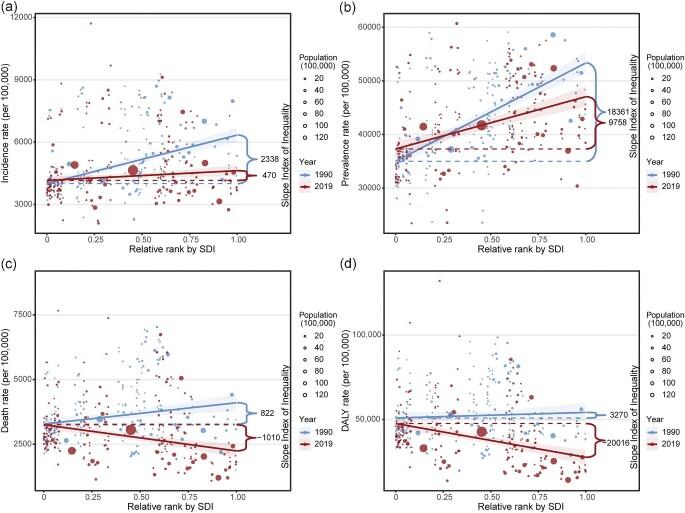
Based on the Global Burden of Disease Study 2019, elderly CVD burden data were analysed. Temporal burden trends were analysed with the joinpoint model. The slope index and concentration index were used to evaluate health inequality. From 1990 to 2019, the global elderly CVD incidence, prevalence, death, and disability-adjusted life year rates generally decreased. However, the current burden remains high. The rapid growth in burden in parts of sub-Saharan Africa and Asia is a cause for concern. Countries with a higher socio-demographic index (SDI) have generally seen a greater decrease in burden, while countries with a lower SDI have generally experienced increases or smaller declines in burden. Health inequality analysis confirmed that the burden was gradually concentrating towards countries with a low SDI. Among the different CVDs, ischaemic heart disease causes the greatest burden in elderly individuals. Most CVD burdens increase with age, but stroke and peripheral vascular disease show markedly different distributional characteristics. In addition, the burden of hypertensive heart disease shows an unusual shift towards high-SDI countries. High systolic blood pressure was consistently the leading risk factor for CVD among elderly individuals.
CONCLUSION
The burden of CVD in older people remains severe and generally tends to shift to lower-SDI countries. Policymakers need to take targeted measures to reduce its harm.
背景
随着全球人口老龄化,老年人心血管疾病(CVD)的负担日益受到关注。
目的
我们报告了 1990 年至 2019 年全球 70 岁以上老年人的 CVD 负担情况。
方法和结果
基于 2019 年全球疾病负担研究,分析了老年人心血管疾病负担数据。使用 joinpoint 模型分析了时间负担趋势。斜率指数和集中指数用于评估健康不平等。1990 年至 2019 年,全球老年人心血管疾病发病率、患病率、死亡率和伤残调整生命年率普遍下降。然而,目前的负担仍然很高。撒哈拉以南非洲和亚洲部分地区负担的快速增长令人担忧。社会人口指数(SDI)较高的国家的负担普遍下降较大,而 SDI 较低的国家的负担普遍增加或下降较小。健康不平等分析证实,负担逐渐集中在 SDI 较低的国家。在不同的 CVD 中,缺血性心脏病对老年人的负担最大。大多数 CVD 负担随年龄增长而增加,但卒中和外周血管疾病的分布特征明显不同。此外,高血压性心脏病的负担显示出向高 SDI 国家异常转移的趋势。高收缩压一直是老年人 CVD 的主要危险因素。
结论
老年人 CVD 的负担仍然严重,且普遍有向低 SDI 国家转移的趋势。政策制定者需要采取有针对性的措施来减轻其危害。

 Zotero 插件