
用于临床应用的诱导多能干细胞衍生类器官的优点与挑战。
Merits and challenges of iPSC-derived organoids for clinical applications.
作者信息
Xu Ziran, Yang Jiaxu, Xin Xianyi, Liu Chengrun, Li Lisha, Mei Xianglin, Li Meiying
机构信息
The Key Laboratory of Pathobiology, Ministry of Education, Jilin University, Changchun, Jilin, China.
Department of Clinical Laboratory, Lequn Branch, The First Hospital of Jilin University, Changchun, Jilin, China.
出版信息
Front Cell Dev Biol. 2023 May 26;11:1188905. doi: 10.3389/fcell.2023.1188905. eCollection 2023.
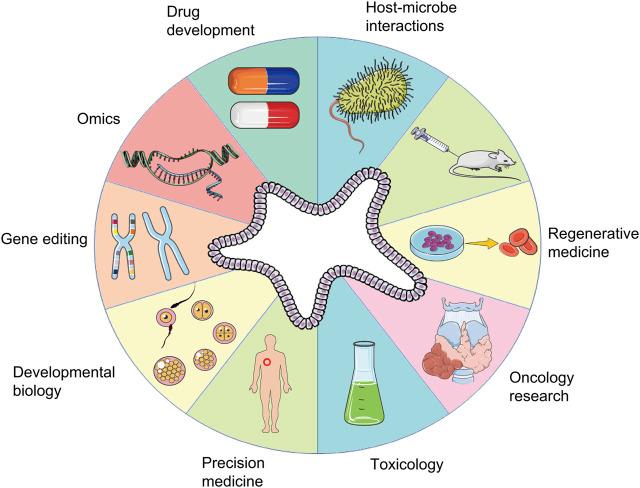
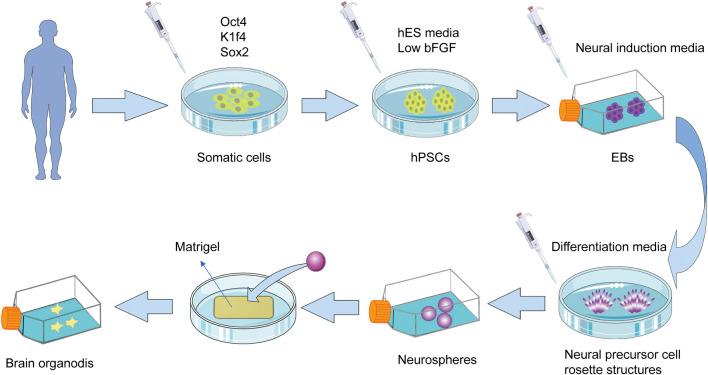
Induced pluripotent stem cells (iPSCs) have entered an unprecedented state of development since they were first generated. They have played a critical role in disease modeling, drug discovery, and cell replacement therapy, and have contributed to the evolution of disciplines such as cell biology, pathophysiology of diseases, and regenerative medicine. Organoids, the stem cell-derived 3D culture systems that mimic the structure and function of organs , have been widely used in developmental research, disease modeling, and drug screening. Recent advances in combining iPSCs with 3D organoids are facilitating further applications of iPSCs in disease research. Organoids derived from embryonic stem cells, iPSCs, and multi-tissue stem/progenitor cells can replicate the processes of developmental differentiation, homeostatic self-renewal, and regeneration due to tissue damage, offering the potential to unravel the regulatory mechanisms of development and regeneration, and elucidate the pathophysiological processes involved in disease mechanisms. Herein, we have summarized the latest research on the production scheme of organ-specific iPSC-derived organoids, the contribution of these organoids in the treatment of various organ-related diseases, in particular their contribution to COVID-19 treatment, and have discussed the unresolved challenges and shortcomings of these models.
诱导多能干细胞(iPSC)自首次产生以来,已进入了前所未有的发展阶段。它们在疾病建模、药物发现和细胞替代疗法中发挥了关键作用,并推动了细胞生物学、疾病病理生理学和再生医学等学科的发展。类器官是一种源自干细胞的三维培养系统,可模拟器官的结构和功能,已广泛应用于发育研究、疾病建模和药物筛选。将iPSC与三维类器官相结合的最新进展,正在推动iPSC在疾病研究中的进一步应用。源自胚胎干细胞、iPSC和多组织干细胞/祖细胞的类器官,能够复制发育分化、稳态自我更新以及因组织损伤而再生的过程,这为揭示发育和再生的调控机制以及阐明疾病机制中涉及的病理生理过程提供了潜力。在此,我们总结了关于器官特异性iPSC衍生类器官生产方案的最新研究、这些类器官在治疗各种器官相关疾病中的作用,特别是它们对COVID-19治疗的贡献,并讨论了这些模型尚未解决的挑战和不足之处。


 Zotero 插件