
β-重型地中海贫血患者的营养研究:简要综述。
Nutritional studies in patients with β-thalassemia major: A short review.
机构信息
Department of Pediatrics, Hamad General Hospital, Doha, Qatar.
.
出版信息
Acta Biomed. 2023 Jun 14;94(3):e2023187. doi: 10.23750/abm.v94i3.14732.
BACKGROUND
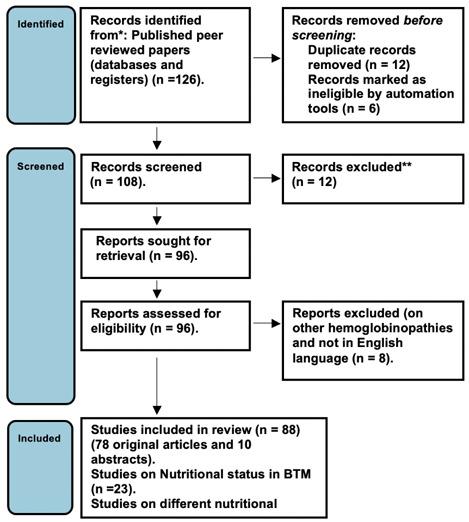
Patients with β-thalassemia major (BTM) had variable prevalence of undernutrition and abnormal body composition. Methods: We performed an electronic search in PubMed, Scopus, Research gate, and Web of Sciences to evaluate the prevalence of nutritional disorders in patients with BTM worldwide in relation to their body composition and possible etiological factors. In addition, we reviewed the published nutritional intervention studies. Results: 22 studies on the prevalence of undernutrition (12 countries) and 23 nutritional intervention studies were analyzed. Undernutrition occurred in a considerable number of patients but varied greatly among different countries (from 5.2% to 70%). The lower middle income (LMI) countries (India, Pakistan, Iran, Egypt) had higher prevalence, while (high -middle and high income (Turkey, Greece, North America, USA, Canada) had lower prevalence. Even in patients with normal BMI, abnormalities of body composition are common with decreased muscle mass, lean-body mass, and bone mineral density. 65% to 75% of them had lower energy intake with low levels of circulating nutrients, minerals (zinc, selenium, and copper), and vitamins (D, E) versus controls. Increased macro and micronutrient requirements decreased absorption and /or increased loss or excretion are etiologic factors. Undernutrition was associated with short stature and lower quality of life (QOL). High prevalence of endocrinopathies, poor transfusion regimen (tissue hypoxia), improper chelation, and lack of maternal education, represented important risk factors in the production of poor growth in weight and stature.
CONCLUSIONS
Timely detection of undernutrition in patients with BTM and proper nutritional intervention could prevent growth delay and comorbidities.
背景
重型 β-地中海贫血(BTM)患者存在不同程度的营养不良和异常的身体成分。方法:我们在 PubMed、Scopus、Research gate 和 Web of Sciences 上进行了电子检索,评估了全球 BTM 患者营养障碍的流行情况及其与身体成分和可能的病因因素的关系。此外,我们还回顾了已发表的营养干预研究。结果:分析了 12 个国家 22 项关于营养不良患病率的研究和 23 项营养干预研究。营养不良在相当多的患者中发生,但在不同国家之间差异很大(从 5.2%到 70%)。中低收入国家(印度、巴基斯坦、伊朗、埃及)患病率较高,而中高收入和高收入国家(土耳其、希腊、北美、美国、加拿大)患病率较低。即使 BMI 正常,身体成分也常出现异常,肌肉量、瘦体重和骨矿物质密度减少。65%至 75%的患者能量摄入较低,循环营养素、矿物质(锌、硒和铜)和维生素(D、E)水平较低。增加宏量和微量营养素需求、减少吸收和/或增加丢失或排泄是病因因素。营养不良与身材矮小和生活质量(QOL)降低有关。内分泌疾病、输血方案不佳(组织缺氧)、螯合不当和缺乏母婴教育的高发,是体重和身高生长不良的重要危险因素。结论:及时发现 BTM 患者的营养不良并进行适当的营养干预,可以预防生长迟缓及并发症。

 Zotero 插件