
肝类器官:肿瘤进展和肝癌精准医学中洞察和创新的有前途的三维模型。
Liver organoids: a promising three-dimensional model for insights and innovations in tumor progression and precision medicine of liver cancer.
机构信息
Organ Transplant Center, The First Affiliated Hospital, Sun Yat-sen University, Guangzhou, China.
Zhongshan School of Medicine, Sun Yat-sen University, Guangzhou, China.
出版信息
Front Immunol. 2023 Jun 2;14:1180184. doi: 10.3389/fimmu.2023.1180184. eCollection 2023.
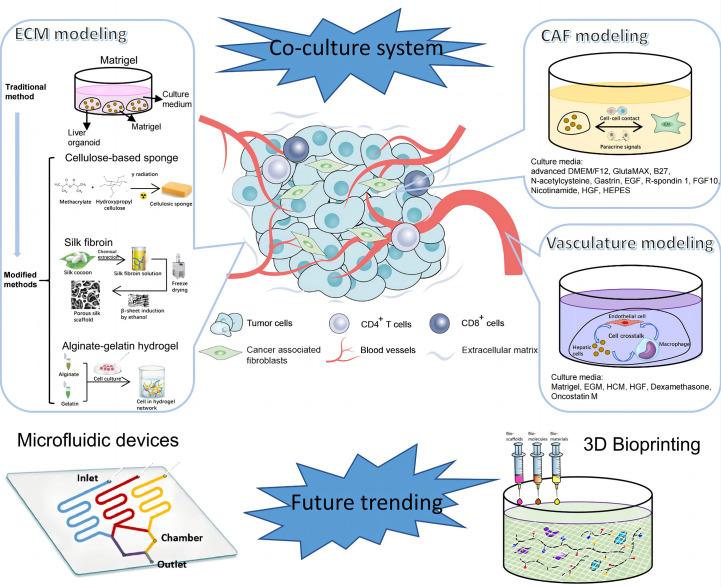
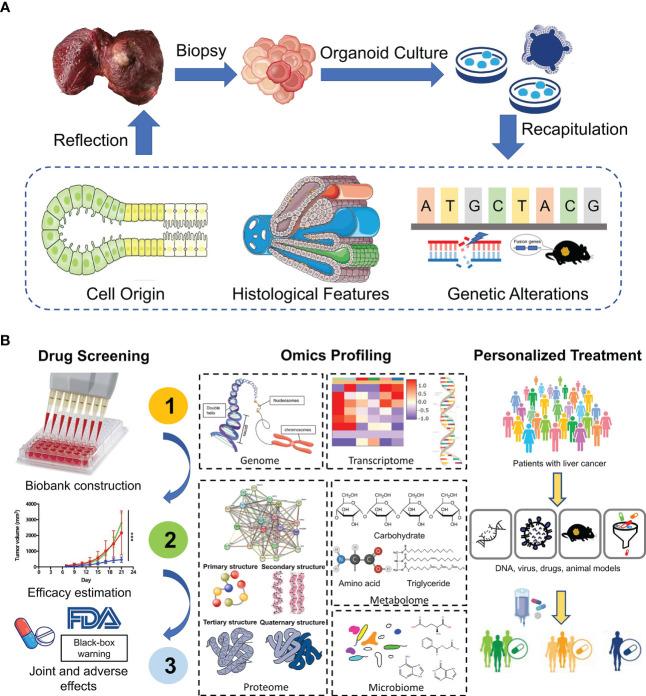
Primary liver cancer (PLC) is one type of cancer with high incidence rate and high mortality rate in the worldwide. Systemic therapy is the major treatment for PLC, including surgical resection, immunotherapy and targeted therapy. However, mainly due to the heterogeneity of tumors, responses to the above drug therapy differ from person to person, indicating the urgent needs for personalized treatment for PLC. Organoids are 3D models derived from adult liver tissues or pluripotent stem cells. Based on the ability to recapitulate the genetic and functional features of tissues, organoids have assisted biomedical research to make tremendous progress in understanding disease origin, progression and treatment strategies since their invention and application. In liver cancer research, liver organoids contribute greatly to reflecting the heterogeneity of liver cancer and restoring tumor microenvironment (TME) by co-organizing tumor vasculature and stromal components . Therefore, they provide a promising platform for further investigation into the biology of liver cancer, drug screening and precision medicine for PLC. In this review, we discuss the recent advances of liver organoids in liver cancer, in terms of generation methods, application in precision medicine and TME modeling.
原发性肝癌(PLC)是一种在全球范围内发病率和死亡率都很高的癌症。系统治疗是 PLC 的主要治疗方法,包括手术切除、免疫治疗和靶向治疗。然而,主要由于肿瘤的异质性,对上述药物治疗的反应因人而异,这表明 PLC 迫切需要个性化治疗。类器官是源自成人肝组织或多能干细胞的 3D 模型。基于重现组织遗传和功能特征的能力,自发明和应用以来,类器官已极大地促进了对疾病起源、进展和治疗策略的生物医学研究。在肝癌研究中,肝类器官通过共同组织肿瘤血管和基质成分,为反映肝癌的异质性和恢复肿瘤微环境(TME)做出了巨大贡献。因此,它们为进一步研究肝癌生物学、药物筛选和 PLC 的精准医学提供了一个有前途的平台。在这篇综述中,我们讨论了肝类器官在肝癌中的最新进展,包括生成方法、在精准医学和 TME 建模中的应用。

 Zotero 插件