
东非抗菌药物耐药背景下的患者治疗路径研究
Unravelling patient pathways in the context of antibacterial resistance in East Africa.
机构信息
School of Geography and Sustainable Development, University of St. Andrews, St Andrews, KY16 9AL, UK.
Makerere University, Kampala, Uganda.
出版信息
BMC Infect Dis. 2023 Jun 19;23(1):414. doi: 10.1186/s12879-023-08392-9.
BACKGROUND
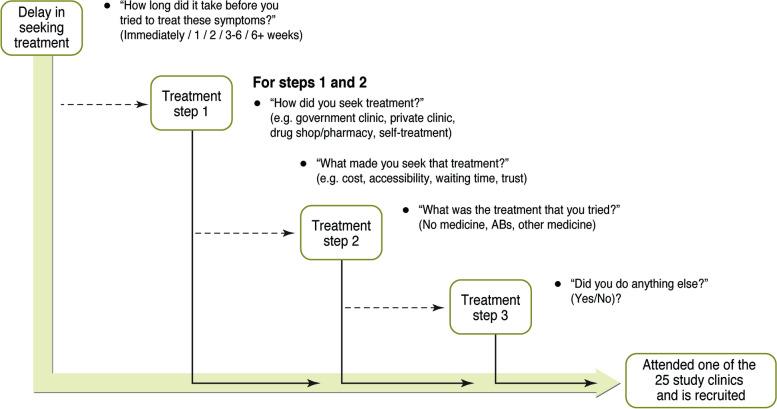
A key factor driving the development and maintenance of antibacterial resistance (ABR) is individuals' use of antibiotics (ABs) to treat illness. To better understand motivations and context for antibiotic use we use the concept of a patient treatment-seeking pathway: a treatment journey encompassing where patients go when they are unwell, what motivates their choices, and how they obtain antibiotics. This paper investigates patterns and determinants of patient treatment-seeking pathways, and how they intersect with AB use in East Africa, a region where ABR-attributable deaths are exceptionally high.
METHODS
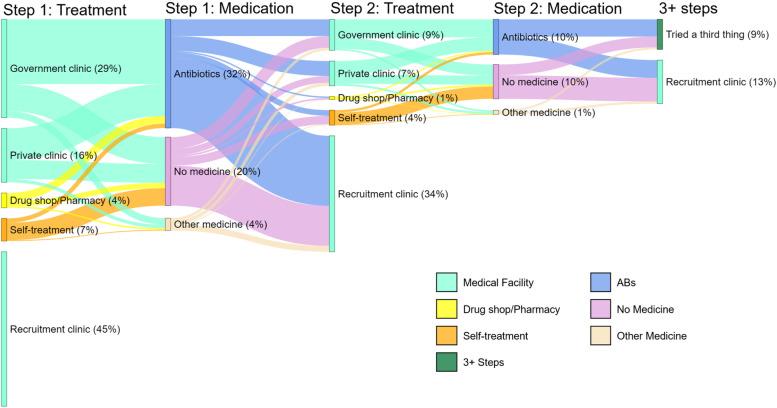
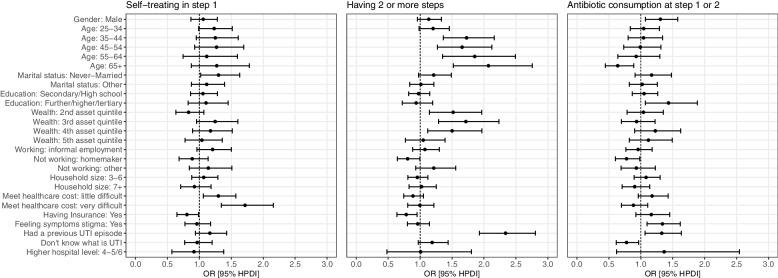
The Holistic Approach to Unravelling Antibacterial Resistance (HATUA) Consortium collected quantitative data from 6,827 adult outpatients presenting with urinary tract infection (UTI) symptoms in Kenya, Tanzania, and Uganda between February 2019- September 2020, and conducted qualitative in-depth patient interviews with a subset (n = 116). We described patterns of treatment-seeking visually using Sankey plots and explored explanations and motivations using mixed-methods. Using Bayesian hierarchical regression modelling, we investigated the associations between socio-demographic, economic, healthcare, and attitudinal factors and three factors related to ABR: self-treatment as a first step, having a multi-step treatment pathway, and consuming ABs.
RESULTS
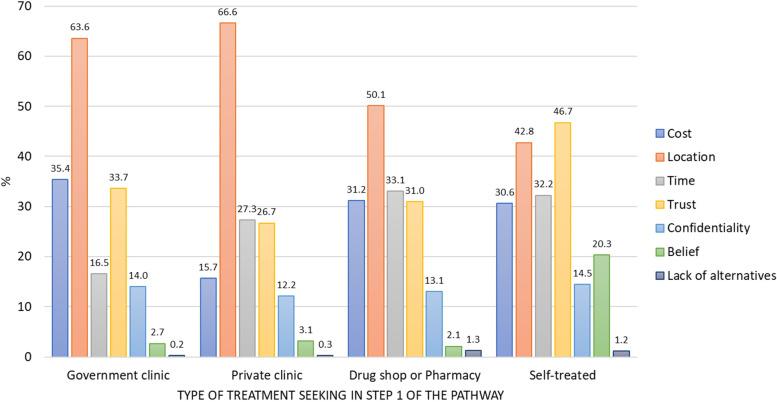
Although most patients (86%) sought help from medical facilities in the first instance, many (56%) described multi-step, repetitive treatment-seeking pathways, which further increased the likelihood of consuming ABs. Higher socio-economic status patients were more likely to consume ABs and have multi-step pathways. Reasons for choosing providers (e.g., cost, location, time) were conditioned by wider structural factors such as hybrid healthcare systems and AB availability.
CONCLUSION
There is likely to be a reinforcing cycle between complex, repetitive treatment pathways, AB consumption and ABR. A focus on individual antibiotic use as the key intervention point in this cycle ignores the contextual challenges patients face when treatment seeking, which include inadequate access to diagnostics, perceived inefficient public healthcare and ease of purchasing antibiotics without prescription. Pluralistic healthcare landscapes may promote more complex treatment seeking and therefore inappropriate AB use. We recommend further attention to healthcare system factors, focussing on medical facilities (e.g., accessible diagnostics, patient-doctor interactions, information flows), and community AB access points (e.g., drug sellers).
背景
导致抗菌药物耐药性(ABR)产生和持续存在的一个关键因素是个体使用抗生素(ABs)治疗疾病。为了更好地了解抗生素使用的动机和背景,我们采用了患者治疗寻求途径的概念:一种治疗过程,包括患者在不适时去何处、是什么促使他们做出选择以及他们如何获得抗生素。本文研究了东非地区(该地区因 ABR 导致的死亡人数异常高)患者治疗寻求途径的模式和决定因素,以及它们与 AB 使用的关系。
方法
“剖析抗菌药物耐药性的整体方法(HATUA)”联盟于 2019 年 2 月至 2020 年 9 月期间,在肯尼亚、坦桑尼亚和乌干达收集了 6827 名患有尿路感染(UTI)症状的成年门诊患者的定量数据,并对其中一部分(n=116)进行了深入的定性患者访谈。我们使用 Sankey 图直观地描述了治疗寻求模式,并使用混合方法探索了解释和动机。使用贝叶斯分层回归模型,我们调查了社会人口统计学、经济、医疗保健和态度因素与三个与 ABR 相关的因素(作为第一步的自我治疗、多步骤治疗途径和使用 AB)之间的关联。
结果
尽管大多数患者(86%)首先寻求医疗机构的帮助,但许多患者(56%)描述了多步骤、重复的治疗寻求途径,这进一步增加了使用 AB 的可能性。较高社会经济地位的患者更有可能使用 AB 并采用多步骤途径。选择提供者的原因(例如,成本、位置、时间)受到混合医疗体系和 AB 可用性等更广泛的结构性因素的影响。
结论
复杂、重复的治疗途径、AB 消耗和 ABR 之间可能存在强化循环。将重点放在个体抗生素使用作为这一循环中的关键干预点上,忽略了患者在寻求治疗时面临的背景挑战,这些挑战包括诊断不足、对公共医疗保健效率低下的看法以及无需处方购买抗生素的便利性。多元化的医疗保健格局可能会促进更复杂的治疗寻求和因此不适当的 AB 使用。我们建议进一步关注医疗体系因素,重点关注医疗机构(例如,可及的诊断、医患互动、信息流)和社区 AB 接触点(例如,药店)。

 Zotero 插件