
神经健康与疾病中的神经元-星形胶质细胞全向信号传导
Neuron-astrocyte omnidirectional signaling in neurological health and disease.
作者信息
Pathak Dhruba, Sriram Krishnan
机构信息
Health Effects Laboratory Division, National Institute for Occupational Safety and Health, Centers for Disease Control and Prevention, Morgantown, WV, United States.
出版信息
Front Mol Neurosci. 2023 Jun 8;16:1169320. doi: 10.3389/fnmol.2023.1169320. eCollection 2023.
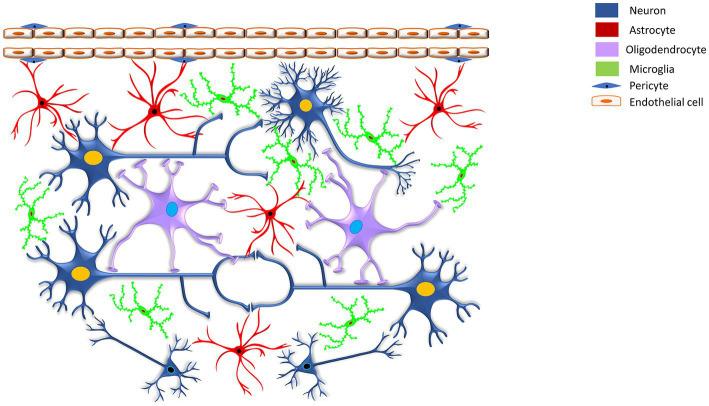
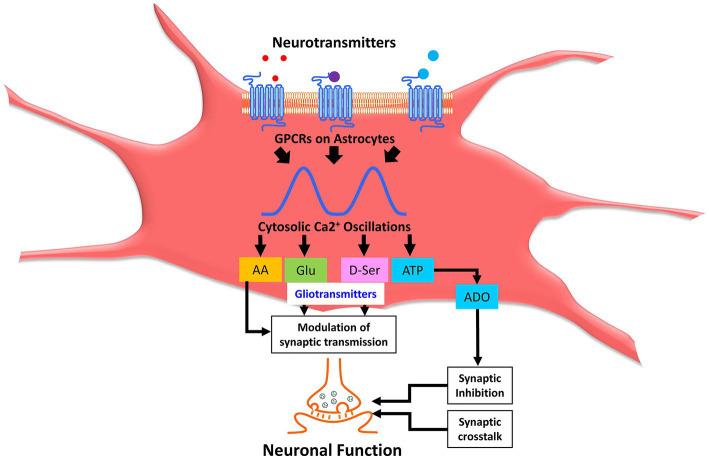
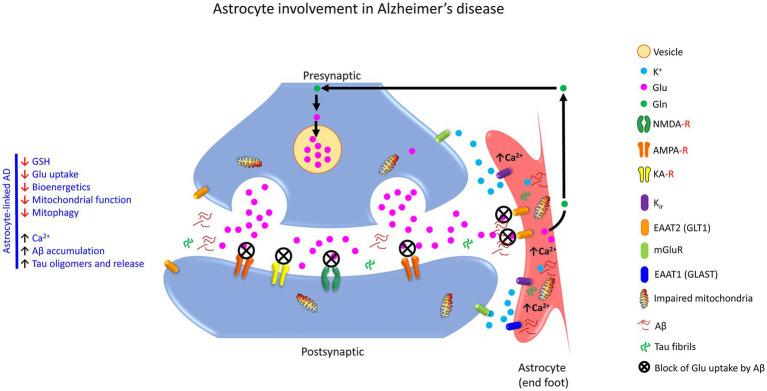
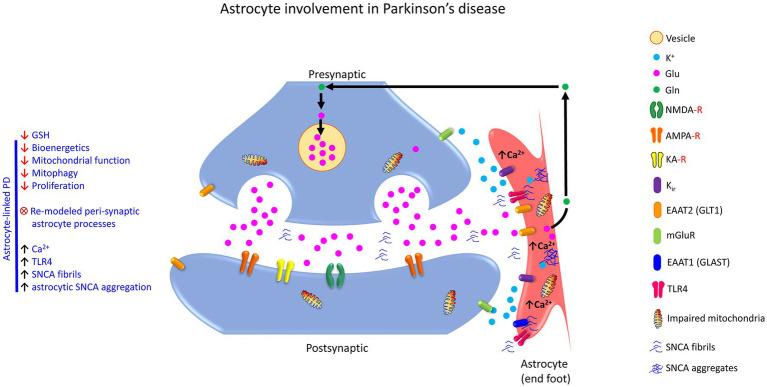
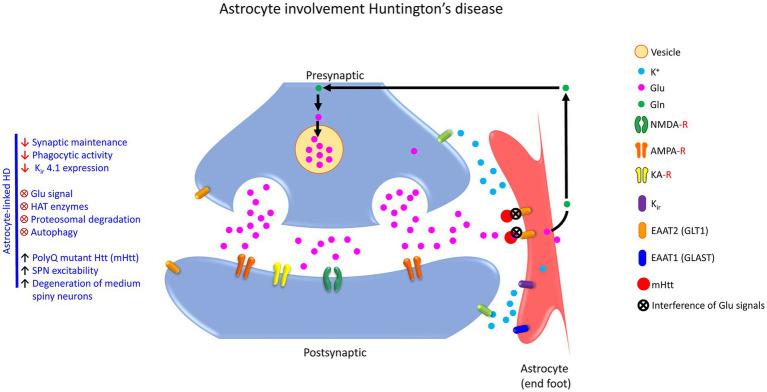
Astrocytes are an abundantly distributed population of glial cells in the central nervous system (CNS) that perform myriad functions in the normal and injured/diseased brain. Astrocytes exhibit heterogeneous phenotypes in response to various insults, a process known as astrocyte reactivity. The accuracy and precision of brain signaling are primarily based on interactions involving neurons, astrocytes, oligodendrocytes, microglia, pericytes, and dendritic cells within the CNS. Astrocytes have emerged as a critical entity within the brain because of their unique role in recycling neurotransmitters, actively modulating the ionic environment, regulating cholesterol and sphingolipid metabolism, and influencing cellular crosstalk in diverse neural injury conditions and neurodegenerative disorders. However, little is known about how an astrocyte functions in synapse formation, axon specification, neuroplasticity, neural homeostasis, neural network activity following dynamic surveillance, and CNS structure in neurological diseases. Interestingly, the tripartite synapse hypothesis came to light to fill some knowledge gaps that constitute an interaction of a subpopulation of astrocytes, neurons, and synapses. This review highlights astrocytes' role in health and neurological/neurodegenerative diseases arising from the omnidirectional signaling between astrocytes and neurons at the tripartite synapse. The review also recapitulates the disruption of the tripartite synapse with a focus on perturbations of the homeostatic astrocytic function as a key driver to modulate the molecular and physiological processes toward neurodegenerative diseases.
星形胶质细胞是中枢神经系统(CNS)中分布广泛的一类神经胶质细胞,在正常及受损/患病的大脑中发挥着多种功能。星形胶质细胞在受到各种损伤时会表现出异质性表型,这一过程称为星形胶质细胞反应性。脑信号传导的准确性和精确性主要基于中枢神经系统内神经元、星形胶质细胞、少突胶质细胞、小胶质细胞、周细胞和树突状细胞之间的相互作用。星形胶质细胞已成为大脑中的关键细胞,因为它们在回收神经递质、积极调节离子环境、调节胆固醇和鞘脂代谢以及在各种神经损伤情况和神经退行性疾病中影响细胞间相互作用方面发挥着独特作用。然而,关于星形胶质细胞在突触形成、轴突特化、神经可塑性、神经内环境稳定、动态监测后的神经网络活动以及神经疾病中的中枢神经系统结构中如何发挥作用,我们所知甚少。有趣的是,三方突触假说的提出填补了一些知识空白,该假说认为星形胶质细胞亚群、神经元和突触之间存在相互作用。本综述重点介绍了星形胶质细胞在三方突触处星形胶质细胞与神经元之间的全方位信号传导所引发的健康及神经/神经退行性疾病中的作用。本综述还概述了三方突触的破坏,重点关注稳态星形胶质细胞功能的扰动,这是调节神经退行性疾病分子和生理过程的关键驱动因素。



 Zotero 插件