
纳米材料对DNA甲基化的影响:综述
The Effect of Nanomaterials on DNA Methylation: A Review.
作者信息
Valente Ana, Vieira Luís, Silva Maria João, Ventura Célia
机构信息
Department of Human Genetics, National Institute of Health Doutor Ricardo Jorge, I.P. (INSA), Av. Padre Cruz, 1649-016 Lisbon, Portugal.
Department of Animal Biology, Faculty of Sciences, University of Lisbon, Campo Grande, 1749-016 Lisbon, Portugal.
出版信息
Nanomaterials (Basel). 2023 Jun 17;13(12):1880. doi: 10.3390/nano13121880.
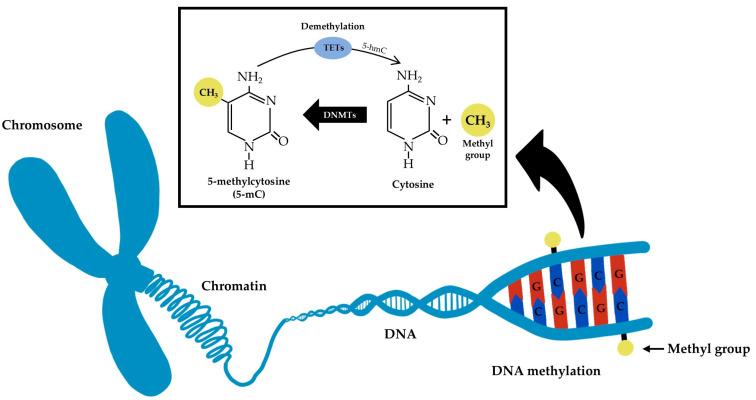
DNA methylation is an epigenetic mechanism that involves the addition of a methyl group to a cytosine residue in CpG dinucleotides, which are particularly abundant in gene promoter regions. Several studies have highlighted the role that modifications of DNA methylation may have on the adverse health effects caused by exposure to environmental toxicants. One group of xenobiotics that is increasingly present in our daily lives are nanomaterials, whose unique physicochemical properties make them interesting for a large number of industrial and biomedical applications. Their widespread use has raised concerns about human exposure, and several toxicological studies have been performed, although the studies focusing on nanomaterials' effect on DNA methylation are still limited. The aim of this review is to investigate the possible impact of nanomaterials on DNA methylation. From the 70 studies found eligible for data analysis, the majority were in vitro, with about half using cell models related to the lungs. Among the in vivo studies, several animal models were used, but most were mice models. Only two studies were performed on human exposed populations. Global DNA methylation analyses was the most frequently applied approach. Although no trend towards hypo- or hyper-methylation could be observed, the importance of this epigenetic mechanism in the molecular response to nanomaterials is evident. Furthermore, methylation analysis of target genes and, particularly, the application of comprehensive DNA methylation analysis techniques, such as genome-wide sequencing, allowed identifying differentially methylated genes after nanomaterial exposure and affected molecular pathways, contributing to the understanding of their possible adverse health effects.
DNA甲基化是一种表观遗传机制,涉及在CpG二核苷酸的胞嘧啶残基上添加甲基基团,CpG二核苷酸在基因启动子区域特别丰富。几项研究强调了DNA甲基化修饰可能对接触环境毒物所导致的不良健康影响产生的作用。我们日常生活中越来越常见的一类外源性物质是纳米材料,其独特的物理化学性质使其在大量工业和生物医学应用中具有吸引力。它们的广泛使用引发了人们对人类接触的担忧,并且已经进行了几项毒理学研究,尽管专注于纳米材料对DNA甲基化影响的研究仍然有限。本综述的目的是研究纳米材料对DNA甲基化的可能影响。在70项符合数据分析条件的研究中,大多数是体外研究,约一半使用与肺部相关的细胞模型。在体内研究中,使用了几种动物模型,但大多数是小鼠模型。仅对人类暴露人群进行了两项研究。全基因组DNA甲基化分析是最常用的方法。虽然未观察到低甲基化或高甲基化的趋势,但这种表观遗传机制在对纳米材料的分子反应中的重要性是显而易见的。此外,对靶基因的甲基化分析,特别是全基因组测序等综合DNA甲基化分析技术的应用,能够识别纳米材料暴露后差异甲基化的基因以及受影响的分子途径,有助于理解它们可能的不良健康影响。

 Zotero 插件