
mRNA 癌症免疫疗法治疗的研究进展:从修饰到传递。
Advances in mRNA therapeutics for cancer immunotherapy: From modification to delivery.
机构信息
KU-KIST Graduate School of Converging Science and Technology, Korea University, 145 Anam-ro, Seongbuk-gu, Seoul 02841, Republic of Korea; Medicinal Materials Research Center, Biomedical Research Institute, Korea Institute of Science and Technology (KIST), Hwarangno 14-gil 5, Seongbuk-gu, Seoul 02792, Republic of Korea.
Medicinal Materials Research Center, Biomedical Research Institute, Korea Institute of Science and Technology (KIST), Hwarangno 14-gil 5, Seongbuk-gu, Seoul 02792, Republic of Korea; Division of Bio-Medical Science &Technology, KIST School, University of Science and Technology, Hwarang-ro14-gil 5, Seongbuk-gu, Seoul, Republic of Korea 02792; Chemical and Biological Integrative Research Center, Korea Institute of Science and Technology (KIST), Seoul 02792, Republic of Korea.
出版信息
Adv Drug Deliv Rev. 2023 Aug;199:114973. doi: 10.1016/j.addr.2023.114973. Epub 2023 Jun 25.
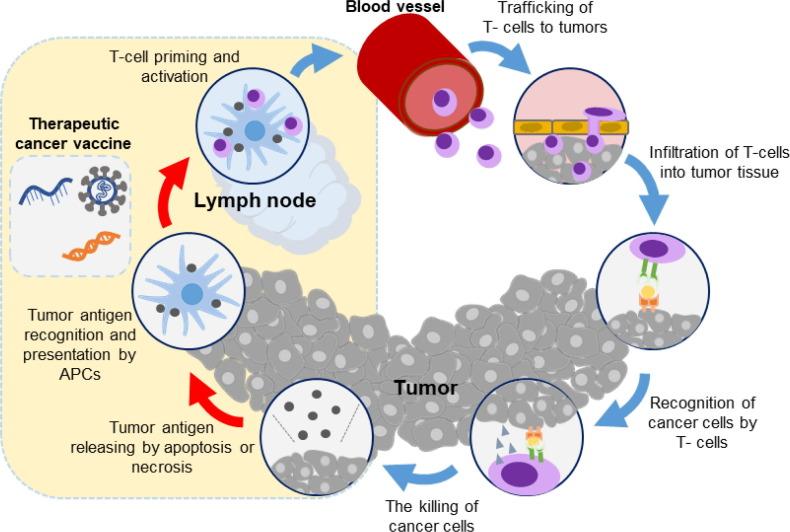
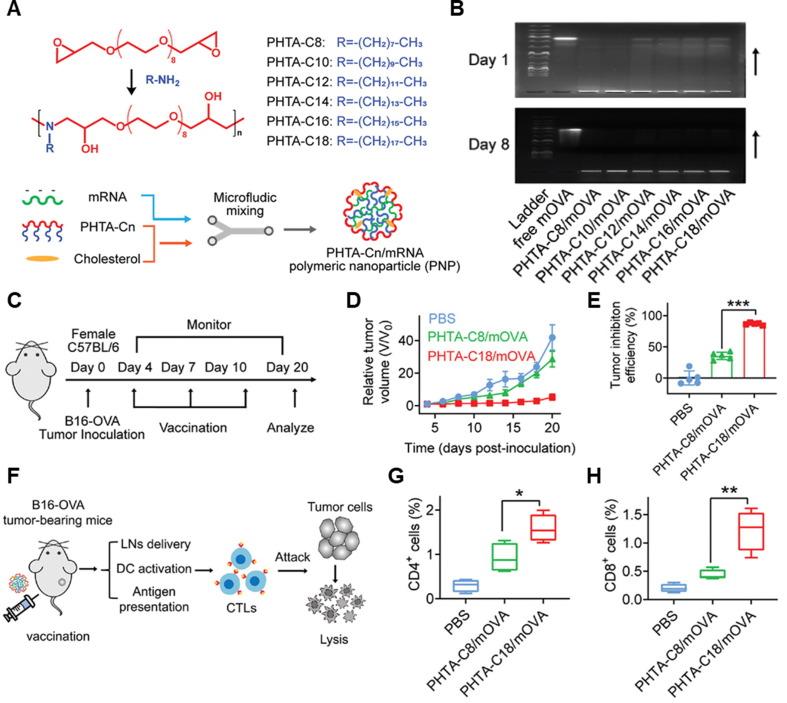
RNA vaccines have demonstrated their ability to solve the issues posed by the COVID-19 pandemic. This success has led to the renaissance of research into mRNA and their nanoformulations as potential therapeutic modalities for various diseases. The potential of mRNA as a template for synthesizing proteins and protein fragments for cancer immunotherapy is now being explored. Despite the promise, the use of mRNA in cancer immunotherapy is limited by challenges, such as low stability against extracellular RNases, poor delivery efficiency to the target organs and cells, short circulatory half-life, variable expression levels and duration. This review highlights recent advances in chemical modification and advanced delivery systems that are helping to address these challenges and unlock the biological and pharmacological potential of mRNA therapeutics in cancer immunotherapy. The review concludes by discussing future perspectives for mRNA-based cancer immunotherapy, which holds great promise as a next-generation therapeutic modality.
RNA 疫苗已经证明了它们解决 COVID-19 大流行所带来问题的能力。这一成功促使人们重新开始研究 mRNA 及其纳米制剂,将其作为治疗各种疾病的潜在治疗方法。现在正在探索 mRNA 作为模板合成蛋白质和蛋白质片段用于癌症免疫治疗的潜力。尽管前景广阔,但由于一些挑战,如对细胞外核糖核酸酶的稳定性低、向靶器官和细胞的递送效率差、循环半衰期短、表达水平和持续时间的可变性等,mRNA 在癌症免疫治疗中的应用受到限制。这篇综述重点介绍了化学修饰和先进递送系统的最新进展,这些进展有助于解决这些挑战,并释放 mRNA 治疗剂在癌症免疫治疗中的生物学和药理学潜力。最后,本文讨论了基于 mRNA 的癌症免疫治疗的未来展望,它作为下一代治疗方法具有很大的潜力。




 Zotero 插件