
在肺腺癌中与预后、氧化应激和免疫格局相关的m7G相关miRNA特征的鉴定
Identification of m7G-Related miRNA Signatures Associated with Prognosis, Oxidative Stress, and Immune Landscape in Lung Adenocarcinoma.
作者信息
Jiang Sujing, Xiao Mingshu, Shi Yueli, Wang Yongfang, Xu Zhiyong, Wang Kai
机构信息
Department of Respiratory and Critical Care Medicine, The Fourth Affiliated Hospital, Zhejiang University School of Medicine, Yiwu 322000, China.
Second Affiliated Hospital, Zhejiang University School of Medicine, Hangzhou 310009, China.
出版信息
Biomedicines. 2023 May 29;11(6):1569. doi: 10.3390/biomedicines11061569.
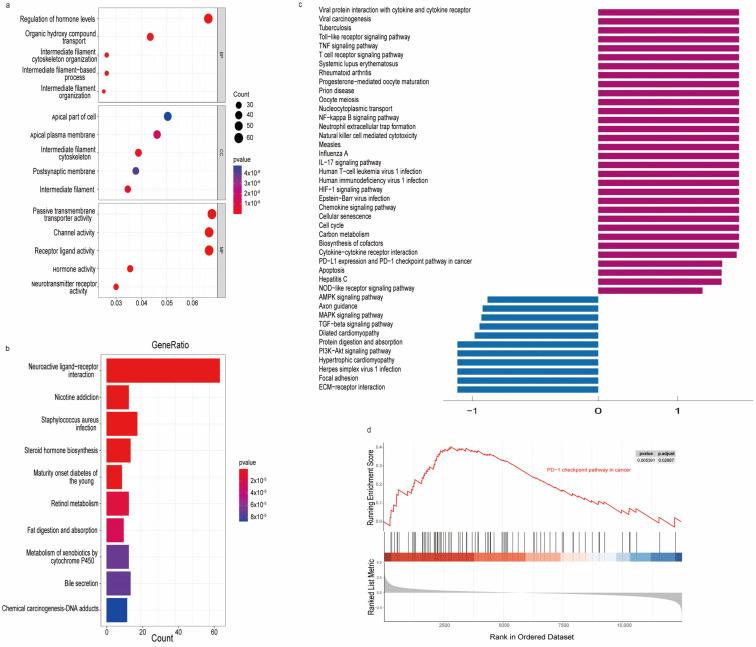
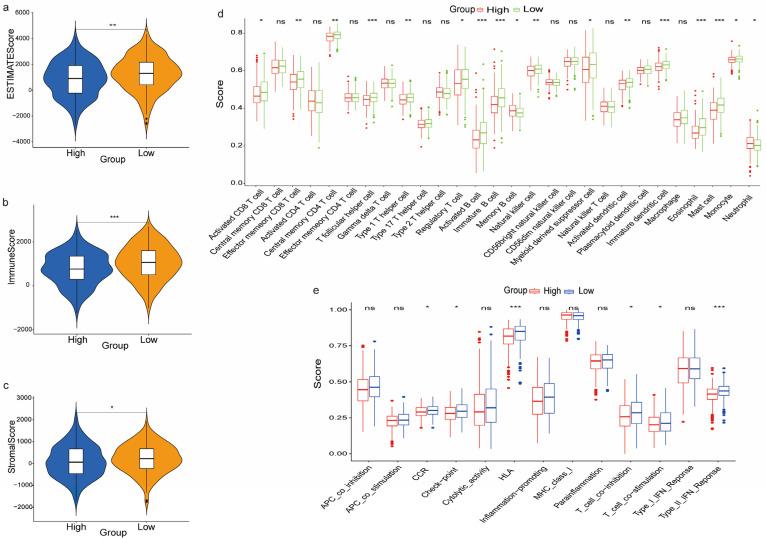
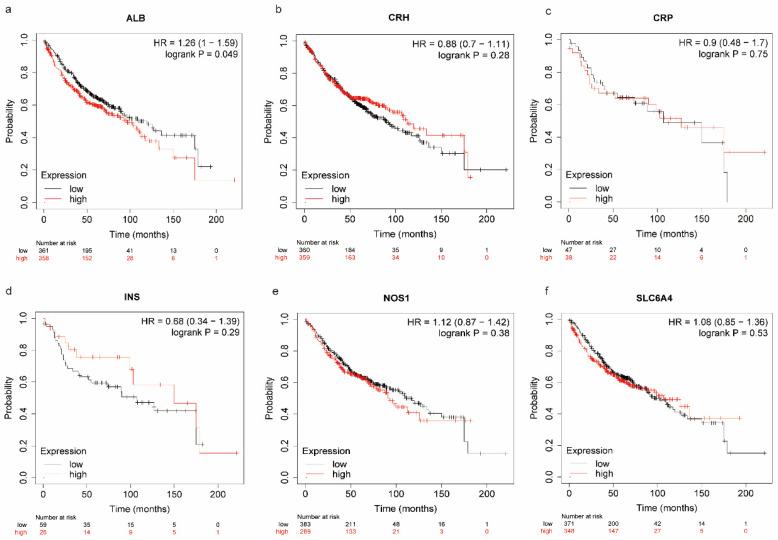
The role of N7-methylguanosine(m7G)-related miRNAs in lung adenocarcinoma (LUAD) remains unclear. We used LUAD data from The Cancer Genome Atlas (TCGA) to establish a risk model based on the m7G-related miRNAs, and divided patients into high-risk or low-risk subgroups. A nomogram for predicting overall survival (OS) was then constructed based on the independent risk factors. In addition, we performed a functional enrichment analysis and defined the oxidative stress-related genes, immune landscape as well as a drug response profile in the high-risk and low-risk subgroups. This study incorporated 28 m7G-related miRNAs into the risk model. The data showed a significant difference in the OS between the high-risk and low-risk subgroups. The receiver operating characteristic curve (ROC) predicted that the area under the curve (AUC) of one-year, three-year and five-year OS was 0.781, 0.804 and 0.853, respectively. The C-index of the prognostic nomogram for predicting OS was 0.739. We then analyzed the oxidative stress-related genes and immune landscape in the high-risk and low-risk subgroups. The data demonstrated significant differences in the expression of albumin (ALB), estimated score, immune score, stromal score, immune cell infiltration and functions between the high-risk and low-risk subgroups. In addition, the drug response analysis showed that low-risk subgroups may be more sensitive to tyrosine kinase inhibitor (TKI) and histone deacetylase (HDAC) inhibitors. We successfully developed a novel risk model based on m7G-related miRNAs in this study. The model can predict clinical prognosis and guide therapeutic regimens in patients with LUAD. Our data also provided new insights into the molecular mechanisms of m7G in LUAD.
N7-甲基鸟苷(m7G)相关的微小RNA(miRNA)在肺腺癌(LUAD)中的作用尚不清楚。我们使用来自癌症基因组图谱(TCGA)的LUAD数据,基于m7G相关的miRNA建立了一个风险模型,并将患者分为高风险或低风险亚组。然后根据独立风险因素构建了一个预测总生存期(OS)的列线图。此外,我们进行了功能富集分析,并确定了高风险和低风险亚组中的氧化应激相关基因、免疫图谱以及药物反应谱。本研究将28个m7G相关的miRNA纳入风险模型。数据显示高风险和低风险亚组之间的OS存在显著差异。受试者工作特征曲线(ROC)预测,一年、三年和五年OS的曲线下面积(AUC)分别为0.781、0.804和0.853。预测OS的预后列线图的C指数为0.739。然后我们分析了高风险和低风险亚组中的氧化应激相关基因和免疫图谱。数据表明,高风险和低风险亚组之间在白蛋白(ALB)表达、估计评分、免疫评分、基质评分、免疫细胞浸润和功能方面存在显著差异。此外,药物反应分析表明,低风险亚组可能对酪氨酸激酶抑制剂(TKI)和组蛋白去乙酰化酶(HDAC)抑制剂更敏感。在本研究中,我们成功开发了一种基于m7G相关miRNA的新型风险模型。该模型可以预测LUAD患者的临床预后并指导治疗方案。我们的数据也为m7G在LUAD中的分子机制提供了新的见解。





 Zotero 插件