
褪黑素:一种潜在的DNA甲基化调节因子。
Melatonin: A Potential Regulator of DNA Methylation.
作者信息
Linowiecka Kinga, Slominski Andrzej T, Reiter Russel J, Böhm Markus, Steinbrink Kerstin, Paus Ralf, Kleszczyński Konrad
机构信息
Department of Human Biology, Faculty of Biological and Veterinary Sciences, Nicolaus Copernicus University, Lwowska 1, 87-100 Toruń, Poland.
Dr. Phillip Frost Department of Dermatology & Cutaneous Surgery, University of Miami Miller School of Medicine, Miami, FL 33125, USA.
出版信息
Antioxidants (Basel). 2023 May 25;12(6):1155. doi: 10.3390/antiox12061155.
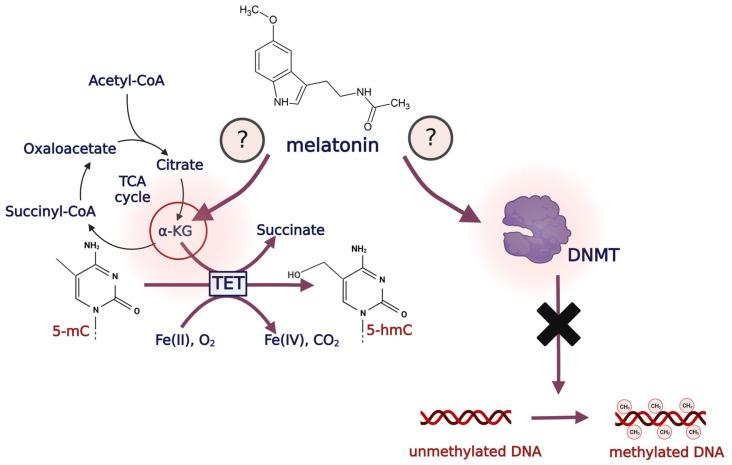
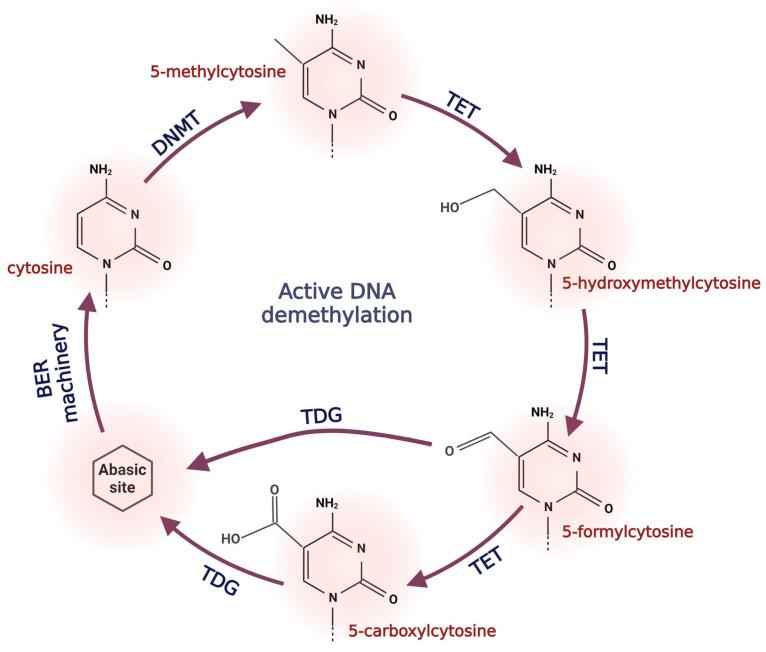
The pineal gland-derived indoleamine hormone, melatonin, regulates multiple cellular processes, ranging from chronobiology, proliferation, apoptosis, and oxidative damage to pigmentation, immune regulation, and mitochondrial metabolism. While melatonin is best known as a master regulator of the circadian rhythm, previous studies also have revealed connections between circadian cycle disruption and genomic instability, including epigenetic changes in the pattern of DNA methylation. For example, melatonin secretion is associated with differential circadian gene methylation in night shift workers and the regulation of genomic methylation during embryonic development, and there is accumulating evidence that melatonin can modify DNA methylation. Since the latter one impacts cancer initiation, and also, non-malignant diseases development, and that targeting DNA methylation has become a novel intervention target in clinical therapy, this review discusses the potential role of melatonin as an under-investigated candidate epigenetic regulator, namely by modulating DNA methylation via changes in mRNA and the protein expression of DNA methyltransferases (DNMTs) and ten-eleven translocation (TET) proteins. Furthermore, since melatonin may impact changes in the DNA methylation pattern, the authors of the review suggest its possible use in combination therapy with epigenetic drugs as a new anticancer strategy.
松果体衍生的吲哚胺激素褪黑素可调节多种细胞过程,范围从生物钟学、增殖、凋亡、氧化损伤到色素沉着、免疫调节和线粒体代谢。虽然褪黑素作为昼夜节律的主要调节因子最为人所知,但先前的研究也揭示了昼夜节律周期破坏与基因组不稳定之间的联系,包括DNA甲基化模式的表观遗传变化。例如,褪黑素分泌与夜班工作者昼夜节律基因的差异甲基化以及胚胎发育过程中基因组甲基化的调节有关,并且有越来越多的证据表明褪黑素可以改变DNA甲基化。由于后者影响癌症的发生,也影响非恶性疾病的发展,而且靶向DNA甲基化已成为临床治疗中的一种新型干预靶点,因此本综述讨论了褪黑素作为一种研究不足的候选表观遗传调节因子的潜在作用,即通过改变DNA甲基转移酶(DNMTs)和十一-易位(TET)蛋白的mRNA和蛋白质表达来调节DNA甲基化。此外,由于褪黑素可能影响DNA甲基化模式的变化,该综述的作者建议将其与表观遗传药物联合使用作为一种新的抗癌策略。
 Zotero 插件