
性二型果蝇前腿及其感觉器官发育的单细胞图谱。
A single-cell atlas of the sexually dimorphic Drosophila foreleg and its sensory organs during development.
机构信息
Department of Evolution and Ecology, University of California, Davis, California, United States of America.
出版信息
PLoS Biol. 2023 Jun 28;21(6):e3002148. doi: 10.1371/journal.pbio.3002148. eCollection 2023 Jun.
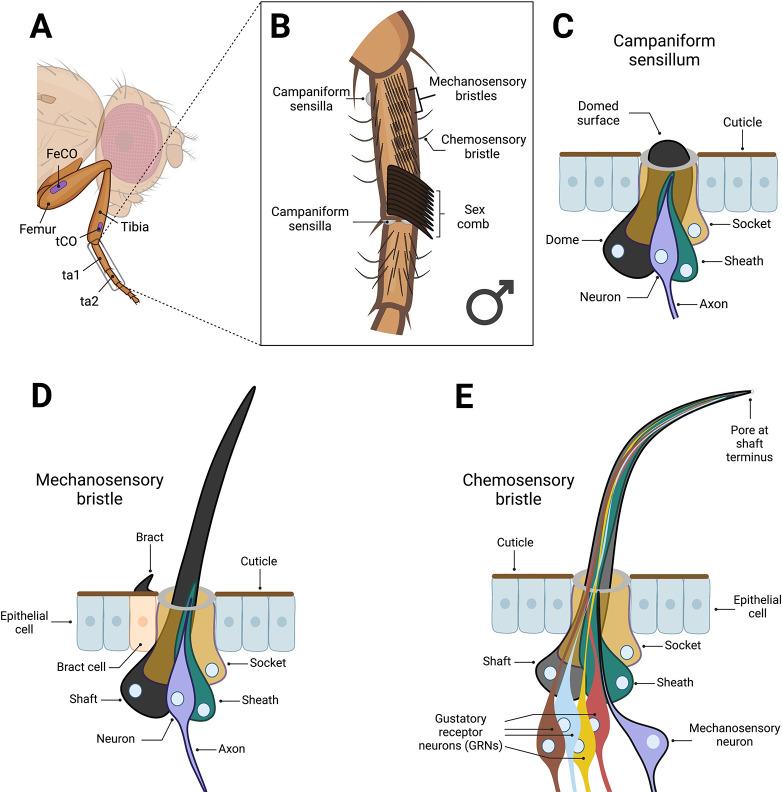
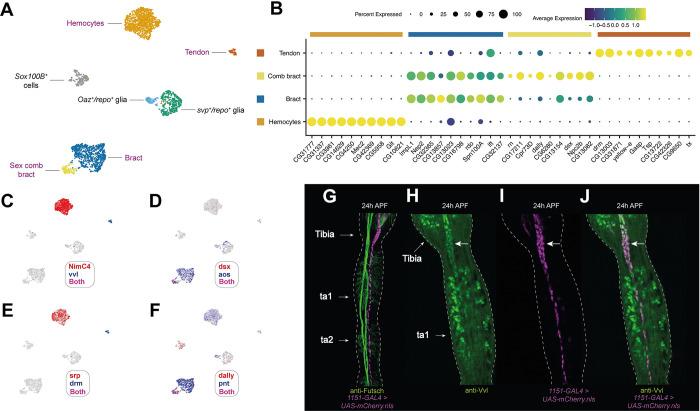
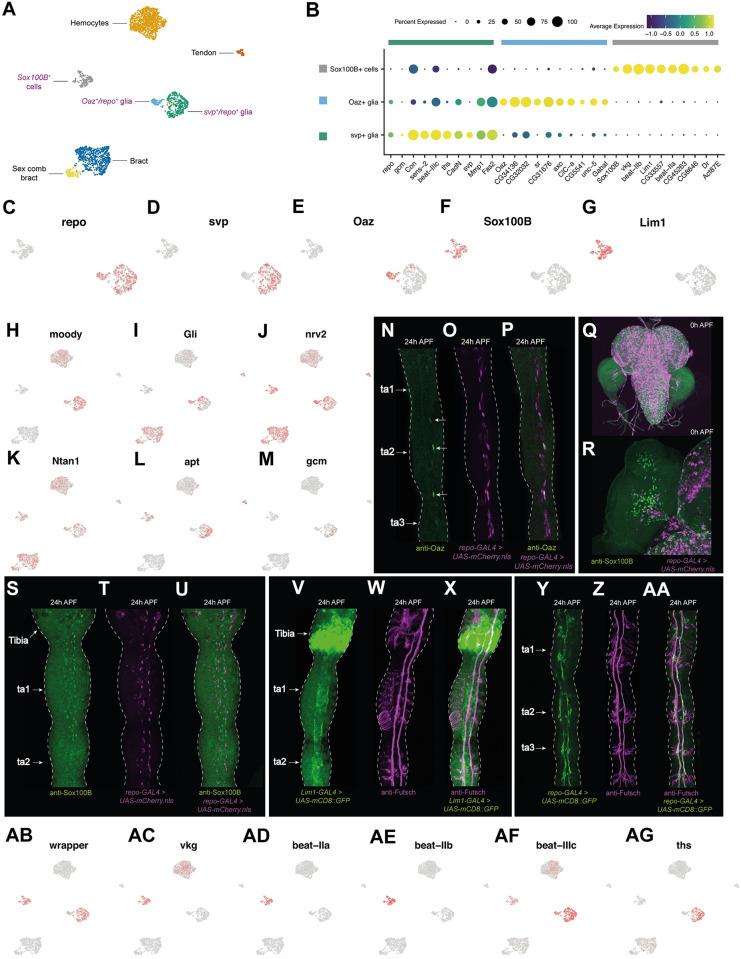
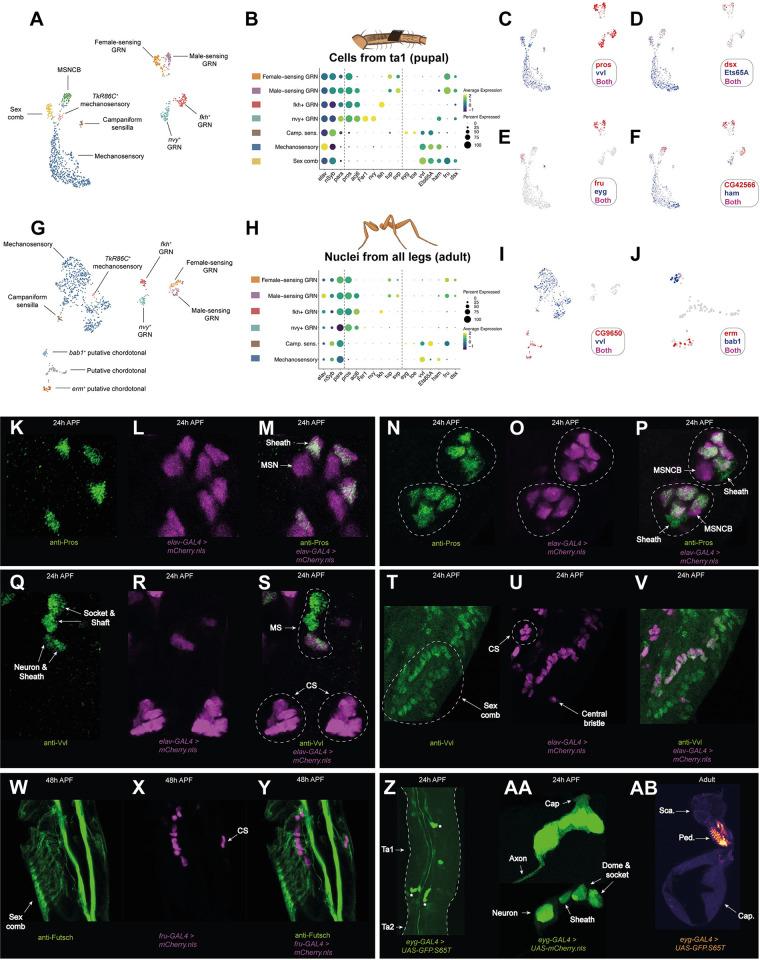
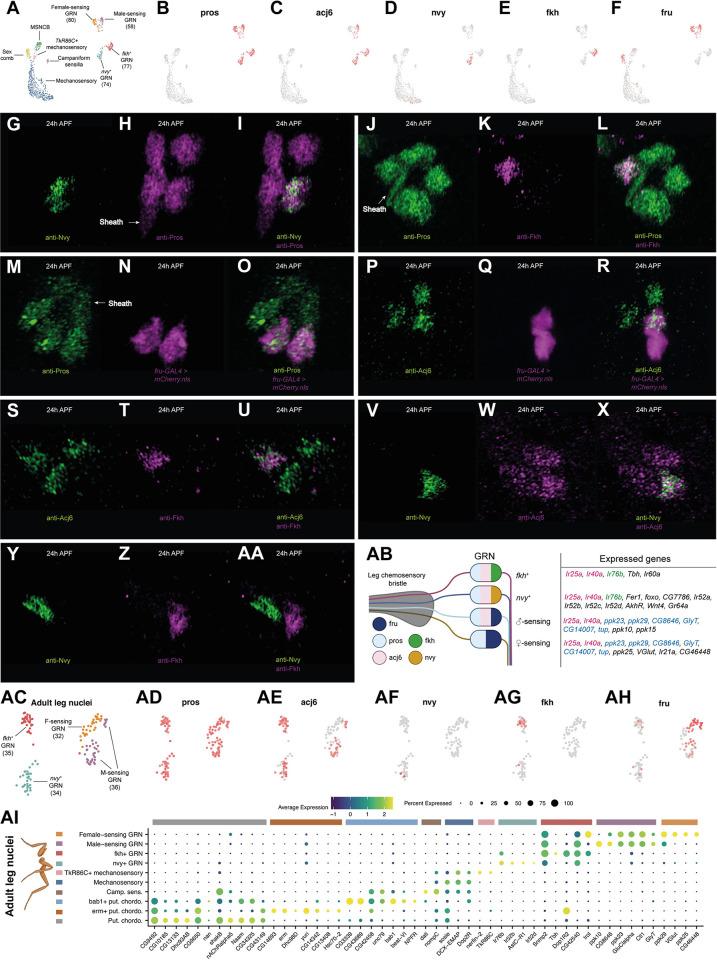
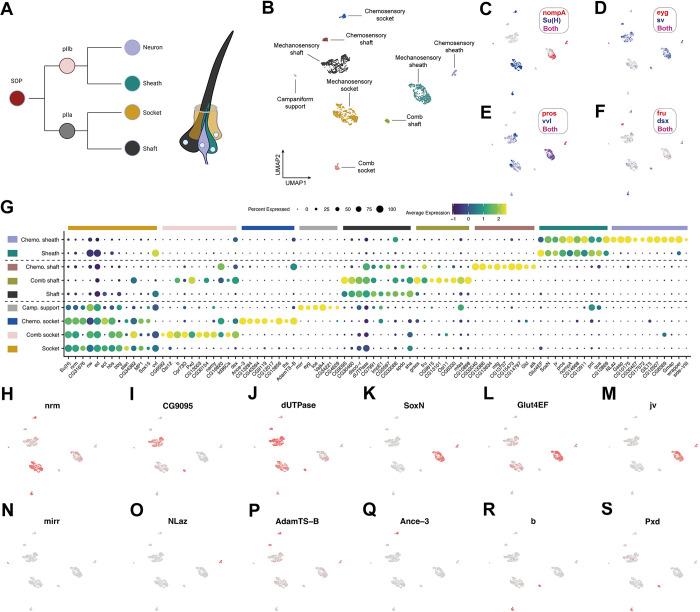
To respond to the world around them, animals rely on the input of a network of sensory organs distributed throughout the body. Distinct classes of sensory organs are specialized for the detection of specific stimuli such as strain, pressure, or taste. The features that underlie this specialization relate both to the neurons that innervate sensory organs and the accessory cells they comprise. To understand the genetic basis of this diversity of cell types, both within and between sensory organs, we performed single-cell RNA sequencing on the first tarsal segment of the male Drosophila melanogaster foreleg during pupal development. This tissue displays a wide variety of functionally and structurally distinct sensory organs, including campaniform sensilla, mechanosensory bristles, and chemosensory taste bristles, as well as the sex comb, a recently evolved male-specific structure. In this study, we characterize the cellular landscape in which the sensory organs reside, identify a novel cell type that contributes to the construction of the neural lamella, and resolve the transcriptomic differences among support cells within and between sensory organs. We identify the genes that distinguish between mechanosensory and chemosensory neurons, resolve a combinatorial transcription factor code that defines 4 distinct classes of gustatory neurons and several types of mechanosensory neurons, and match the expression of sensory receptor genes to specific neuron classes. Collectively, our work identifies core genetic features of a variety of sensory organs and provides a rich, annotated resource for studying their development and function.
为了对外界环境做出反应,动物依赖于分布在全身的感觉器官网络输入。不同类别的感觉器官专门用于检测特定的刺激,如应变、压力或味道。这种特化的基础与支配感觉器官的神经元和它们所包含的附属细胞有关。为了了解这种细胞类型多样性的遗传基础,包括感觉器官内和感觉器官之间的细胞类型,我们在雄性黑腹果蝇前腿的第一跗骨节的蛹发育期间对其进行了单细胞 RNA 测序。该组织显示出各种功能和结构上不同的感觉器官,包括杯形感觉器、机械感觉刚毛和化学感觉味觉刚毛,以及性梳,这是一种最近进化的雄性特异性结构。在这项研究中,我们描述了感觉器官所在的细胞环境,鉴定了一种新的细胞类型,该类型有助于神经层的构建,并解析了感觉器官内和感觉器官之间支持细胞之间的转录组差异。我们确定了区分机械感觉神经元和化学感觉神经元的基因,解析了定义 4 种不同味觉神经元和几种机械感觉神经元的组合转录因子代码,并将感觉受体基因的表达与特定的神经元类型匹配。总的来说,我们的工作确定了各种感觉器官的核心遗传特征,并为研究它们的发育和功能提供了丰富的注释资源。



 Zotero 插件