
食物污染物与糖尿病发生的潜在风险:一篇叙述性综述。
Food contaminants and potential risk of diabetes development: A narrative review.
作者信息
Milanović Maja, Milošević Nataša, Milić Nataša, Stojanoska Milica Medić, Petri Edward, Filipović Jelena Marković
机构信息
Department of Pharmacy, Faculty of Medicine, University of Novi Sad, Novi Sad 21000, Serbia.
Faculty of Medicine, Clinic for Endocrinology, Diabetes and Metabolic Diseases, University Clinical Center of Vojvodina, University of Novi Sad, Novi Sad 21000, Serbia.
出版信息
World J Diabetes. 2023 Jun 15;14(6):705-723. doi: 10.4239/wjd.v14.i6.705.
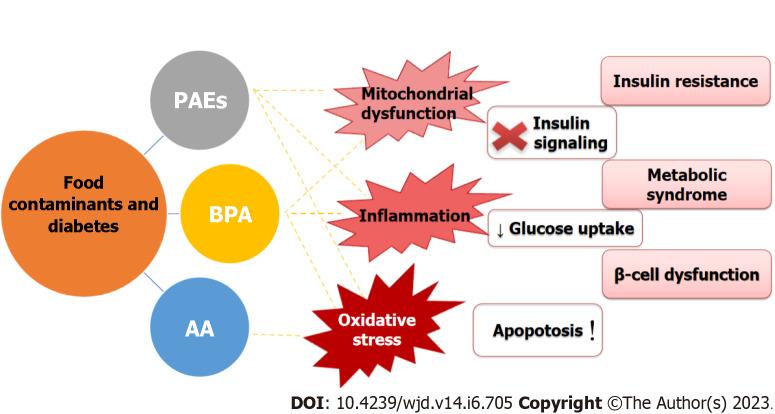
The number of people diagnosed with diabetes continues to increase, especially among younger populations. Apart from genetic predisposition and lifestyle, there is increasing scientific and public concern that environmental agents may also contribute to diabetes. Food contamination by chemical substances that originate from packaging materials, or are the result of chemical reactions during food processing, is generally recognized as a worldwide problem with potential health hazards. Phthalates, bisphenol A (BPA) and acrylamide (AA) have been the focus of attention in recent years, due to the numerous adverse health effects associated with their exposure. This paper summarizes the available data about the association between phthalates, BPA and AA exposure and diabetes. Although their mechanism of action has not been fully clarified, , and epidemiological studies have made significant progress toward identifying the potential roles of phthalates, BPA and AA in diabetes development and progression. These chemicals interfere with multiple signaling pathways involved in glucose and lipid homeostasis and can aggravate the symptoms of diabetes. Especially concerning are the effects of exposure during early stages and the gestational period. Well-designed prospective studies are needed in order to better establish prevention strategies against the harmful effects of these food contaminants.
被诊断出患有糖尿病的人数持续增加,尤其是在年轻人群体中。除了遗传易感性和生活方式外,科学和公众越来越关注环境因素可能也会导致糖尿病。源自包装材料或食品加工过程中化学反应的化学物质对食品的污染,被普遍认为是一个具有潜在健康危害的全球性问题。近年来,邻苯二甲酸盐、双酚A(BPA)和丙烯酰胺(AA)因其暴露会带来众多不良健康影响而成为关注焦点。本文总结了有关邻苯二甲酸盐、双酚A和丙烯酰胺暴露与糖尿病之间关联的现有数据。尽管它们的作用机制尚未完全阐明,但流行病学研究在确定邻苯二甲酸盐、双酚A和丙烯酰胺在糖尿病发生和发展中的潜在作用方面取得了重大进展。这些化学物质会干扰参与葡萄糖和脂质稳态的多种信号通路,并会加重糖尿病症状。尤其值得关注的是早期和孕期暴露的影响。需要开展精心设计的前瞻性研究,以便更好地制定预防策略,应对这些食品污染物的有害影响。

 Zotero 插件