
黏液和生物膜对抗菌光动力疗法的影响:使用钌(II)配合物进行评估。
Impact of mucus and biofilm on antimicrobial photodynamic therapy: Evaluation using Ruthenium(II) complexes.
作者信息
Youf Raphaëlle, Ghanem Rosy, Nasir Adeel, Lemercier Gilles, Montier Tristan, Le Gall Tony
机构信息
Inserm, Univ Brest, EFS, UMR 1078, GGB, F-29200, Brest, France.
CHU de Brest, Service de Génétique Médicale et de Biologie de la Reproduction, 29200, Brest, France.
出版信息
Biofilm. 2023 Mar 24;5:100113. doi: 10.1016/j.bioflm.2023.100113. eCollection 2023 Dec.
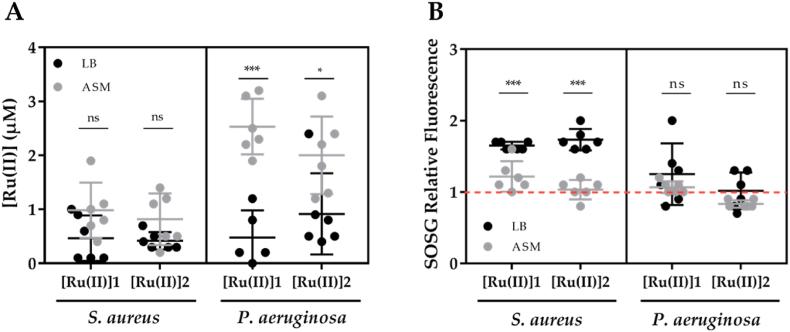
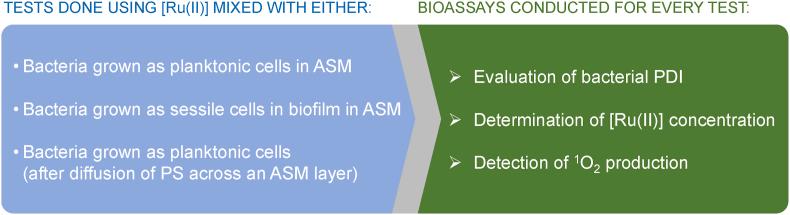
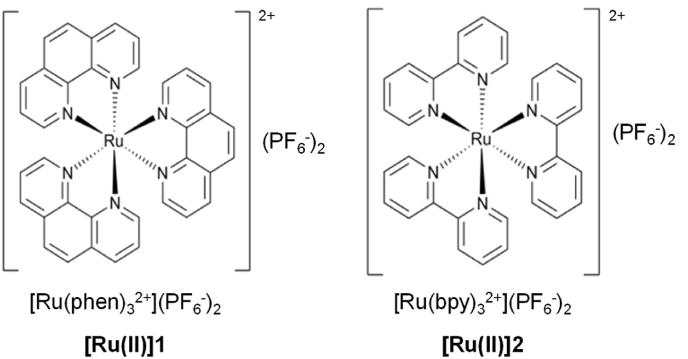
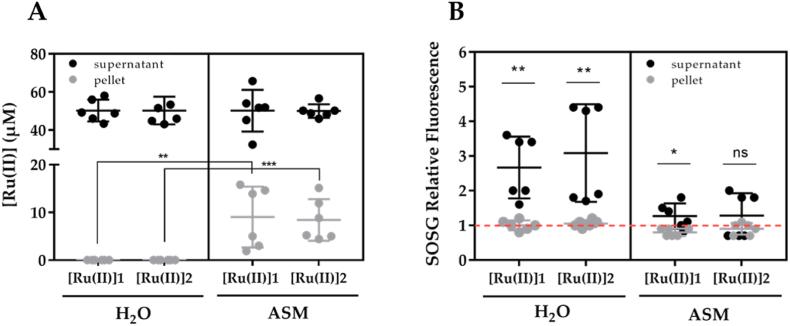
The biofilm lifestyle of bacterial pathogens is a hallmark of chronic lung infections such as in cystic fibrosis (CF) patients. Bacterial adaptation to the complex conditions in CF-affected lungs and repeated antibiotherapies lead to increasingly tolerant and hard-to-treat biofilms. In the context of growing antimicrobial resistance and restricted therapeutic options, antimicrobial photodynamic therapy (aPDT) shows great promise as an alternative to conventional antimicrobial modalities. Typically, aPDT consists in irradiating a non-toxic photosensitizer (PS) to generate reactive oxygen species (ROS), which kill pathogens in the surrounding environment. In a previous study, we reported that some ruthenium (II) complexes ([Ru(II)]) can mediate potent photodynamic inactivation (PDI) against planktonic cultures of and clinical isolates. In the present work, [Ru(II)] were further assayed to evaluate their ability to photo-inactivate such bacteria under more complex experimental conditions better recapitulating the microenvironment in lung infected airways. Bacterial PDI was tentatively correlated with the properties of [Ru(II)] in biofilms, in mucus, and following diffusion across the latter. Altogether, the results obtained demonstrate the negative impacting role of mucus and biofilm components on [Ru(II)]-mediated PDT, following different possible mechanisms of action. Technical limitations were also identified that may be overcome, making this report a pilot for other similar studies. In conclusion, [Ru(II)] may be subjected to specific chemical engineering and/or drug formulation to adapt their properties to the harsh micro-environmental conditions of the infected respiratory tract.
细菌病原体的生物膜生活方式是慢性肺部感染的一个标志,比如在囊性纤维化(CF)患者中。细菌对CF患者肺部复杂环境的适应以及反复的抗菌治疗导致生物膜的耐受性越来越强且难以治疗。在抗菌耐药性不断增加和治疗选择受限的背景下,抗菌光动力疗法(aPDT)作为传统抗菌方式的替代方法显示出巨大的前景。通常,aPDT包括照射一种无毒的光敏剂(PS)以产生活性氧(ROS),ROS会杀死周围环境中的病原体。在之前的一项研究中,我们报道了一些钌(II)配合物([Ru(II)])可以介导对 和 临床分离株的浮游培养物的有效光动力失活(PDI)。在本研究中,对[Ru(II)]进行了进一步检测,以评估它们在更复杂的实验条件下使此类细菌光失活的能力,这些条件能更好地模拟肺部感染气道中的微环境。细菌PDI初步与[Ru(II)]在生物膜、黏液中的性质以及在黏液中扩散后的性质相关。总之,所获得的结果表明,黏液和生物膜成分通过不同的可能作用机制对[Ru(II)]介导的光动力疗法产生负面影响。还发现了一些可以克服的技术限制,这使得本报告成为其他类似研究的一个试点。总之,[Ru(II)]可能需要进行特定的化学工程和/或药物配方设计,以使其性质适应受感染呼吸道的恶劣微环境条件。





 Zotero 插件