
TERC 单体细胞重编程:再生障碍性贫血的一种新治疗策略。
TERC haploid cell reprogramming: a novel therapeutic strategy for aplastic anemia.
机构信息
Shandong University of Traditional Chinese Medicine, Jinan, 250014, China.
Department of Hematology, Affiliated Hospital of Shandong University of Traditional Chinese Medicine, Jinan, 250014, China.
出版信息
Mol Med. 2023 Jul 9;29(1):94. doi: 10.1186/s10020-023-00691-w.
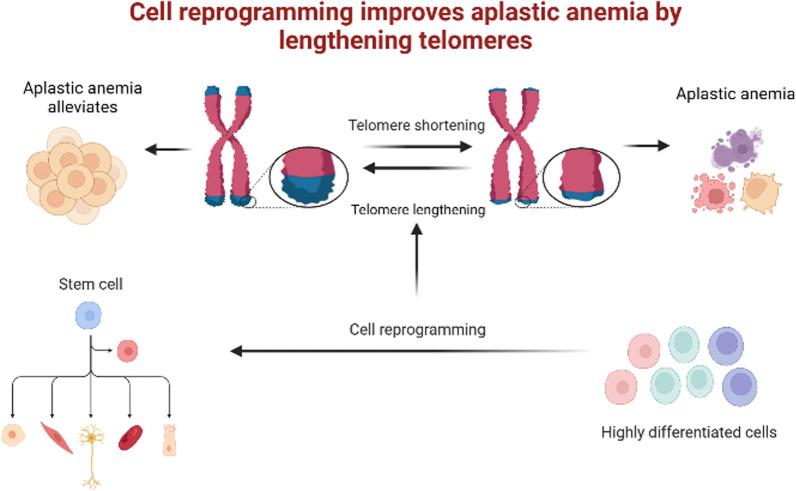
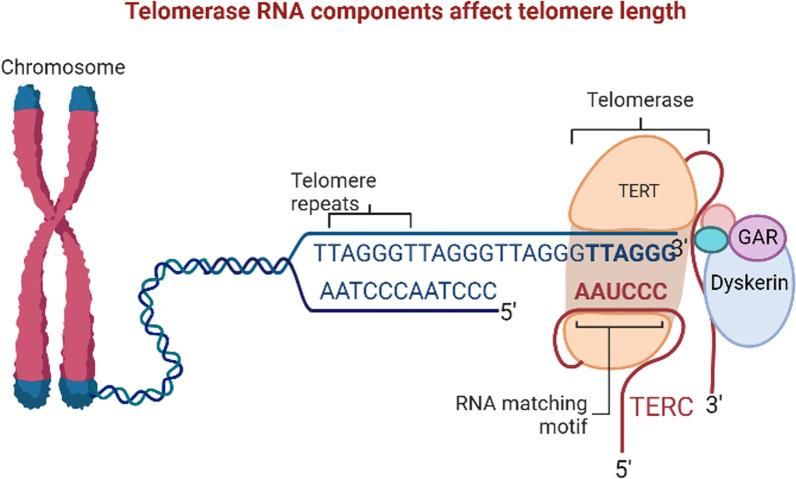
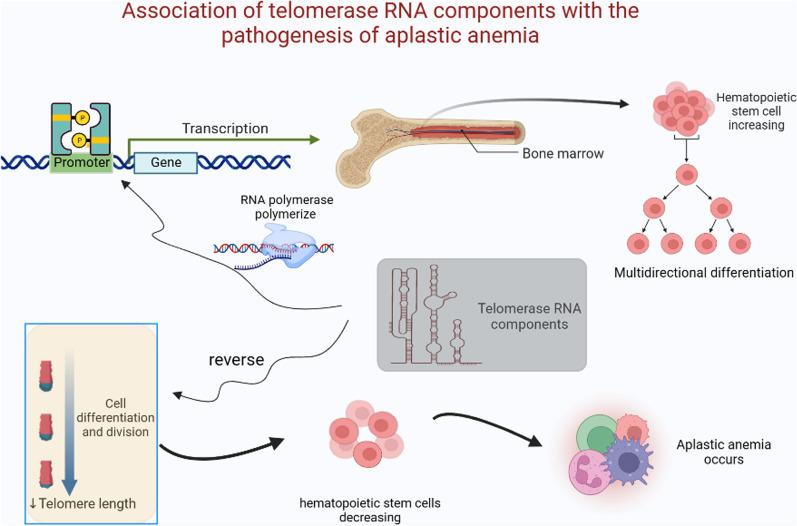
The telomerase RNA component (TERC) gene plays an important role in telomerase-dependent extension and maintenance of the telomeres. In the event of TERC haploinsufficiency, telomere length is often affected; this, in turn, can result in the development of progeria-related diseases such as aplastic anemia (AA) and congenital keratosis. Cell reprogramming can reverse the differentiation process and can, therefore, transform cells into pluripotent stem cells with stronger differentiation and self-renewal abilities; further, cell reprograming can also extend the telomere length of these cells, which may be crucial in the diagnosis and treatment of telomere depletion diseases such as AA. In this study, we summarized the effects of TERC haploid cell reprogramming on telomere length and the correlation between this alteration and the pathogenesis of AA; by investigating the role of cell reprogramming in AA, we aimed to identify novel diagnostic indicators and therapeutic strategies for patients with AA.
端粒酶 RNA 成分(TERC)基因在端粒酶依赖性延伸和端粒维持中发挥重要作用。在 TERC 单倍体不足的情况下,端粒长度通常会受到影响;反过来,这可能导致再生障碍性贫血(AA)和先天性角化不良等与早衰相关的疾病的发展。细胞重编程可以逆转分化过程,因此可以将细胞转化为具有更强分化和自我更新能力的多能干细胞;此外,细胞重编程还可以延长这些细胞的端粒长度,这对于诊断和治疗端粒耗竭疾病(如 AA)可能至关重要。在这项研究中,我们总结了 TERC 单倍体细胞重编程对端粒长度的影响以及这种改变与 AA 发病机制之间的相关性;通过研究细胞重编程在 AA 中的作用,我们旨在为 AA 患者确定新的诊断指标和治疗策略。
 Zotero 插件